G20, "경제위기 대응해 강력한 공조체계 갖출 것" <전문>
은행권 재무건전성 확보, 각국 중앙은행은 유동성 공급키로
[아시아경제 김영식 기자] 주요20개국(G20) 재무장관들은 각국 증시 폭락 등 세계경제가 침체 위기에 다시 처한 것에 대해 공동 대응을 강화하기로 합의했다.
22일 블룸버그통신에 따르면 G20은 이날 미국 워싱턴에서 열린 G20 재무장관·중앙은행 총재 회의를 마친 뒤 공동성명서(코뮈니케)를 통해 “세계 경제가 직면한 새로운 도전과제에 대응하기 위해 강력한 국제적 공조체제를 이룰 것이며, 금융시장 안정성을 유지하고 낙관적인 경기전망을 회복하는 한편 성장세를 지지하기 위해 강력히 대응할 것”이라고 밝혔다.
또 유럽 국가들은 지난 7월21일 유로존 정상회담의 합의 사항을 이행하고 공공재정 안정성을 확보하기 위해 과감히 나설 것을 다짐했다. 이의 일환으로 유럽재정안정기금(EFSF)의 운용범위를 확대하고 재정위기의 확산을 막기 위한 영향력을 최대화하기 위해 필요한 조치를 취하기로 했다.
미국과 일본은 중기적인 재정안정성 회복을 위해 중기적 재정건전성 확보 등에 나서고 신흥시장국은 경제 펀더멘털을 반영해 환율 유연성을 더욱 높이고 경제구조 재조정을 통해 내수시장 주도 성장으로 세계 경제에 기여한다는 원칙을 확인했다.
이를 위해 G20은 금융시장과 은행시스템의 안정성을 유지하기 위해 필요한 모든 수단을 동원하기로 했다. 주요 은행들은 바젤III 협약 기준에 따른 자기자본비율 확대 등 재무건전성을 충족하도록 하고, 각국 중앙은행은 금융권에 유동성을 필요한 만큼 공급할 수 있는 준비를 갖추는 한편 통화정책 기조를 물가안정을 유지하고 경기부양을 지원하는 방향으로 하도록 합의했다.
G20은 프랑스 칸에서 열리는 올해 G20 정상회의까지 단기적 정책결정과 중기적 관점이 조화된 정책 액션 플랜을 공동으로 마련하기로 했다.
이하는 G20의 공동선언 원문이다.
We, the Finance Ministers and Central Bank Governors of the G-20 are committed to a strong and coordinated international response to address the renewed challenges facing the global economy, notably heightened downside risks from sovereign stresses, financial system fragility, market turbulence, weak economic growth and unacceptably high unemployment.
We are taking strong actions to maintain financial stability, restore confidence and support growth. In Europe, Euro area countries have taken major actions to ensure the sustainability of public finances, and are implementing the decisions taken by Euro area Leaders on 21 July 2011.
Specifically, the euro area will have implemented by the time of our next meeting the necessary actions to increase the flexibility of the EFSF and to maximize its impact in order to address contagion.
The US has put forward a significant package to strengthen growth and employment through public investments, tax incentives, and targeted jobs measures, combined with fiscal reforms designed to restore fiscal sustainability over the medium term.
Japan is implementing substantial fiscal measures for reconstruction from the earthquake while ensuring the commitment to medium-term fiscal consolidation.
Heightened downside risks have also made the economic environment for emerging markets and developing economies more challenging and they are adjusting their macro-economic policies accordingly to maintain stability and sustain growth.
이 기사와 관련있는 기사
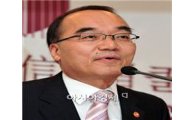 박재완 G20서 국제무대 데뷔…재정위기 리더십 보여줄까
The contribution of the emerging market economies to global growth will increase as these economies as a whole move towards more domestic led growth, including through structural reforms and enhanced exchange rate flexibility to reflect economic fundamentals. We reiterate that excess volatility and disorderly movements in exchange rates have adverse implications for economic and financial stability.
We are committed to supporting growth, implementing credible fiscal consolidation plans, and ensuring strong, sustainable and balanced growth. This will require a collective and bold action plan, with everyone doing their part. We are working together to put in place for the Cannes Summit such an action plan of coordinated policies with both short term decisions and a medium-long term perspective.
We commit to take all necessary actions to preserve the stability of banking systems and financial markets as required. We will ensure that banks are adequately capitalized and have sufficient access to funding to deal with current risks and that they fully implement Basel III along the agreed timelines.
Central Banks will continue to stand ready to provide liquidity to banks as required. Monetary policies will maintain price stability and continue to support economic recovery.
We will review progress made in implementing the commitments made today at our next meeting.
<ⓒ투자가를 위한 경제콘텐츠 플랫폼, 아시아경제(www.asiae.co.kr) 무단전재 배포금지>
![[단독]문신사법 시행 앞두고 엇갈린 법원…‘눈썹문신 무죄’ 대법 심리 착수](https://cwcontent.asiae.co.kr/asiaresize/308/2020013114494834033_1580449788.jpg)



![[시시비비] 과학, 맹신, 사기… 혼돈의 딥테크 주식](https://cwcontent.asiae.co.kr/asiaresize/308/2026051407271078513A.jpg)
![[초동시각]코스피8000 시대, AI투자도 대전환 시급](https://cwcontent.asiae.co.kr/asiaresize/308/2026051409011380770A.jpg)
![[기자수첩]소상공인에겐 너무 먼 일·가정 양립](https://cwcontent.asiae.co.kr/asiaresize/308/2026051409481693494A.jpg)






!["10년 만에 해냈다…이번엔 진짜" 반도체 호황에 1분기 경상흑자 '사상최대'[BOK포커스]](https://cwcontent.asiae.co.kr/asiaresize/309/2026051315410261534_1778654463.png)

![[미중 정상회담]테이블에 무역휴전 연장…"45兆 상품관세 인하 논의"](https://cwcontent.asiae.co.kr/asiaresize/309/2026051411260162853_1778725560.jpg)
![[미중 정상회담]트럼프 "상호주의 더욱 발전"…시진핑 "공동이익, 분란 이겨"](https://cwcontent.asiae.co.kr/asiaresize/309/2026051411462362902_1778726783.jpg)