[브레이킹뷰스]유가, 100달러 향한 상승세 이어갈 듯
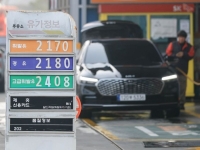
런던, 1월18일 (로이터브레이킹뷰스) - 유가가 배럴당 100달러를 넘보고 있다. 수요, 투기세력, 달러 약세, 높은 유동성은 모두 유가 급등을 뒷받침하는 요인이다. 상품 시장 전반이 상승세를 보이면서 각국 중앙은행들을 곤란하게 하고 있다. 중앙은행들은 성장세가 확고해질 때까지 되도록 금리 인상을 미루기를 선호하지만 상품 가격 상승이 인플레를 부추겨 금리 인상을 고려할 수 밖에 없도록 만들고 있는 것이다. 그러나 유가 상승이 절대적으로 확실한 것은 아니다. 유로존 우려가 다시 확산되면서 달러를 끌어올리면 유가 상승은 빠르게 억제될 수도 있다.
현 유가 상승의 한 요인은 바로 예상보다 견실한 글로벌 회복세다. 석유수출국기구(OPEC)는 17일자 보고서에서 "글로벌 경제의 지속적 개선에 대한 전망이 상품 투자 증가세를 지지하고 있다"고 밝혔다. OPEC은 작년 및 올해 글로벌 석유 수요 전망치를 상향 조정했다. 그러나 OPEC은 또 석유 시장 공급이 현재로선 충분하며 현 유가 강세는 투기세력들의 상품 투자가 늘었기 때문이라고 지적했다.
OPEC의 평가는 자신들의 이익을 도모하는 것이지만 대체로 맞는 말일 수도 있다. 유가와 상품 시장의 향후 전망과 관련한 호재들은 많다. 글로벌 경제가 회복되고 있고 유로존과 영국에서 인플레이션이 중앙은행 목표치를 상회하고 있지만 금리 인상이 임박해 보이진 않는다. 유로존은 여전히 주변국 문제에 골몰하고 있고 영란은행은 재정긴축 영향을 가늠하기에 바쁘다.
중앙은행들은 유가 상승이 수요에 미치는 부정적 영향도 고려해야 할 것이다. 연료비가 늘면 다른 제품이나 서비스에 대한 소비는 줄어들 수 밖에 없다. 이는 정책결정자들에게 딜레마를 안겨 준다. 유가 상승을 허용하느냐 아니면 그로 인한 인플레에 대응하느냐를 선택해야 하는 것이다.
그러나 미국의 인플레는 여전히 낮은 수준이다. 그리고 연준의 2차 완화정책, 6000억달러 규모 국채 매입 프로그램이 예정대로 진행될 전망이다. 미국의 완화정책으로 달러 랠리는 일시적이 될 것이며 이는 상품시장엔 우호적 요인이다.
유로존 패닉이 유로 대비 달러 상승을 초래해 유가와 다른 상품에 타격을 줄 수도 있지만 현재로선 수요, 금리, 유동성 모두 유가 및 상품 시장 상승에 우호적인 조건인 것으로 보인다. (이안 캠벨 칼럼니스트)
* 본 칼럼은 개인의 견해로 로이터의 편집 방향과 일치하지 않을 수 있습니다.
* 원문
BREAKINGVIEWS-Oil set for turbulent ascent
(Adds context)
-- The author is a Reuters Breakingviews columnist. The opinions expressed are his own --
By Ian Campbell
LONDON, Jan 17 (Reuters Breakingviews) - Oil nudging $100 per barrel may be just the beginning. Demand, speculation, a softish dollar and high liquidity all favour a destabilising oil-price spike. Commodities generally look set to give central banks extreme difficulty, driving up inflation and making banks mull rate rises they would prefer to defer until recovery is entrenched. But orbital oil is not a dead cert. Renewed euro zone panics could provoke dollar spurts that would be quick to temper oil's heat.
One factor in oil's rise is a global recovery that is stronger than widely predicted. OPEC says as much in its monthly report released on Jan. 17. The cartel of leading oil producers has raised its previous estimate for global oil demand in 2010, and its demand forecast for 2011. But OPEC has also argued that the oil market is well supplied for now, and is blaming the current oil strength on "increasing commodity investment" -- code for speculators.
OPEC's assessment is self-serving yet may be mostly correct. There are many green lights now for oil and commodities. The world economy is certainly picking up. Inflation is now above central bank targets in both the euro zone and the UK but in neither case does a rate rise look imminent. The euro zone is still preoccupied with its periphery; the Bank of England about the impact of fiscal tightening.
Central banks must also weigh the negative impact of oil prices themselves on demand. The money that consumers pour into their fuel tanks can't be spent on other goods and services.
That presents policymakers with a dilemma: allow the oil price spike to run its course -- as most, though not the European Central Bank, did in 2008 -- or react to the inflation it causes.
이 기사와 관련있는 기사
![[브레이킹뷰스]美ㆍ中 관계 개선 속 리밸런싱 지체돼선 안 돼](https://cwstatic.asiae.co.kr/asiae_v2/common/no_img_rank.jpg) [브레이킹뷰스]美ㆍ中 관계 개선 속 리밸런싱 지체돼선 안 돼
[브레이킹뷰스]美ㆍ中 관계 개선 속 리밸런싱 지체돼선 안 돼
But the fact is that inflation remains low in the United States. And the Federal Reserve's $600 billion second round of quantitative easing continues to be unfurled. With U.S. money still ultra loose, the dollar's rally is tentative. That too favours commodity speculation.
Euro panics could boost the dollar and hit oil and commodities in bouts of potentially fierce turbulence. But for now, demand, rates and liquidity favour oil and commodities' ascent.
![[초동시각]애물단지가 된 필리버스터](https://cwcontent.asiae.co.kr/asiaresize/308/2026051513484496581A.jpg)
![[기자수첩]'현대판 러다이트' 멈춰선 공장의 의미](https://cwcontent.asiae.co.kr/asiaresize/308/2026051513493797137A.jpg)
![[남산길 산책]2026년 아비뇽, 세계에 선보일 K-연극](https://cwcontent.asiae.co.kr/asiaresize/308/2026051513455791682A.jpg)





![AI 때문에 일자리 사라진다더니…구인 800% 폭증한 '이 직종' [테크토크]](https://cwcontent.asiae.co.kr/asiaresize/308/2026051413392963075_1778733569.jpg)

!["편의점 10곳 돌아도 못 샀다" 난리…벌써 1억개 팔린 빵 정체[지금 사는 방식]](https://cwcontent.asiae.co.kr/asiaresize/308/2026051314412961326_1778650889.jpg)







!["편의점 10곳 돌아도 못 샀다" 난리…벌써 1억개 팔린 빵 정체[지금 사는 방식]](https://cwcontent.asiae.co.kr/asiaresize/309/2026051314412961326_1778650889.jpg)

!["한국인 일상 너무 부러웠다"…아침부터 명동 한복판에 줄 선 외국인들[르포]](https://cwcontent.asiae.co.kr/asiaresize/309/2026051515241665091_1778826284.jpg)
![100조 날리게 생겼는데…"삼성 파업은 역대급 특수" 가격 20% 폭등하고 난리 [대만칩통신]](https://cwcontent.asiae.co.kr/asiaresize/309/2026051416263163580_1778743590.jpg)
!["집 지어지면 먼저 연락 주세요" 자산가들 '눈독'…200억원 초고가주택 들어서나[부동산AtoZ]](https://cwcontent.asiae.co.kr/asiaresize/309/2026051609430065520_1778892181.jpg)

!["HBM도 넘본다"…삼성·SK, 中 추격에도 '초격차' 유지하려면[칩톡]](https://cwcontent.asiae.co.kr/asiaresize/309/2025021710490034501_1739756940.jpg)
![[타보니]"최상위, 그 너머에"…메르세데스-마이바흐 GLS 600'](https://cwcontent.asiae.co.kr/asiaresize/309/2026051509582364441_1778806703.jpg)







