Even After Lifting Social Distancing, Economic Slowdown Continues... First Quarter Commercial Rent Prices All Decline
Q1 Commercial Real Estate Leasing Trend Survey
Office Lease Price Index Rises Compared to Previous Quarter
Retail Investment Yield Declines Due to Real Estate Market Slump
In the first quarter of this year, rents for small-scale, medium-to-large, and collective commercial complexes all declined simultaneously. In contrast, office building rents rose alone due to increased social office attendance and growing demand from IT and startup companies.
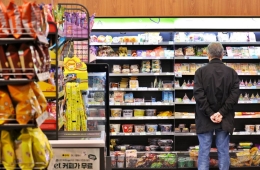
![[Image source=Yonhap News]](http://www.asiae.co.kr/news/img_view.htm?img=2023042613331811885_1682483598.jpg)
According to the Korea Real Estate Agency's commercial real estate rental trend survey for the first quarter on the 26th, the office rental price index was 100.66, up 0.25% from the previous quarter (100.41).
The rental price indices for medium-to-large, small-scale, and collective commercial complexes were 99.55, 99.25, and 99.59 respectively, down 0.32%, 0.60%, and 0.27% compared to the previous quarter. All types of commercial complex rental price indices remained below 100, failing to recover to pre-COVID-19 levels even after the easing of social distancing measures.
A representative from the Korea Real Estate Agency explained, "Office rents rose as new supply was limited and lease demand in major business districts remained strong, leading to an increase in the rental price index. Meanwhile, despite an overall increase in foot traffic in commercial districts after the endemic phase, the rental price index for all types of commercial complexes declined due to delayed domestic demand recovery and weakened consumer sentiment amid economic slowdown."

For offices, rents in the Seoul metropolitan area, including Seoul and Gyeonggi, showed an upward trend. The first-quarter rental price index rose in Seoul, Gyeonggi, and Jeju, but declined in other provinces, maintaining polarization. In particular, in Seoul, rents increased compared to the previous quarter in areas with strong demand and good accessibility, such as Dosan-daero and the Jamsil and Songpa commercial districts, reflecting rent increases in new contracts.
Medium-to-large commercial complexes had the highest rents in Seoul, Busan, and Gyeonggi, in that order. The first-quarter rental price index rose only in Seoul, increasing 0.30% from the previous quarter, driven by rent increases centered around the Apgujeong commercial district and the Ttukseom commercial district, which gained popularity through social media (SNS) and saw increased foot traffic.
Small-scale commercial complex rents were highest in Seoul, Busan, and Gyeonggi, in that order. The rental price index rose in Seoul, Jeju, and Daeseon.
Collective commercial complex rents were highest in Seoul, Gyeonggi, and Busan, in that order, with rents rising compared to the previous quarter only in Seoul and Gangwon. In Gangwon, rents increased 0.02% from the previous quarter as some long-term vacancies were resolved in the Sokcho Central Market and Wonju Innovation City commercial districts, which consistently attract tourists.
Looking at average rent per square meter, offices (average for 3 floors and above) were 174,000 KRW, up from the previous quarter. For commercial complexes (based on first floors), collective complexes were 268,000 KRW, medium-to-large 256,000 KRW, and small-scale 194,000 KRW. Only medium-to-large complexes saw an increase compared to the previous quarter, while collective and small-scale complexes maintained similar levels.
The investment yield, representing investment performance over three months of real estate holding, was 1.04% for offices, 0.69% for medium-to-large commercial complexes, 0.58% for small-scale commercial complexes, and 0.84% for collective commercial complexes, all declining from the previous quarter except for offices. Investment yield is calculated by summing income yield and capital yield.
Income yield, indicating rental income, was 0.98% for offices, 0.85% for medium-to-large commercial complexes, 0.77% for small-scale commercial complexes, and 1.04% for collective commercial complexes.
Capital yield, indicating asset value changes, was 0.06% for offices, -0.15% for medium-to-large commercial complexes, -0.19% for small-scale commercial complexes, and -0.20% for collective commercial complexes.
Compared to the previous quarter, income yields generally remained stable, but investment yields declined across all commercial complex types except offices due to asset value decreases caused by market contraction and reduced investment demand amid sustained high interest rates.
The nationwide average office vacancy rate was 9.5%, slightly up from the previous quarter due to increased vacancies in existing offices caused by new supply in business districts such as Gangnam in Seoul, as well as manufacturing export sluggishness and regional economic downturns in areas like Gyeongnam.
Hot Picks Today
!["Only the Top 1% Winning Big in Stocks Smile... '300 Million Won Splurges' or '10-Won Wars,' the Middle Disappears [K-Shaped Consumption Era]①"](https://cwcontent.asiae.co.kr/asiaresize/93/2026042114121434484_1776748334.png) "Only the Top 1% Winning Big in Stocks Smile......
"Only the Top 1% Winning Big in Stocks Smile......
- "If Relocated, I'll Resign"?40% of Millennial and Gen Z Employees Threaten to Qu...
- "Left Even Their Phones Behind: 11 U.S. Scientists Dead or Missing, Prompting Po...
- Female Game Caster Makes Bold Move After Criticism Over "Short Skirt" on Broadca...
- Couple Secretly Making Love on Mountain Summit... Broadcast Live on the Internet
For commercial complexes, the nationwide average vacancy rates were 13.3% for medium-to-large, 6.9% for small-scale, and 9.3% for collective complexes. Despite factors activating commercial districts after the endemic phase, commercial complex vacancy rates remained generally stable amid mixed concerns over economic slowdown and weakened consumer sentiment.
© The Asia Business Daily(www.asiae.co.kr). All rights reserved.




![Is This a Boom or a Recession? Queues for Both Luxury and Bargain Goods [K-Shaped Consumption Era]](https://cwcontent.asiae.co.kr/asiaresize/307/2026042114133834494_1776748418.png)