[Shaken Public Institutions] Stalled Appointment Process... One in Four Faces a Leadership Vacuum
![[Shaken Public Institutions] Stalled Appointment Process... One in Four Faces a Leadership Vacuum](http://www.asiae.co.kr/news/img_view.htm?img=2026042109462733913_1776732387.jpg)
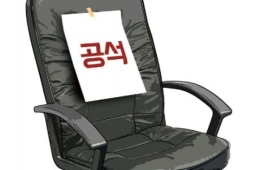
Recently, the appointment of public institution heads has been accelerating, yet one out of every four public institutions is still experiencing a leadership vacuum at the top.
On April 21, The Asia Business Daily analyzed 342 public corporations, quasi-governmental institutions, and other public organizations designated as public institutions this year. The analysis found that 36 institutions (10.5%) currently have vacant leadership positions. In 32 institutions (9.3%), the previous head whose term has expired is still acting as interim leader, and in another 17 institutions (5%), the term of the current head is set to expire in the first half of the year. In total, 85 institutions (24.8%) are facing confusion due to a lack of leadership.
Among the institutions with vacant leadership, the largest number are directly related to the public’s daily life and the economy, such as the National Railroad Authority, Korea Land and Housing Corporation (LH), Korea Expressway Corporation, Incheon International Airport Corporation, Korea Airports Corporation, Korea Industrial Manpower Corporation, and Korea Creative Content Agency. While these public institutions are closely tied to the government’s state affairs agenda, a prolonged leadership vacuum makes it inevitable that there will be disruptions in fully launching major projects, as well as in personnel and organizational management.
Korea Land and Housing Corporation (LH), which is supposed to spearhead the Lee Jaemyung administration’s plan to expand public housing supply, has been operating under an unprecedented extended interim leadership. At organizations like the Korea Technology Finance Corporation, Korea Gas Corporation, and KEPCO KPS, heads whose terms have expired are continuing to lead their respective organizations.
![[Shaken Public Institutions] Stalled Appointment Process... One in Four Faces a Leadership Vacuum](http://www.asiae.co.kr/news/img_view.htm?img=2026042110012533973_1776733285.jpg)
There are also a significant number of institutions that have failed to appoint a new leader for nearly two years. Both major airport corporations are without a president; in the case of Korea Airports Corporation, the leadership vacuum has persisted since former president Yoon Hyeongjung resigned in April 2024, during the Yoon Suk Yeol administration.
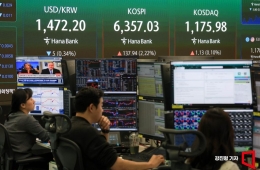
Each public institution with a vacant leadership post is eager for a swift appointment, but some predict that the leadership gap could last even longer due to the ongoing trend of mergers, closures, and reforms in the public sector. There are also concerns that after the local elections coming up in June, appointments could become a continuation of rewarding political allies and close associates. If the leadership vacuum continues amid a global supply chain crisis caused by the escalating Middle East war, as well as external economic challenges such as a strong dollar and high inflation, the Lee Jaemyung administration’s ability to govern may be further weakened.
Hot Picks Today
!["Only the Top 1% Winning Big in Stocks Smile... '300 Million Won Splurges' or '10-Won Wars,' the Middle Disappears [K-Shaped Consumption Era]①"](https://cwcontent.asiae.co.kr/asiaresize/93/2026041409371024802_1776127030.jpg) "Only the Top 1% Winning Big in Stocks Smile......
"Only the Top 1% Winning Big in Stocks Smile......
- "If Relocated, I'll Resign"?40% of Millennial and Gen Z Employees Threaten to Qu...
- "Finally Coming"... Samsung Electronics, SK hynix 2x Leveraged ETF to Be Listed ...
- Female Game Caster Makes Bold Move After Criticism Over "Short Skirt" on Broadca...
- Couple Secretly Making Love on Mountain Summit... Broadcast Live on the Internet
Some experts argue that to resolve the chronic leadership vacuum at public institutions, which has recurred with every administration, the president’s exclusive authority over appointments must be reduced. Kang Minseong, professor of public administration at Kyung Hee University, pointed out, “The president holds appointment authority for more than 2,000 posts, intervening in personnel decisions not only for central government ministers and vice ministers, but also for public institutions, national think tanks, and even regional party committee chairs.” He added, “We need to consider whether it is appropriate for the president to be responsible for appointments in such highly specialized fields.”
© The Asia Business Daily(www.asiae.co.kr). All rights reserved.



!["They Said It Was 'Delicious' Milk... Is the 'List of Fake Milk Products in Korea' for Real? [Matjal X-File]"](https://cwcontent.asiae.co.kr/asiaresize/307/2023072413274517286_1690172865.jpg)