Naphtha crisis hits banana ripening process
Concerns over impact on overall food sector including fruits and processed foods
Concerns over impact on overall food sector including fruits and processed foods

by Seo Jiyeong
by Choi Yujeong
Published 20 Apr.2026 14:29(KST)
The aftermath of the Middle East war is shaking the Japanese economy in unexpected ways. As instability in crude oil supply goes beyond simply driving up energy prices and starts to affect the entire food distribution system, concerns have emerged that even the supply of bananas-a typical low-cost fruit-may be impacted. In particular, if the blockade of the Strait of Hormuz becomes prolonged, it is increasingly likely to place a burden on the overall supply of daily consumer goods.
On April 19, the Sankei Shimbun reported, "The unstable crude oil supply is spreading into unexpected areas," citing bananas as a primary example. Japan relies heavily on banana imports, and in accordance with quarantine regulations, imports them in an unripe state before completing the ripening process domestically.
The core issue is that ethylene gas, essential for the ripening process, is produced from naphtha. If the supply of naphtha-extracted from crude oil-is disrupted, the ripening process will be delayed, which could immediately lead to distribution problems. Industry insiders have expressed concerns that if securing naphtha becomes difficult, the shipment of bananas may also be delayed.
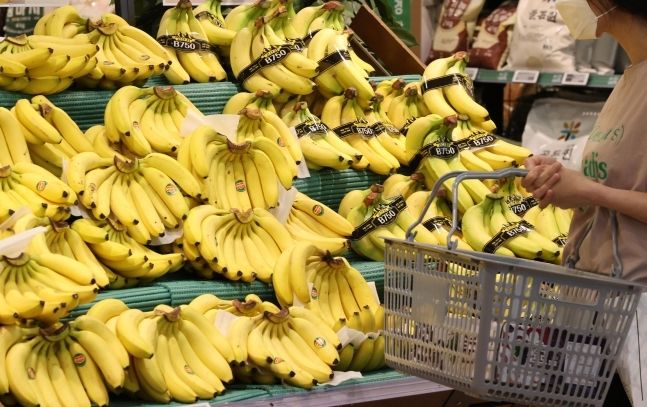
Moreover, this impact is not limited to bananas. All imported fruits requiring ripening, such as kiwis and avocados, could be similarly affected, raising the possibility of widespread supply instability in the fruit market as a whole.
The ripple effect is also expected to reach processed foods. Vanillin, the ingredient responsible for vanilla flavor in products like ice cream and chocolate, is also produced through a naphtha-based chemical process.
In particular, synthetic vanillin is much more cost-effective than natural flavoring and is widely used in low-priced product lines. If the supply of raw materials becomes unstable, production of related products is expected to face inevitable disruptions. This, in turn, could contribute to an increase in consumer-perceived prices.
The Sankei Shimbun noted, "Because the price difference between artificial vanillin (which utilizes a benzene ring) and natural flavoring is significant, the supply of affordable products is likely to be disrupted," adding, "What is needed is to conserve petroleum in everyday life."

The impact of the Hormuz blockade is expected to extend to processed foods such as ice cream. Pixabay
원본보기 아이콘Although Japan maintains a certain level of oil reserves, market experts point out that psychological anxiety over supply stability can be a greater variable than physical inventory.
If crude oil prices continue to rise, companies and consumers may move preemptively to secure supplies, potentially triggering so-called "panic demand." This could fuel further instability in the distribution market, regardless of the actual supply situation.

Seo Jiyeong zo2zo2zo2@asiae.co.kr
Choi Yujeong yjchoi@asiae.co.kr
© The Asia Business Daily(www.asiae.co.kr). All rights reserved.

!["They Said It Was 'Delicious' Milk... Is the 'List of Fake Milk Products in Korea' for Real? [Matjal X-File]"](https://cwcontent.asiae.co.kr/asiaresize/323/2023072413274517286_1690172865.jpg)


!['Record-High Net Profit' TSMC to Invest KRW 82 Trillion in Facilities This Year [Taiwan Chip Communication]](https://cwcontent.asiae.co.kr/asiaresize/304/2026011515434793142_1768459427.jpg)