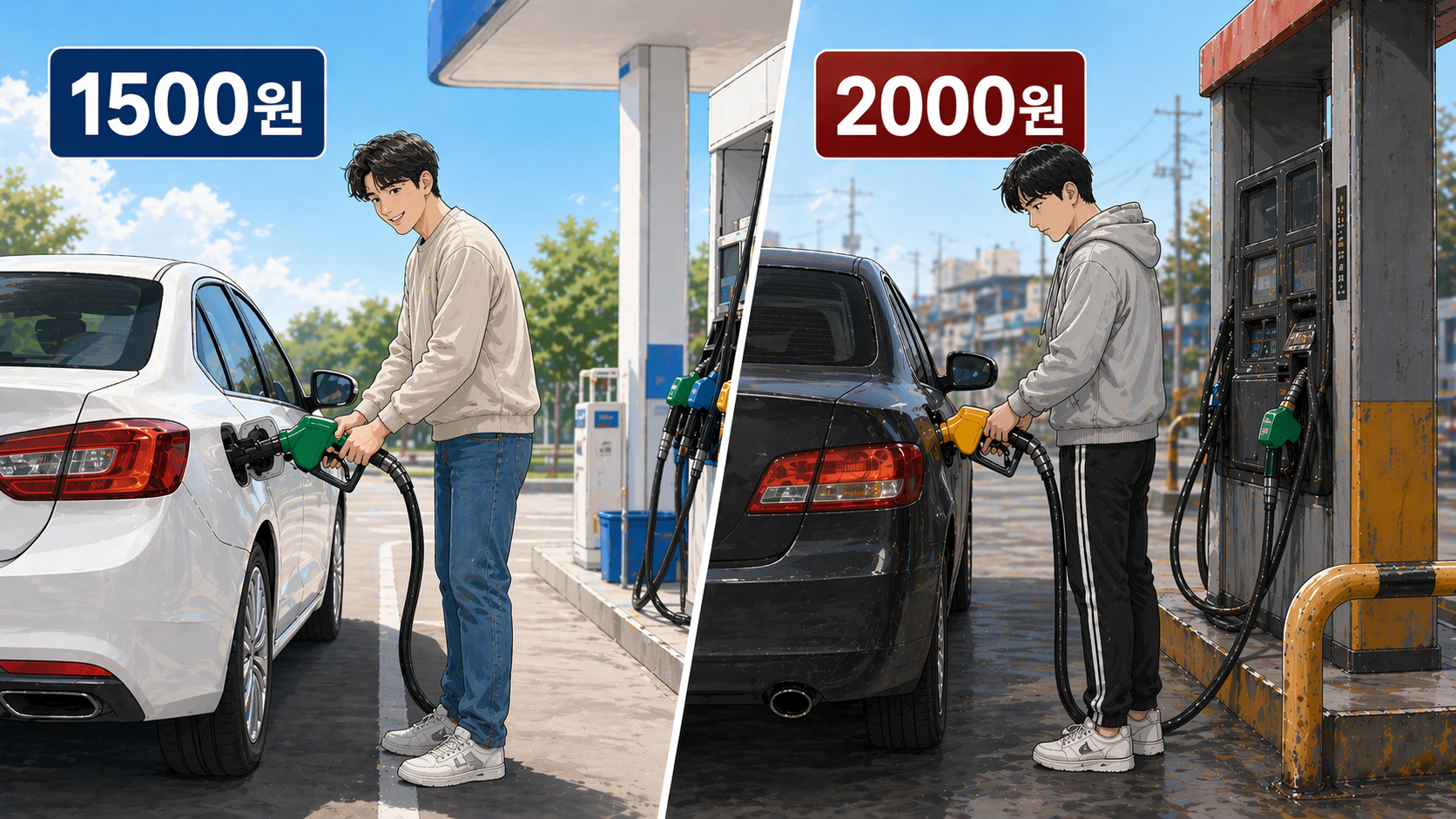
As the Middle East war continues and international oil prices skyrocket, Korea's petroleum product prices remain relatively high compared to Japan and the United States. In particular, while gasoline prices in Korea have surpassed 2,000 won per liter, Japan, under the influence of government subsidies, has maintained a lower price in the 1,500 won range, clearly highlighting the price gap resulting from policy differences.
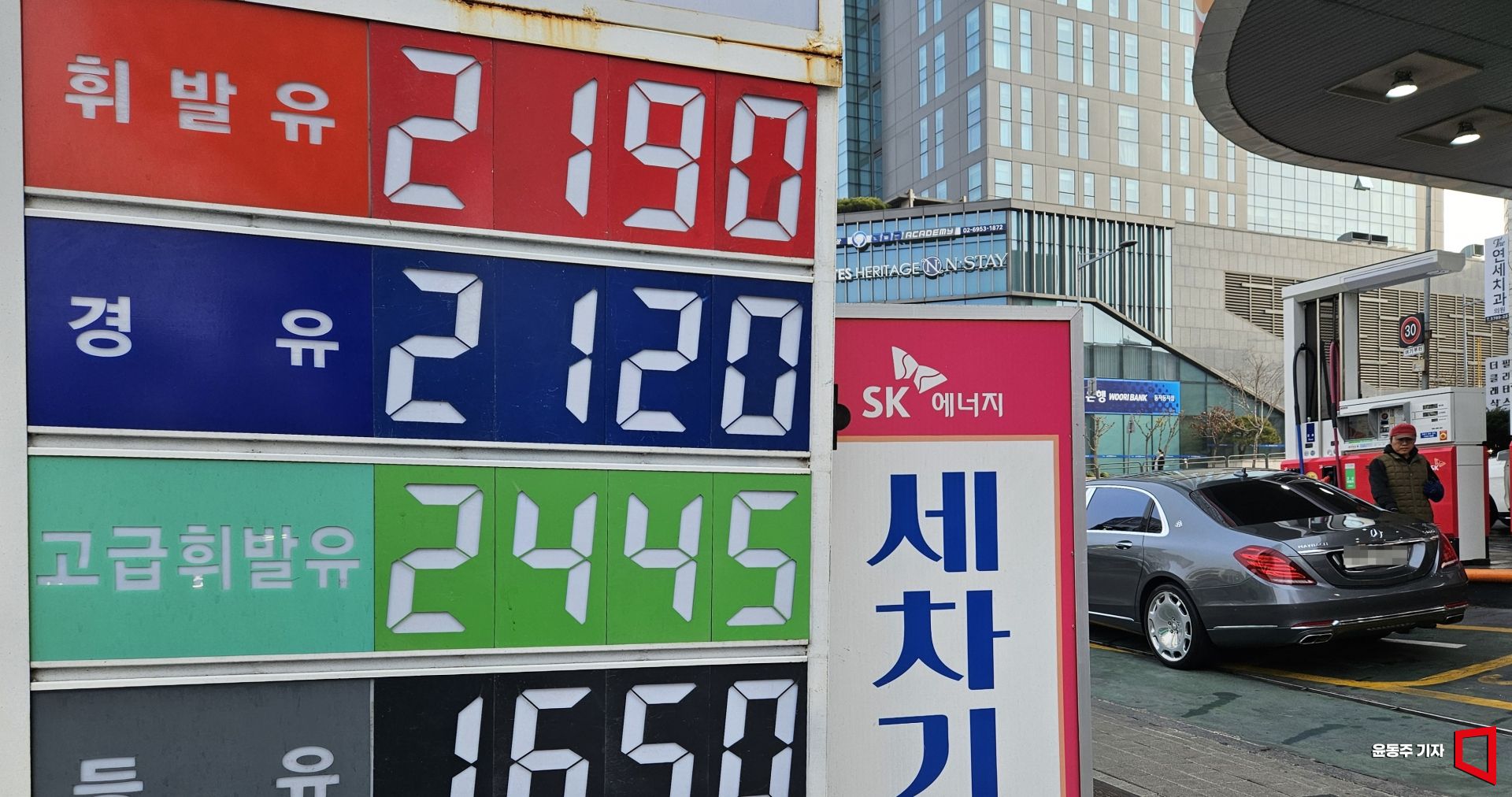
According to the Ministry of Trade, Industry and Energy on April 21, the domestic gasoline price as of that day was 2,003.17 won per liter, and diesel stood at 1,996.76 won. These figures represent increases of 18.4% and 25.0%, respectively, compared to February 27, before the war.
In contrast, as of April 19, Japan's gasoline price was 1,527 won per liter and diesel was 1,432 won, which are 23.8% and 28.3% lower than Korea's prices, respectively. The rate of increase since February 27 was only 7.28% for gasoline and 9.4% for diesel. This is attributed to the Japanese government's use of fuel tax subsidies to keep prices at a certain level.
South Korea implemented a highest price system but the increase rate is more than double that of Japan Government: "Focusing on managing the rate of increase not excessively suppressing prices"
In Japan, prices remain low at around 1500 yen due to government subsidies
A notice showing gasoline and diesel prices is placed at a gas station in Yongsan-gu, Seoul. Photo by Dongju Yoon
Yang Kiuk, Director General for Industrial Resource Security at the Ministry of Trade, Industry and Energy, explained at a daily briefing of the Middle East War Response Headquarters on April 21, "Although Korea implemented a price ceiling system, our rate of increase is more than twice that of Japan," adding, "As far as I know, Japan continues to inject significant subsidies."
The situation in the United States is somewhat different. As of April 20, the gasoline price stood at 1,586 won per liter-20.8% lower than in Korea-while diesel was 2,170 won, or 8.7% higher. This is interpreted as a reflection of differences in demand for logistics fuels and refining margins within the United States.
This comparison also serves as an indirect rebuttal to recent criticism regarding artificially suppressing prices through tax injections. Unlike Japan, which maintains low prices through large-scale subsidies, Korea has focused on managing the pace of price increases using the price ceiling system and fuel tax adjustments.
Yang emphasized, "Given the significant differences in price levels and rates of increase among countries, it is necessary to assess whether Korea is excessively suppressing prices through the price ceiling system by comparing with cases in other countries."
Meanwhile, as concerns grow over a potential supply disruption of ethylene gas-a key raw material for shipbuilding-HD Hyundai has taken steps to produce and supply it independently.
Ethylene gas, essential for the initial steel plate cutting process in shipbuilding, is produced by high-temperature cracking of naphtha. Recently, the instability in Middle Eastern supply chains has raised the possibility of supply disruptions.
In response, since mid-March, the Ministry of Trade, Industry and Energy has taken measures to supply the necessary quantities for process continuity through cooperation with the shipbuilding and chemical industries, while the industry itself has also been making efforts to improve usage efficiency.
HD Hyundai, through its chemical affiliate HD Hyundai Chemical, has developed a plan to produce and procure ethylene gas independently. The company will ship 2,000 tons of ethylene produced at the Daesan Petrochemical Complex in South Chungcheong Province by carrier vessel to the vicinity of its Ulsan shipyard.
This shipment is expected to arrive in early May, after which it will be supplied sequentially to HD Hyundai's affiliated shipyards and partner construction sites. Notably, approximately 200 tons of the total amount will also be supplied to small and medium-sized shipbuilders.
Through this measure, the government aims to alleviate short-term concerns over supply stability and strengthen its response system based on cooperation within the industry. Yang stated, "We will continue to expand public-private cooperation to ensure that no production disruptions occur even amid supply chain instability."



![[Report] "A Culinary Destination with a View of Gyeongbokgung"... Kim Dong-sun's High-End Dining Takes Over Gwanghwamun](https://cwcontent.asiae.co.kr/asiaresize/304/2026042114562634571_1776750985.jpg)
![[Gallery Stroll] Red Robe, Black Lines... Danjong Returns with the Face of Wounds](https://cwcontent.asiae.co.kr/asiaresize/304/2026042014183532691_1776662315.jpg)