"Agricultural Material Supply Chain Shaken by War and Exchange Rates"... Science and Technology Must Provide the Solution
STEPI Warns of Reliance on Imported Feed and Fertilizer
Proposes Four Major Responses: AI, Stockpiles, New Materials, and More
The Science and Technology Policy Institute (STEPI) has assessed the agricultural materials supply chain crisis, which has been exacerbated by war and exchange rate fluctuations, and proposed science and technology-based response strategies. The analysis indicates that, given the entrenched reliance on imports for essential agricultural materials such as feed and fertilizer, changes in international conditions are directly leading to domestic agricultural cost crises.
In the recently published Issue 63 of its "Science and Technology Policy Brief," STEPI stated that the combined effects of the Russia-Ukraine war and the weakening of the Korean won are prolonging upward pressure on agricultural material prices. Lee Juryang, Senior Research Fellow at STEPI and author of the report, diagnosed that "the instability in essential agricultural material supply chains is structurally undermining the foundation of domestic agriculture."

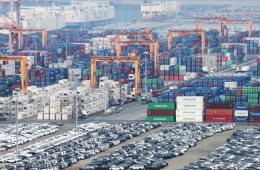
In reality, Korea relies on imports for more than 90% of its livestock feed, primarily from the United States, Brazil, and Ukraine, and depends entirely on imports for raw materials for inorganic fertilizers. In this situation, the combination of rising international raw material prices and exchange rate fluctuations is increasing the burden on farms to absorb higher costs. Notably, while production costs are rising, farmers are unable to easily raise selling prices, leading to a prolonged "cost-price squeeze" phenomenon that is eroding farm profitability.
The report called for a review of the agricultural material supply structure, which is vulnerable to external factors such as war and exchange rates, and proposed that it should be transformed based on science and technology.
"AI, Stockpiles, New Materials"... Urgent Need for Science and Technology-Based Response
The report presented four strategic directions for science and technology-based responses to address these structural problems. First, it emphasized the need to strengthen digital and artificial intelligence (AI)-based farm management infrastructure to simultaneously improve cost control and productivity.
It also recommended expanding research and development (R&D) on alternative feed materials such as insect protein and microalgae, and establishing a strategic stockpiling system linked to the sustainable aviation fuel (SAF) industry and grain processing (crush) industry. The idea is to create a "dual-use" structure that can be used for the energy industry under normal circumstances and converted for feed use in times of crisis.
Furthermore, it stressed the need to strategically allocate a portion of the 350 billion dollars in U.S. investments to overseas food procurement infrastructure, such as grain elevators, and to develop precision fertilization technology alongside strategic stockpiling of fertilizer raw materials. Precision fertilization is a technology that applies only the necessary amount of fertilizer according to crop and soil conditions, which can help reduce import dependence.
Hot Picks Today
 Chilling Timing "Did They Know Again?"... $640 ...
- Thailand and India Surpass 50%, but Korea Only at 37%... Falling Behind in the A...
- "Why Is My Chanel Wallet on Danggeun?"...High School Students Steal Luxury Goods...
- "Woke Up to a Strange Smell"...Both Feet Placed on KTX Front Armrest
- "I Can't Believe They're Real": Cockroaches Squirm Inside Transparent Jacket in ...
Senior Research Fellow Lee stated, "Food and agriculture are national strategic assets, and the power that sustains them is science and technology," adding, "It is necessary to shift from the current support-focused policies to a science and technology-based efficiency system."
© The Asia Business Daily(www.asiae.co.kr). All rights reserved.