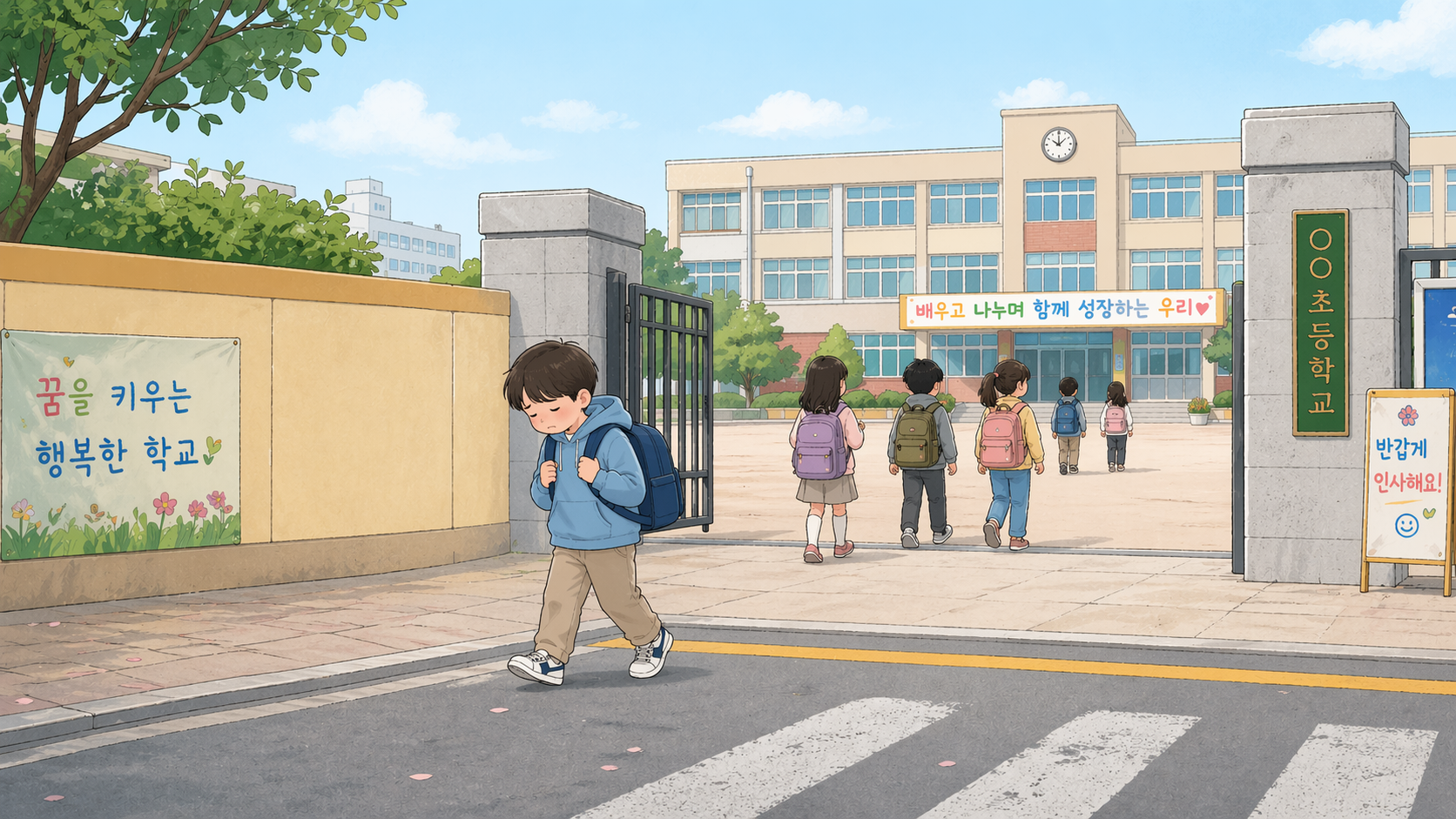
Korea Educational Development Institute Research on 'Importance of Early Intervention for Students in Crisis'
It has been found that more than 50,000 elementary, middle, and high school students drop out of school each year in South Korea due to school maladjustment, prolonged absences, and similar reasons. These at-risk students exhibit crisis factors in academic, psychological and emotional, and behavioral aspects, and these factors tend to accumulate over time. As a result, experts argue that support policies for at-risk students should focus more on early intervention rather than on post-factum responses.
On April 23, the Korea Educational Development Institute (KEDI) held an online press briefing and announced the findings of its research titled "Why Is Early Intervention Important for At-Risk Students in School?"
According to the report, the number of students who dropped out of school due to maladjustment or prolonged absences reached 54,516 in 2024. Due to factors such as the COVID-19 pandemic, the number of dropouts, which was around 32,000 in 2020, increased rapidly to 52,981 in 2022 and 55,615 in 2023, consistently exceeding 50,000 each year.

Academic crises manifest as psychological and emotional crises such as depression and stress, and are also expressed in behavioral crises like truancy and excessive online gaming addiction.
Various risk factors accumulate over a prolonged period, ultimately increasing the risk of dropping out of school.
Situations worsen over time, urgent need to establish an early intervention system Photo by Getty Images Bank
Lee Seungjoo, Associate Research Fellow at KEDI, stated, "Although support policies and related programs for at-risk students, such as the 'dropout consideration period' and 'in-school alternative classrooms,' have been in place for quite some time, there have been criticisms in the field that these policies focus more on post-event remedies rather than on early prevention." He continued, "Given that student crises can have long-term negative impacts extending into adulthood, early intervention and systematic preventive support for at-risk students are essential." He further emphasized, "It is important to thoroughly analyze the characteristics and causes of student crises in order to clearly identify policy intervention points. In particular, approaches to at-risk students should go beyond isolated incidents or temporary difficulties and should be addressed from a more structural and longitudinal perspective."
Associate Research Fellow Lee also analyzed that student crises rarely manifest in a single form; rather, various crisis indicators overlap and appear in complex ways. For example, academic crises such as low enthusiasm for learning and decreased school satisfaction often coincide with psychological and emotional crises such as depression or stress, and may also be expressed alongside behavioral crises like truancy or excessive online gaming. He said, "The risk of dropping out is not formed over a short period of time, but rather intensifies gradually as these various risk factors accumulate over the long term, ultimately leading to a higher risk of dropping out of school."

When the types of crises are classified into three categories-academic (enthusiasm for learning, academic motivation), psychological and emotional (depression, anxiety, sense of happiness), and behavioral (attitude in class, rule compliance)-and the cumulative effects over time are examined, crisis states tend to be sustained and accumulate. If a student is currently in a 'high' crisis state, the probability of remaining at a 'high' level one year later is 53.3% for academic crises, 30.9% for psychological and emotional crises, and 32.3% for behavioral crises. Overall, the probability of maintaining the current crisis level is high. Associate Research Fellow Lee explained, "This shows that crisis states have a strong tendency to persist over time, and once a crisis level is established, it is likely to continue into the next academic year."

Among the individual factors affecting crises, students' subjective perception-specifically, their sense of understanding the class-was found to have a greater impact than their actual academic achievement. In addition, lower income levels were associated with higher psychological and emotional crises, but the increasing level of crisis was also observed among students from high-income families. Meanwhile, the relationship with teachers emerged as a key protective factor in alleviating students' overall crises. This demonstrates that teachers play a role beyond simply transmitting knowledge, influencing students' academic, psychological and emotional, and behavioral well-being as a whole.
Associate Research Fellow Lee analyzed, "The cumulative effect of crises was much greater when multiple crisis areas interacted, rather than acting individually." He continued, "Short-term remedies or interventions targeting a single area are not sufficient. This indicates the need for a system in which early detection, rapid intervention, and multidimensional integrated support operate continuously." He suggested the following: ▲Establishment of an early detection system for complex crises ▲Advancement of psychological and emotional assessments ▲Strengthening of multilayered support systems involving parents, teachers, and local communities ▲Long-term recovery support and continuity enhancement.
-

Reporter Oh Jooyean moon170@asiae.co.kr
-
Edit Choi Yujeong yjchoi@asiae.co.kr
© The Asia Business Daily(www.asiae.co.kr). All rights reserved.




![[Beijing Motor Show 2026] Hyundai Aims for Revival After 24 Years in China With Major Shift to Eco-Friendly Vehicles](https://cwcontent.asiae.co.kr/asiaresize/304/2026042219371036736_1776854230.jpg)
![[Polpol News] President Lee’s Approval Rating Soars at 69%... People Power Party at 15%](https://cwcontent.asiae.co.kr/asiaresize/304/2026042309542537386_1776905665.jpg)