Yongin City Officials Study Semiconductors Intensively... "Securing Power Is Key to Industrial Complex Success"
Yongin City Holds "Semiconductor Competency Enhancement Training" for Public Officials
Special Lecture by Professor Hongjong Cho
Strategies for Building Power Systems Including LNG and SMR Presented
Mayor Lee Sang-il: "National Support for Power Grid Is Essential for the Success of the Semiconductor National Industrial Complex"
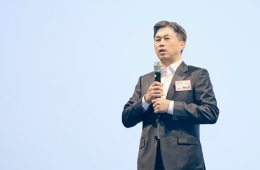
Yongin Special City in Gyeonggi Province (Mayor Lee Sang-il) announced on April 20 that it held a "Semiconductor Competency Enhancement Training" at Ace Hall in City Hall to strengthen the administrative response capabilities of city-affiliated public officials.

Lee Sangil, Mayor of Yongin Special City, is giving a greeting at semiconductor training for public officials on the 20th. Provided by Yongin City
View original imageThis training was organized to share key issues regarding the "ultra-large semiconductor ecosystem" currently being developed in Yongin—including the Wonsam-myeon Yongin Semiconductor Cluster General Industrial Complex (SK hynix), the Idong and Namsa-eup Advanced System Semiconductor National Industrial Complex (Samsung Electronics), and the Giheung Samsung Electronics Future Research Complex—and to improve public officials' understanding of the many outstanding challenges, such as power infrastructure.
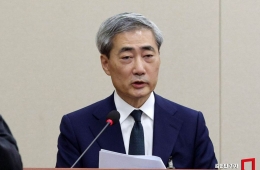
Mayor Lee Sang-il and city officials attended the training, with Professor Hongjong Cho from the Department of Economics at Dankook University delivering the lecture.
Professor Cho, an expert in the energy and power sector, currently serves as a member of the 12th Basic Plan for Electricity Supply and Demand Committee at the Ministry of Climate, Energy, and Environment, a policy advisory member to the Minister of Trade, Industry and Energy, and president of the Korea Resource Economics Association. He provided an in-depth analysis of strategies for building semiconductor clusters and power infrastructure.
In his lecture, Professor Cho explained the surge in power demand stemming from the spread of artificial intelligence (AI), as well as global energy policy trends responding to this shift. He emphasized, "In the AI era, industrial competitiveness ultimately depends on the ability to secure power."

Lee Sang-il, mayor of Yongin Special City, is attending a semiconductor training session for public officials on the 20th and asking questions. Provided by Yongin City
View original imageHe highlighted cases in which major countries such as the United States and China are expanding data centers and power infrastructure as part of their national strategies, and pointed out that building an "integrated power infrastructure"—encompassing electricity generation, transmission networks, and energy storage facilities—is a crucial factor determining the competitiveness of advanced industries like semiconductors and AI.
Professor Cho stated, "Globally, national support is being focused on securing leadership in AI data centers and the semiconductor industry by building power generation and transmission networks. As industrial competition is expanding into a competition over energy infrastructure, it is essential for Korea to be aware of this crisis and respond proactively."
Regarding power supply for the Yongin Semiconductor Cluster, he explained, "The semiconductor industry cannot tolerate even a single power outage," emphasizing the importance of stable power supply.
If power supply is either insufficient or excessive, it can lead to system instability and blackouts. He noted that renewable energy sources, which have been expanding recently, are highly volatile and cannot guarantee stable power supply; therefore, it is necessary to secure additional power sources that can complement renewables.

Yongin Special City invited Professor Hongjong Cho of Dankook University on the 20th to conduct semiconductor education for public officials. Provided by Yongin City
View original imageAccordingly, he stressed that "to address the volatility of renewables and the imbalance in power supply and demand, it is necessary to build a 'flexible power operation system' that combines traditional energy sources such as coal and nuclear power with renewables and energy storage facilities."
He further stated that, for a stable power supply to the Yongin Semiconductor Cluster, "it is essential to promptly expand power generation facilities, such as new LNG combined cycle power plants, as well as to construct transmission lines and establish or expand substations to build up the power grid infrastructure."
He also proposed leveraging the West Coast region, including Pyeongtaek and Dangjin, as an alternative power supply source. In the long term, he suggested that it is necessary to consider introducing future energy sources such as small modular reactors (SMR) in order to ensure both the stability and scalability of power supply.
Mayor Lee Sang-il actively participated in the training, listening from start to finish with staff and engaging with the lecturer by asking questions.
Hot Picks Today
 "Six Months After 'Mom's Touch Troublesome Woma...
- Popcorn Container Craze at Theaters Sparks Sell-Out Frenzy, Emerges as New Reven...
- "With This Certificate, Even Those in Their 60s Can Get Hired and Earn 3.69 Mill...
- Korean Bar Association Selects Four Outstanding Lawyers Including Min Kyungsik a...
- Female Game Caster Makes Bold Move After Criticism Over "Short Skirt" on Broadca...
Mayor Lee stated, "I am deeply grateful to Professor Hongjong Cho for his highly engaging and professional lecture. It was a meaningful opportunity to learn a great deal about the semiconductor industry and power issues. Listening to an expert's explanations not only deepened my understanding of the related fields but also increased my sense of responsibility and concern regarding the competitive environment of the industry."

Yongin Special City is conducting semiconductor education for public officials on the 20th by inviting Professor Hongjong Cho from Dankook University. Provided by Yongin City
View original imageHe continued, "In a situation where global competition is intensifying, it is vital for everyone to fulfill their roles so that our semiconductor industry does not fall behind. The government must make special efforts, including persuading groups opposing transmission lines, to ensure that advanced system semiconductor national industrial complex projects in Yongin proceed as planned and without setbacks."
© The Asia Business Daily(www.asiae.co.kr). All rights reserved.



!["They Said It Was 'Delicious' Milk... Is the 'List of Fake Milk Products in Korea' for Real? [Matjal X-File]"](https://cwcontent.asiae.co.kr/asiaresize/307/2023072413274517286_1690172865.jpg)