
!["They Said It Was 'Delicious' Milk... Is the 'List of Fake Milk Products in Korea' for Real? [Matjal X-File]"](http://www.asiae.co.kr/news/img_view.htm?img=2026042009273132007_1776644850.jpg)
!["They Said It Was 'Delicious' Milk... Is the 'List of Fake Milk Products in Korea' for Real? [Matjal X-File]"](http://www.asiae.co.kr/news/img_view.htm?img=2026041710404430220_1776390044.jpg)
!["They Said It Was 'Delicious' Milk... Is the 'List of Fake Milk Products in Korea' for Real? [Matjal X-File]"](http://www.asiae.co.kr/news/img_view.htm?img=2026041710573530277_1776391055.jpg)
!["They Said It Was 'Delicious' Milk... Is the 'List of Fake Milk Products in Korea' for Real? [Matjal X-File]"](http://www.asiae.co.kr/news/img_view.htm?img=2026041710412730226_1776390087.jpg)
!["They Said It Was 'Delicious' Milk... Is the 'List of Fake Milk Products in Korea' for Real? [Matjal X-File]"](http://www.asiae.co.kr/news/img_view.htm?img=2026042009590332165_1776646743.jpg)
!["They Said It Was 'Delicious' Milk... Is the 'List of Fake Milk Products in Korea' for Real? [Matjal X-File]"](http://www.asiae.co.kr/news/img_view.htm?img=2026042010025832174_1776646978.png)
In terms of nutrition, there is little difference in protein and calcium between raw milk and skimmed milk powder, and skimmed milk powder, which has had the fat removed, actually contains less fat and calories. However, fat-soluble vitamins such as vitamins A and D are likely to be removed during the high-temperature drying process that converts raw milk into skimmed milk powder. Additionally, processed milk often contains a high amount of sugar as sugar is added in large quantities to achieve certain flavors.
'Shocking! List of Fake Milk Products in Korea'
Recently, while browsing social networking services (SNS), I was startled by the title of a post. The post summarized a Consumer Research analysis of processed milk ingredients sold in 2017. Processed milk refers to dairy products made by adding flavoring, coloring, sugar, and other ingredients to raw milk freshly collected from dairy cows. The strawberry, chocolate, banana, and coffee milk drinks commonly seen on the market are mostly processed milk. While processed milk contains milk ingredients, some products do not contain any raw milk at all, so the post warned readers to check the ingredients before drinking.
▼
Ingredient Analysis of 50 Types of Strawberry, Chocolate, Banana, and Coffee Milk Drinks
5 Products with 0% Raw Milk... 57% of Products Contain 50% Raw Milk or Less
When you try to buy strawberry milk or chocolate milk at a convenience store, supermarket, or online, you will often see expressions highlighting the milk content. As a result, many consumers expect these drinks to be mostly raw milk. However, this is not always the case. In this edition of Matjal X-File, we analyzed the ingredients of 50 top-selling processed milk products-strawberry, chocolate, banana, and coffee milk-sold through online channels such as Coupang, Kurly, and Naver Shopping.
Among the 50 products surveyed, 8 manufacturers refused to disclose their raw milk content, so the analysis focused on the remaining 42 products. Of these, 5 products had 0% raw milk content. Four products in the Denmark Milk series produced by Dongwon F&B contained no raw milk at all. Instead, skimmed milk powder and whey powder were used. Binggrae's Royal Chocolate Milk, launched in February last year, also had 0% raw milk. Including these five, a total of 24 products-almost half of the products analyzed-contained 50% raw milk or less. Excluding the products where manufacturers refused disclosure, the proportion of products with 50% or less raw milk content reached 57%.
▼
Despite Advertising "Fresh Milk," Raw Milk Content Is Minimal
'Milk in Appearance Only'-No Legal Issues
The main source of consumer confusion is labeling. Most packages or online product names use the word "milk." It is also common to see detailed online product descriptions emphasizing that the item is a milk product. Sometimes, these descriptions claim that the manufacturer thoroughly manages raw milk, even for products with less than 20% raw milk content. Phrases like "fresh milk" and "Grade A raw milk from exclusive dairy farms" are frequently used in marketing, leading consumers to expect a high proportion of raw milk in these products.
Legally, even processed milk products that do not contain any raw milk can be labeled as "milk." This is because in 2012, the Ministry of Agriculture, Food and Rural Affairs ruled that processed milk could be labeled as milk if its composition was similar. As a result, ingredients such as skimmed milk powder, milk cream, or whey powder-derived from raw milk-are used in place of raw milk. Even products with 0% raw milk content can be labeled as "contains milk" on the ingredient list if they contain skimmed milk powder or similar ingredients.
▼
Skimmed Milk Powder Can Be Stored at Room Temperature for a Long Time, Making Storage and Distribution Convenient
Using Imported Skimmed Milk Powder Can Reduce Production Costs
Skimmed milk powder is a raw material made by removing fat from raw milk and then converting it into powder. Raw milk, being a fresh product, has a short shelf life and must be refrigerated. From a manufacturer's perspective, powdered skimmed milk, with its moisture removed, can be stored at room temperature for over a year, making storage and distribution much more convenient. This also lowers unit and storage costs. However, a dairy industry official explains, "Using skimmed milk powder instead of raw milk does not automatically reduce costs," adding, "If skimmed milk powder is produced from domestic raw milk, the price is almost the same as raw milk."
If imported skimmed or blended milk powder is used, production costs can be significantly reduced compared to using domestic raw milk. Among the 50 products surveyed, 35 used skimmed or blended milk powder, but only 9 used domestic powder. More than half of the products analyzed used imported milk powder, such as from the Netherlands. Industry sources note that Dutch milk powder, in particular, is three to four times cheaper than domestic powder due to the large production volume and lower manufacturing costs.
The dairy industry explains that adjusting the proportion of raw milk is not solely about reducing costs. Since the supply and taste of raw milk can vary by season, manufacturers use available ingredients and skimmed milk powder to ensure product consistency. For example, one manufacturer explained that, due to an oversupply of raw milk last year, it was converted to skimmed milk powder for storage, and the raw milk content in products was lowered while the proportion of skimmed milk powder was increased to use up this stock. The manufacturer added that once the skimmed milk powder stock is used up, the raw milk proportion in the product can be increased again.
The analysis of processed milk products showed that not all products had low raw milk content. Fourteen products contained more than 70% raw milk. Even products from the same manufacturer were sometimes differentiated based on raw milk content. Binggrae's flagship Banana Flavored Milk, popular among both Koreans and foreign tourists, contains 85.7% raw milk in the original flavor. The unsweetened version contains 80%, and the mini version contains 92%, with raw milk proportion varying according to size and formula. Namyang Dairy Products' popular Choco Emong and Strawberry Emong also have a "Milk Rich" series with increased raw milk content.
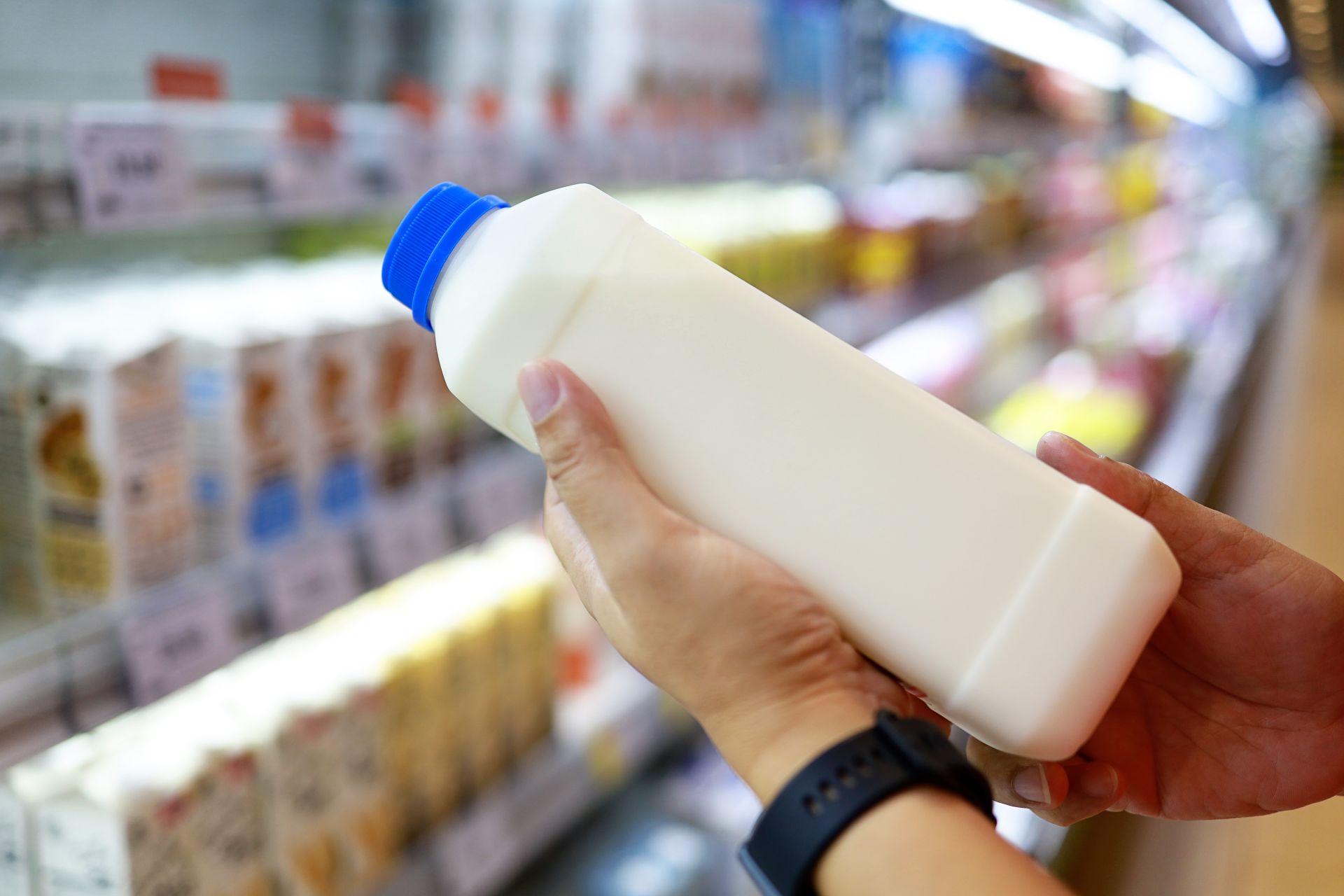
The raw milk content can be adjusted by the manufacturer depending on the production period, so it may vary with each production. Wise consumers need to carefully check the components such as raw milk content, sugar, and protein.
-

Reporter Jeong Hyunjin jhj48@asiae.co.kr
-
Edit Kong Sumin hyunhj@asiae.co.kr
© The Asia Business Daily(www.asiae.co.kr). All rights reserved.




!['Record-High Net Profit' TSMC to Invest KRW 82 Trillion in Facilities This Year [Taiwan Chip Communication]](https://cwcontent.asiae.co.kr/asiaresize/304/2026011515434793142_1768459427.jpg)