Middle East War Hits ICT... Government Launches 'Supply Chain Virtual Situation Room'
Emergency in Naphtha and Key Component Supply
Production Disruptions in IoT Manufacturing and
Urgent Review of Credit Risks for Small and Medium-Sized Companies
The aftermath of the Middle East war is spreading beyond crude oil and logistics to affect the entire domestic information and communications technology (ICT) supply chain. As instability in the supply of naphtha-based materials and key components intensifies, concerns are growing over production delays and declining yields in manufacturing fields such as the Internet of Things (IoT). In response, the government has launched a joint public-private "ICT Supply Chain Monitoring Virtual Situation Room" to establish a real-time response system.
On April 16, the Ministry of Science and ICT held an emergency meeting with related ICT agencies and major associations to assess the impact of the Middle East war on the ICT industry supply chain. About 15 participants attended the meeting, including representatives from the National IT Industry Promotion Agency (NIPA), the Institute for Information & Communications Technology Planning & Evaluation (IITP), and major ICT associations.

Reference photo to aid in understanding the article. A view of an oil refinery. The Asia Business Daily database
View original imageParticipants agreed that the impact of the war has gone beyond simple logistics delays and has become a structural burden throughout the entire manufacturing process. In particular, disruptions in the supply of naphtha-based materials and key components are causing production schedule delays and process instability in IoT manufacturing, leading to lower yields. Furthermore, rising raw material prices, maritime freight rates, and exchange rates are compounding concerns over worsening profitability.
In addition, the combination of high interest rates and growing uncertainty in order volumes has been identified as a major risk factor, especially for small and medium-sized ICT companies, as it could lead to tighter funding conditions and the spread of credit risks.
In response, the government has decided to operate the "ICT Supply Chain Monitoring Virtual Situation Room" with participation from related agencies and associations to monitor company conditions in real time. The scope of individual company surveys will be expanded to more precisely identify supply disruptions, financial burdens, and overseas logistics situations, and to build a robust, field-based support system.
At the same time, non-face-to-face export consulting services utilizing the "Global ICT Portal" will be strengthened. This measure is intended to expand digital-based support tools to ensure that export activities are not interrupted in the event that the war is prolonged and overseas sales activities are affected.
Hot Picks Today
 "Six Months After 'Mom's Touch Troublesome Woma...
- Popcorn Container Craze at Theaters Sparks Sell-Out Frenzy, Emerges as New Reven...
- "With This Certificate, Even Those in Their 60s Can Get Hired and Earn 3.69 Mill...
- Jae-yong Lee Snaps a Selfie with President Lee and Prime Minister Modi... Closer...
- Female Game Caster Makes Bold Move After Criticism Over "Short Skirt" on Broadca...
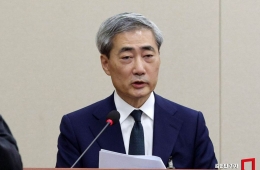
Lee Dokyu, policy chief at the Ministry of Science and ICT, said, "This meeting was meaningful in that it directly assessed the impact of the Middle East war on the ICT industry on site and explored possible response strategies," adding, "We will continue to develop practical support measures that companies can truly feel, through close cooperation with relevant ministries and agencies."
© The Asia Business Daily(www.asiae.co.kr). All rights reserved.



!["They Said It Was 'Delicious' Milk... Is the 'List of Fake Milk Products in Korea' for Real? [Matjal X-File]"](https://cwcontent.asiae.co.kr/asiaresize/307/2023072413274517286_1690172865.jpg)