"'Buul-gyeong' and Other Metropolitan Cities and Provinces Should Be Integrated... Revising Local Administrative System After 30 Years?"
Ministry Advisory Committee Announces "Recommendation for Reforming the Local Administrative System"
"Population of Non-Capital Metropolitan Cities to Decrease by 25% by 2052"
Need to Respond to Regional Extinction and Changes in Population Structure
Daegu-Gyeongbuk, Daejeon-Chungnam, and Busan-Gyeongnam are Pursuing Integration
A proposal has been made to reform the local administrative system that has been maintained for the past 30 years in order to address issues such as regional extinction and changes in population structure. It is explained that future environmental changes should be prepared for through local government integration, jurisdictional changes, and adjustment of local government functions.
On the 22nd, the Ministry of the Interior and Safety announced the "Recommendation for Reforming the Local Administrative System," prepared by the "Future-Oriented Administrative System Reform Advisory Committee (Future Committee)" composed of private experts. The Ministry launched the Future Committee last May, consisting of experts from various fields including local administration, urban planning, population, and future strategy. This was in response to criticisms that the current local administrative system, maintained for 30 years since the introduction of direct elections for local government heads in 1995, is inadequate to cope with problems such as population decline and regional extinction.

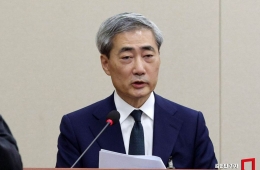
Hong Jun-hyun, Chairman of the Future-Oriented Administrative System Reform Advisory Committee, is briefing on the 'Future-Oriented Administrative System Reform Advisory Committee Administrative System Reform' recommendation at the briefing room of the Government Seoul Office in Jongno-gu, Seoul, on the afternoon of the 22nd. Photo by Ministry of the Interior and Safety
View original imageOn this day, the Future Committee presented eight reform plans for the local administrative system in terms of administrative districts, hierarchy, and functions, after a detailed analysis of changes expected over the next 20 years or more in population structure, economic structure, transportation and communication, and local finance.
The first proposal was the integration between metropolitan cities and provinces to shift from a unipolar system centered on the Seoul metropolitan area to a multipolar system.
By 2052, the total domestic population is expected to decrease to 46.27 million, and the population of non-capital metropolitan cities is projected to decline by about 25%. On the other hand, the concentration in the Seoul metropolitan area is expected to intensify, and if this continues, 53% of the total population will be concentrated in the capital area, which could lead to intensified competition, housing and employment instability, low birth rates, and accelerated aging, according to the Future Committee's analysis.
The Future Committee stated that through the integration of metropolitan cities and provinces, a super metropolitan area can be formed, and for administrative efficiency, a two-tier system of metropolitan and basic local governments should be maintained, along with active government support such as delegation of authority. Currently, Daegu-Gyeongbuk, Daejeon-Chungnam, and Busan-Gyeongnam are pursuing integration between cities and provinces.
The Future Committee also proposed the integration of cities, counties, and districts. If population decline continues, integration between autonomous districts will be necessary to maintain an appropriate scale for autonomous districts. In addition, changes in jurisdiction between special metropolitan cities and adjacent cities and counties were mentioned. It was explained that jurisdictional changes could be considered to incorporate areas with high regional development potential into adjacent special metropolitan cities.
Furthermore, the Future Committee raised tasks such as expanding non-capital hub large cities, adjusting local government functions, and revitalizing special local governments. Regarding the two-tier autonomous system consisting of metropolitan and basic levels, it was suggested that the conversion of autonomous districts to general districts and the transformation of cities and counties that find it difficult to maintain independent existence into administrative cities or counties should be considered.
Lastly, the Future Committee proposed simplifying the eup-myeon-dong system by designating eup for rural areas and dong for urban areas.
The Ministry of the Interior and Safety plans to establish a support team to promote the Future Committee's recommendations and prepare implementation plans through active opinion gathering.
Hot Picks Today
 "Six Months After 'Mom's Touch Troublesome Woma...
- Popcorn Container Craze at Theaters Sparks Sell-Out Frenzy, Emerges as New Reven...
- "With This Certificate, Even Those in Their 60s Can Get Hired and Earn 3.69 Mill...
- Jae-yong Lee Snaps a Selfie with President Lee and Prime Minister Modi... Closer...
- Female Game Caster Makes Bold Move After Criticism Over "Short Skirt" on Broadca...
At the briefing, Kim Min-jae, Deputy Minister of the Ministry of the Interior and Safety, said, "The recommendation for reforming the local administrative system was independently prepared by the Future Committee based on expertise in various fields, and through this announcement, it will be officially recommended to the government." He added, "Since reforming the local administrative system is an issue that greatly affects the entire autonomy system, sufficient opinion gathering and public consent are necessary. The Ministry of the Interior and Safety will receive the Future Committee's recommendations, review them at the government level, and prepare specific implementation plans to carry them out."
© The Asia Business Daily(www.asiae.co.kr). All rights reserved.



!["They Said It Was 'Delicious' Milk... Is the 'List of Fake Milk Products in Korea' for Real? [Matjal X-File]"](https://cwcontent.asiae.co.kr/asiaresize/307/2023072413274517286_1690172865.jpg)