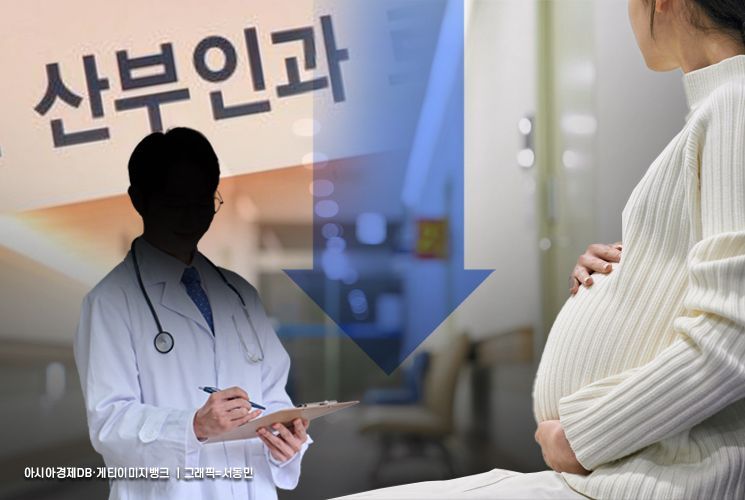


The disparity in infertility support among local governments is a challenge that must be addressed.
Editor's NoteWith the total fertility rate now at 0.72, a long line forms in front of renowned infertility clinics in Seoul. The unprecedented trend of low birth rates in both East and West seems almost irrelevant here. Last year, there were 250,000 infertility patients nationwide. In a reality where all medical infrastructure is concentrated in Seoul, infertile couples from regional areas who travel for "treatment expeditions" continue to suffer. Receiving treatment alone is already challenging, but regional disparities in healthcare block the path for couples desperately hoping for pregnancy and childbirth. In Korea, facing a low birth rate crisis, we take a closer look at the realities of regional couples undergoing treatment expeditions, filled with the determination to have children.
The infertility treatment subsidy program, a representative infertility policy, is being implemented differently in each region due to the absence of a control tower, and it has been confirmed that the central government is unable to even compile the details. Despite the policy involving a massive budget of several hundred billion won, information about the different implementations by region is scattered, and even the statistical standards vary, raising concerns that this will hinder the development of national-level infertility policies in the future. Given the growing importance of infertility policy amid the worsening low birth rate problem, there are increasing calls for the government to take charge and manage the issue in an integrated manner.

A counseling and information center for support related to infertility, pregnancy, and childbirth operated by the Seoul Metropolitan Government is established at the Dongdaemun District Public Health Center. Photo by Jo Yongjun
원본보기 아이콘Inconsistent Infertility Policy Data... Poor Statistical Management
The Ministry of Health and Welfare, when Asia Economy requested data related to the infertility treatment subsidy program from 17 metropolitan and provincial governments last month through an information disclosure request, responded that it was "information not held or managed by the agency due to decentralization since 2022." In other words, even though the national infertility treatment subsidy policy is being implemented simultaneously by the government and local governments, the Ministry of Health and Welfare, as the central agency, does not oversee the implementation details of local governments.
At the same time, the data items related to treatment subsidies managed by the 17 metropolitan and provincial governments also varied by local government. According to the investigation, the details of data held related to treatment subsidies?such as the number of infertility treatments supported, breakdown by artificial insemination or in vitro fertilization, number of recipients, and number of pregnancies through infertility treatment?differed from region to region. If statistical management, which forms the basis of policy decisions, is not properly carried out simply because each local government supports different aspects, it will be difficult to utilize the effects of existing policies when establishing future policies.
Kim Myunghee, president of the Korea Infertility Family Association, pointed out, "In the United States, the infertility market relies on private insurance or the free market, as it is not covered by medical insurance, but statistical management is legally conducted by the state. Accurate statistics are essential for properly managing how efficiently budgets are used and how medical institutions are operated."

A pamphlet containing information on support for infertility, pregnancy, childbirth, and postpartum care provided by the Seoul Metropolitan Government is available at the Dongdaemun-gu Public Health Center. Photo by Jo Yongjun
원본보기 아이콘"Same Citizens, But Discriminated"... Local Governments Pour Out Their Own Infertility Policies
"You say low birth rates are a national problem. Even if we live in different regions, we're all part of the same Korea. Isn't it a problem if citizens feel discriminated against just because they live in different places?" - Infertility patient A, who travels from a regional area to Seoul
The lack of integrated statistics on infertility treatment subsidies is a prime example showing that current domestic infertility policy is facing limitations due to the absence of a control tower. In reality, infertile couples from regional areas complain that the gap between government and local government support policies is a discouraging factor during treatment. While infertility treatment is essentially conducted nationwide, the representative infertility policy?the treatment subsidy program?was decentralized to local governments in 2022, resulting in each local government implementing different policies.
The national-level infertility treatment subsidy program began in 2006. Initially, it provided support for two rounds of in vitro fertilization (test tube baby) procedures within a limit of 1.5 million won per session to infertile couples with an average monthly income of less than 130% of urban workers. Over the years, the number of eligible recipients and the number of subsidized treatments steadily increased, and in 2017, health insurance was applied to infertility treatments. With the application of health insurance, in 2022, the treatment subsidy program was partially transferred from the national government to local governments, allowing local governments to autonomously decide the criteria and scale of support. Currently, the government and local governments provide infertility treatment subsidies in three categories: ▲health insurance ▲government type ▲local government type.
Controversy over regional disparities in infertility policy arose immediately after decentralization. Differences began to emerge in the criteria for treatment subsidy eligibility and the scale of support by local government. Excluding health insurance, which applies equally to all infertile couples, the government-type and local government-type supports?which cover non-insured items and out-of-pocket medical expenses?differ by local government. As controversy over regional disparities in the government-type support grew, the Ministry of Health and Welfare held discussions with all 17 metropolitan and provincial governments last year and adjusted the policy so that all income criteria would be abolished starting this year.
Different Subsidies by Local Government..."Infertility Is a National Issue"
However, regional disparities remain in both government-type and local government-type supports. According to Asia Economy's review of responses to information disclosure requests and publicly available information from the 17 metropolitan and provincial governments, only 7 out of 17 removed all age and income restrictions and barriers by treatment type for government-type subsidies for infertile couples. The remaining 10 set age limits at 45 or maintained restrictions on the number of supported procedures depending on the method (artificial insemination or in vitro fertilization?fresh or frozen embryo transfer).
In the cases of North Gyeongsang, Gwangju, Daegu, South Jeolla, and North Jeolla, five metropolitan and provincial governments provide additional subsidies for infertility treatment by securing their own funds, in addition to health insurance and government-type support. For example, in Daegu, women aged 44 or younger who have lived in the city for more than six months and undergo in vitro fertilization with fresh embryos can receive up to 1.7 million won per session (up to 16 sessions). This means an additional 600,000 won per session is provided on top of the government-type support for women with the same conditions.
The Korean medicine infertility support program, newly established this year through the revision of the Mother and Child Health Act, also shows significant differences by local government in terms of whether support is provided, the scale, number of sessions, and eligibility. Before the law was revised, local governments often enacted separate ordinances to implement such policies. Currently, 10 metropolitan and provincial governments, including Gyeonggi, operate Korean medicine infertility support programs, while Gangwon and North Chungcheong provide support for Korean medicine infertility treatment in some cities within their jurisdictions.
While the government has established procedures for discussing the decentralization of some infertility support policies, local governments must request consultations with the Ministry of Health and Welfare regarding changes or expansions to their infertility support systems for final approval and implementation. According to data received by Kim Mi-ae, a member of the National Assembly's Health and Welfare Committee from the Ministry of Health and Welfare, local governments requested 37 consultations with the ministry regarding infertility-related social security systems between January 1 and September 10 of this year, with 17 completed. Most of the consultations concerned adjustments to the infertility treatment subsidy program, while others discussed support for male infertility treatment, transportation costs, and the establishment of Korean medicine infertility support programs.

However, there is ongoing criticism that these procedures alone are insufficient to resolve disparities between local governments. As financial conditions differ by region, the degree of policy benefits received by infertile couples also varies. The National Assembly Budget Office, in its evaluation report on fiscal decentralization and local transfer projects last year, stated, "As the infertility treatment subsidy program was decentralized, differences in financial burden and local government preferences have led to disparities in support benefits by region," and emphasized, "It is important to recognize that infertility is a national, not a regional, issue."
Efforts are underway to address policy inefficiencies arising from the introduction of separate infertility support systems by the government and local governments. Earlier this month, the Anti-Corruption and Civil Rights Commission requested data submissions from local governments nationwide to investigate the current status of infertility support systems for institutional improvement. In addition, a survey is being conducted on the National Petition Portal, asking questions such as "Do you think there are differences in access to infertility medical institutions depending on the region you live in, such as the metropolitan area?" An official from the Anti-Corruption and Civil Rights Commission explained, "We are pursuing institutional improvements to address administrative inefficiencies and inconveniences, such as the excessive submission of documents required to use the infertility support system."
IndexDifficult Business Conditions
- As Marriage and Pregnancy Are Delayed, 1 in 7 Couples Faces Infertility
- "Six Hours of Travel for Just Ten Minutes of Infertility Treatment: Couples Are Growing Weary"
- On the Way to Seoul to Have a Baby... Feels Like the 'Punishment of Sisyphus'
- Why Fertility Doctors Are Boarding Flights to Jeju Island...
- "They Said on Online Forums... You Absolutely Have to Go to a Famous Hospital"
- "Infertility Clinic Evaluation System? I Didn't Even Know That Existed"
- Even the Government Doesn't Know... Flaws in the Infertility Treatment Support Program for Couples
- Local Governments' Infertility Treatment Support Exceeds 100 Billion Won... Gyeonggi Ranks First
- Central Government to Integrate Infertility Policies... Need for Standardized Services Across Regions
-

Reporter Jeong Hyunjin jhj48@asiae.co.kr
-
Edit Sung Kiho kihoyeyo@asiae.co.kr
© The Asia Business Daily(www.asiae.co.kr). All rights reserved.





![[Reportage]"It Only Leads to Arguments"... Chungnam's True Sentiments Hide Deeper After Martial Law](https://cwcontent.asiae.co.kr/asiaresize/304/2026051223490460082_1778597344.jpg)