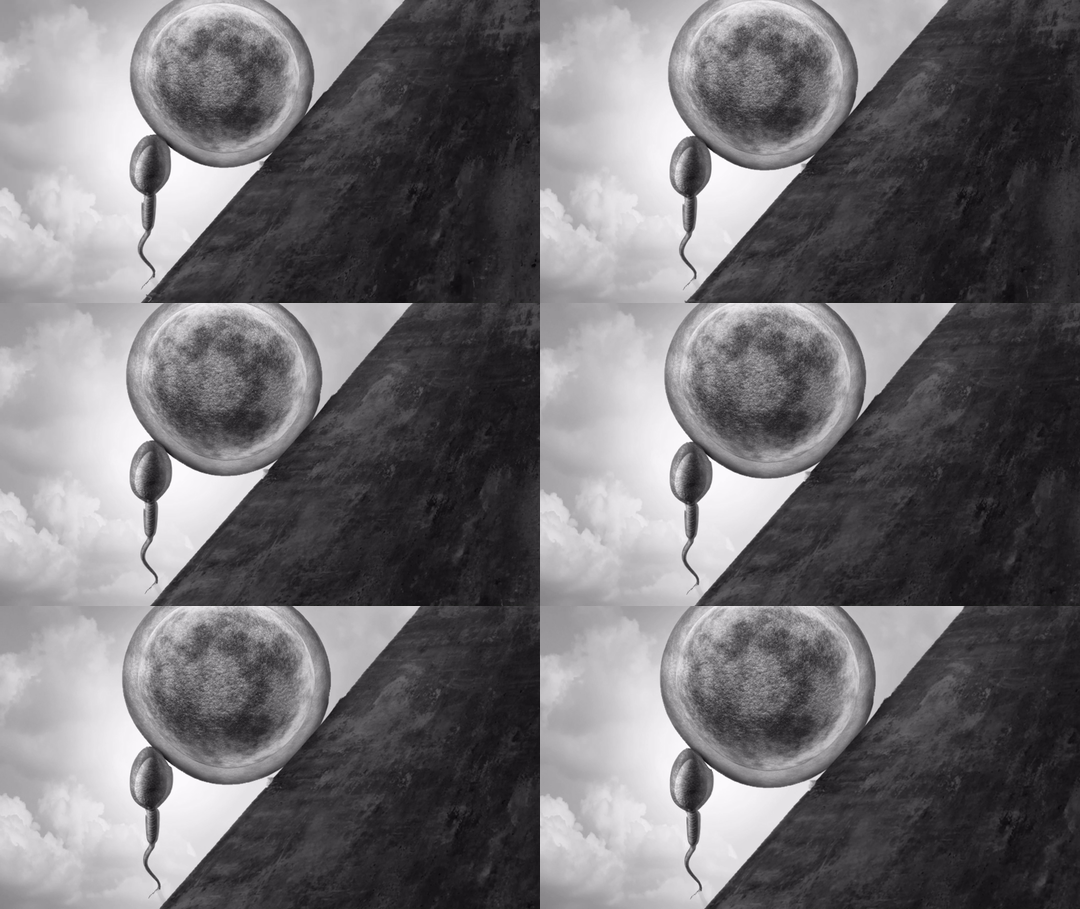


"There are infertility clinics in Gwangju as well. However, for someone like me with 'geuknanjeo' (a condition where ovarian function is severely diminished) or uterine diseases, I think it's like 'picking stars from the sky' to undergo treatment there. People receiving infertility treatment in provincial areas even say things like that. Even if advanced procedures are performed in the provinces, they don't work, but once you go to the metropolitan area, it works in one go."
Editor's NoteIn the era of a total fertility rate of 0.72, long lines form in front of Seoul's well-known fertility clinics. The unprecedented low birth rate trend seems irrelevant here. Last year, there were 250,000 infertility patients nationwide. In a reality where all medical infrastructure is concentrated in Seoul, infertile couples from the provinces who travel for "treatment expeditions" continue to suffer. Undergoing treatment alone is difficult, but regional medical inequality blocks the path of couples who desperately wish for pregnancy and childbirth. We take a closer look at the reality of provincial infertile couples' treatment expeditions, filled with the determination to have children in South Korea, a country facing a low birthrate crisis.
③ Even Infertility Treatments Started Locally Eventually Lead to Seoul
The greatest wish of every couple undergoing infertility treatment is to achieve pregnancy with just "one attempt." According to the Korean Society of Obstetrics and Gynecology, the success rate for in vitro fertilization (IVF), the representative infertility procedure, is about 30-35%. However, these numbers are just statistics; the actual success varies greatly depending on each individual's physical condition. The older the patient, the more attempts are required. On average, Korean infertile couples attempt the procedure seven times. For those in their 40s, the number of attempts sharply increases to over ten. For provincial couples traveling back and forth to hospitals, the physical, psychological, and financial burdens inevitably multiply over time.
Local Hospitals Recommend Transfers to Seoul..."Five Hours on the Road During Vacation Season"
Oh Seunghyun (alias, 37), who travels from Wonju, Gangwon-do to Seoul for infertility treatment, told the reporter that the hardest part of switching hospitals last July was coordinating schedules. In her fourth year of marriage, she began IVF in earnest this February, starting with her first egg retrieval at a university hospital in Wonju, just a 10-minute drive from home. She even underwent embryo transfer at this hospital, but after failing to achieve the desired result, she moved to a hospital in Seoul last July.
"My doctor recommended preimplantation genetic testing (PGT?a test to screen embryos for genetic diseases or chromosomal abnormalities before implantation), but there was nowhere in Gangwon where this was possible, so she advised me to transfer to Seoul. I looked at the list of hospitals where the test could be done and tried to find one that would be least burdensome to reach from Wonju. I started IVF locally because people around me said traveling to Seoul would be difficult, but in the end, I had to go to Seoul anyway."
According to a 2021 survey by the Korean Women's Development Institute of about 600 women who underwent infertility treatment, 65.4% reported having experienced hospital transfers. Most moved because they could not achieve pregnancy. More than half of those who transferred went to medical institutions outside their residential area. In particular, among those living in "Jeju/Gangwon," the rate of transferring to hospitals in other regions was highest at 80.0%. As for the destination of transferred hospitals, 55.4% went to Seoul, just like Seunghyun. In contrast, Seoul residents had the lowest rate of transferring to hospitals in other regions.
Long-distance treatment affects even the scheduling of hospital visits. As a self-employed person, Seunghyun must arrive in Wonju by 2-3 p.m. to match her work hours. She leaves Wonju before 7 a.m., finishes her appointment in Seoul in the morning, and drives herself back home. It's hard to coordinate by intercity bus, so she drives the 200 km round trip without rest. When unexpected hospital visits are required due to her menstrual cycle, it becomes especially challenging. Each trip can take up to five hours round trip, and with her doctor's appointment times varying by day, just making it to the hospital on time is not easy.
In August, travel time doubled due to the vacation season. That month alone, Seunghyun visited the hospital nine times to prepare for egg retrieval. She sometimes traveled to Seoul three times a week. On days when she drove five hours round trip only for a five-minute consultation, she said she "felt truly empty." The IVF process itself is stressful, but having to coordinate schedules and spend long hours traveling made it even harder.
On top of the expensive infertility treatment costs, transportation expenses were added. While attending the hospital in Wonju, she only had to consider the medical bills, but after switching to Seoul, she spent an additional 70,000 to 80,000 won per day on fuel and highway tolls?so-called "money wasted on the road." "Earlier this year, my husband was seriously injured and had to go to a hospital in Seoul. Now that I'm also going to a fertility clinic in Seoul, we joked that we've visited Seoul more times this year than in our entire lives before."
Three Years of Traveling from Gwangju, Bundang, and Seoul to Daegu to Have a Child
Tak Eunae (42), in her third year of infertility treatment, recently transferred from a large hospital in Seoul to a well-known fertility clinic in Daegu. Traveling back and forth from her home in Muan, Jeonnam to Seoul was too burdensome due to the fierce competition for train tickets. When she had to revisit the hospital two or three days later, she would stay at a relative's house or book a hotel, incurring significant accommodation costs. Eunae decided it was better to drive herself three hours and 250 km to Daegu.
Since starting infertility treatment in July 2021, Eunae has moved from Gwangju to Bundang, Gyeonggi-do, then to Seoul, and now to Daegu in pursuit of pregnancy. Before marriage, she underwent surgery for multiple uterine fibroids and is now a high-order patient undergoing her 14th IVF attempt. Initially, she sought treatment at a fertility clinic in Gwangju, the nearest major city to her home in Jeonnam, where there are only two clinics offering IVF and three in Gwangju (as of March this year). After her first egg retrieval at the initial clinic yielded only three empty follicles, she transferred to a large hospital in Gyeonggi-do. She succeeded in getting pregnant at the new hospital but unfortunately suffered a miscarriage.

Eunae has tailored her entire lifestyle to infertility treatment, including dietary control, exercise, and taking supplements. She even adjusted the schedule of the reading and writing academy she runs to accommodate her treatments, but when sudden appointments came up, she often had to ask parents for their understanding. Traveling to Seoul for treatment led to frequent class cancellations and significant losses. Out of frustration, she contacted local governments and the Ministry of Health and Welfare for support.
"The financial aspect is the hardest. Each IVF cycle costs at least 3 to 5 million won. How can an average person afford to spend 5 million won a month? On top of that, there are transportation, accommodation, supplement, and test costs. (Support has increased,) so things are much better than before, but it's still a heavy burden. The low birthrate is a fundamental issue for the country. I hope more attention is given to this problem."
IndexDifficult Business Conditions
- As Marriage and Pregnancy Are Delayed, 1 in 7 Couples Faces Infertility
- "Six Hours of Travel for Just Ten Minutes of Infertility Treatment: Couples Are Growing Weary"
- On the Way to Seoul to Have a Baby... Feels Like the 'Punishment of Sisyphus'
- Why Fertility Doctors Are Boarding Flights to Jeju Island...
- "They Said on Online Forums... You Absolutely Have to Go to a Famous Hospital"
- "Infertility Clinic Evaluation System? I Didn't Even Know That Existed"
- Even the Government Doesn't Know... Flaws in the Infertility Treatment Support Program for Couples
- Local Governments' Infertility Treatment Support Exceeds 100 Billion Won... Gyeonggi Ranks First
- Central Government to Integrate Infertility Policies... Need for Standardized Services Across Regions
-
Reporter Jeong Hyunjin jhj48@asiae.co.kr
-
Edit Park Chunghun parkjovi@asiae.co.kr
© The Asia Business Daily(www.asiae.co.kr). All rights reserved.

![[Reportage]"It Only Leads to Arguments"... Chungnam's True Sentiments Hide Deeper After Martial Law](https://cwcontent.asiae.co.kr/asiaresize/304/2026051223490460082_1778597344.jpg)