

Jaeho Lee, a fertility specialist and director of Ilsan Maria Hospital, held a talk concert about infertility in Jeju Island last April. He also runs a YouTube channel to reduce information disparity in rural areas. Photo by Yongjun Cho jun21@
Editor's NoteThe era of a total fertility rate of 0.72 children. In front of famous infertility clinics in Seoul, long lines of people are waiting. It is a scene that seems to defy the unprecedented trend of ultra-low birth rates in Korea and elsewhere. Last year, there were 250,000 infertility patients nationwide. In a reality where all medical infrastructure is concentrated in Seoul, infertile couples from the provinces who travel for "treatment expeditions" suffer even more today. The treatment itself is already difficult, but regional medical inequality further blocks the path of couples desperately hoping for pregnancy and childbirth. We take a closer look at the reality of "treatment expeditions" for provincial infertile couples who are determined to have children in Korea, a country facing a low birthrate crisis.
④ Stories from Three Infertility Specialists in the Greater Seoul Area
"There are often cases where patients living in Jeju Island can't come for treatment because of the weather. If flights are canceled during the rainy season or when a typhoon hits, there's nothing that can be done. Around holidays, some patients struggle because it's hard to get plane tickets."
Kim Youngsang, director of Gamja and Snowman, an infertility clinic located a 10-minute drive from Gimpo Airport in Gangseo-gu, Seoul, responded this way to a reporter's question last month about the difficulties of seeing patients from the provinces. Because the clinic is near the airport and has direct subway access from the train station and express bus terminal, patients even come from Jeju Island, which requires crossing the sea. As of March this year, there are only four infertility treatment clinics in Jeju serving about 3,000 infertility patients, and among them, only one offers in vitro fertilization (IVF). Dr. Kim said, "I try to figure out ways to minimize the number of visits for patients as much as possible," and sometimes uses procedures that allow for relatively flexible scheduling among infertility treatments.
Half of Infertility Clinics Are in the Greater Seoul Area... Doctors Go on Business Trips to Help Patients
According to an analysis by Asia Economy of the government's 2022 second evaluation of infertility treatment clinics, there were 1,488 OB-GYN specialists at 233 government-designated infertility treatment clinics in 2021 (excluding those that closed after the evaluation). Of these, 903 specialists, or 60.7%, were affiliated with 111 clinics in the Seoul, Gyeonggi, and Incheon metropolitan areas. Naturally, regions with fewer infertility clinics also have fewer OB-GYN specialists.
When provincial infertile couples make the difficult journey, the medical staff worry along with them. Specialists said they try to find solutions whenever they see patients who leave home at dawn, arrive at a Seoul hospital, wait for hours, receive a brief consultation, and then have to catch an afternoon flight home. For IVF, the most common infertility treatment, patients must visit the hospital at least five times within one or two months. Since procedures like ultrasounds are performed according to the patient's biological rhythm, not at their convenience, there are limits to how much even the most considerate doctor can reduce the number of visits.
"I also have patients who come from the provinces. I usually advise them not to come if possible, because I know how hard it is. I recommend they go to a local clinic, as there isn't a big technical difference. Still, if they insist on coming, I try to find ways to minimize their visits. But there are limits. Since I can't check the patient's condition in person, I have to predict and prescribe medication accordingly. In that process, the doctor's experience definitely makes a difference."
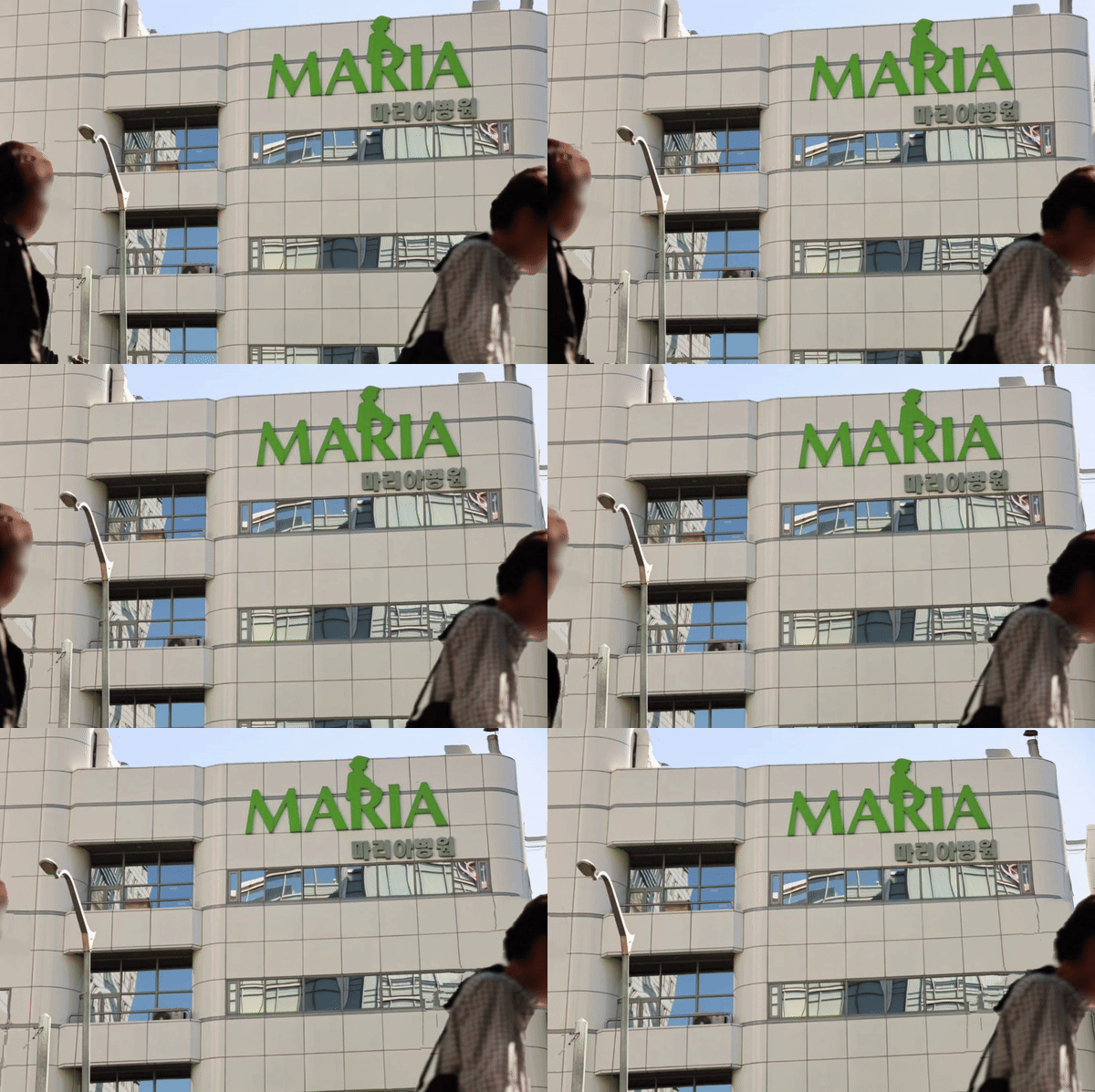
Lee Jaeho, director of Ilsan Maria Hospital and an infertility specialist, also often meets patients from Jeju during consultations and understands their struggles. Wanting to at least reduce the information gap, he traveled to Jeju himself last April. He held a talk concert-style event to answer local patients' questions. For the past five years, he has run a YouTube channel to provide medical information to infertility patients, and when he polled his viewers about which region to visit, Jeju was chosen as the top priority. According to the National Health Insurance Service, there are about 3,000 infertility patients in Jeju (as of 2023). Dr. Lee plans to hold another Q&A event for provincial infertility couples early next year.

Infertility Clinics Clustered Near Transit Hubs... Long-Distance Travel May Affect Treatment Outcomes
When asked why infertility patients must visit clinics so frequently, specialists answered, "To increase the success rate of procedures." Infertility treatment basically involves closely monitoring hormonal changes and proceeding according to the situation. For example, in IVF, a key procedure is egg retrieval, which must be timed precisely to the patient's hormone cycle, so examinations are essential. Unexpected variables may arise during testing, requiring changes in treatment plans, and emergencies after procedures may necessitate sudden visits.

People leaving Seoul Station, with the Cha Women's Medical Research Institute Seoul Station Infertility Center located in the Seoul Square building across from Seoul Station visible. Photo by Cho Yongjun jun21@
원본보기 아이콘Given this, infertility clinics in Seoul with good transportation access have become hotspots for provincial couples seeking treatment. The Seoul Station Cha Fertility Center, located right in front of Seoul Station, is always crowded with patients. When the reporter visited last month, many couples with travel suitcases were seen waiting. Professor Cho Eunhye of this hospital said, "I can feel the number of provincial infertility patients steadily increasing." She explained, "Compared to the provinces, Seoul has more clinics and medical staff, so there are more options, and the perception that the size and system of the hospital will affect pregnancy outcomes draws patients to Seoul."
The specialists interviewed by the reporter believe that long-distance travel by provincial couples may affect treatment outcomes. Although there has been no specific study measuring this, they estimate that physical fatigue, stress, and financial burdens could influence the results. Professor Cho said, "There are economic, time, and physical burdens due to limited transportation options. If a patient can't come because of transportation issues, we have to reschedule, which sometimes leads to choosing suboptimal options during treatment."
IndexDifficult Business Conditions
- As Marriage and Pregnancy Are Delayed, 1 in 7 Couples Faces Infertility
- "Six Hours of Travel for Just Ten Minutes of Infertility Treatment: Couples Are Growing Weary"
- On the Way to Seoul to Have a Baby... Feels Like the 'Punishment of Sisyphus'
- Why Fertility Doctors Are Boarding Flights to Jeju Island...
- "They Said on Online Forums... You Absolutely Have to Go to a Famous Hospital"
- "Infertility Clinic Evaluation System? I Didn't Even Know That Existed"
- Even the Government Doesn't Know... Flaws in the Infertility Treatment Support Program for Couples
- Local Governments' Infertility Treatment Support Exceeds 100 Billion Won... Gyeonggi Ranks First
- Central Government to Integrate Infertility Policies... Need for Standardized Services Across Regions
-
Reporter Jeong Hyunjin jhj48@asiae.co.kr
-
Edit Park Chunghun parkjovi@asiae.co.kr
© The Asia Business Daily(www.asiae.co.kr). All rights reserved.



![[Reportage]"It Only Leads to Arguments"... Chungnam's True Sentiments Hide Deeper After Martial Law](https://cwcontent.asiae.co.kr/asiaresize/304/2026051223490460082_1778597344.jpg)