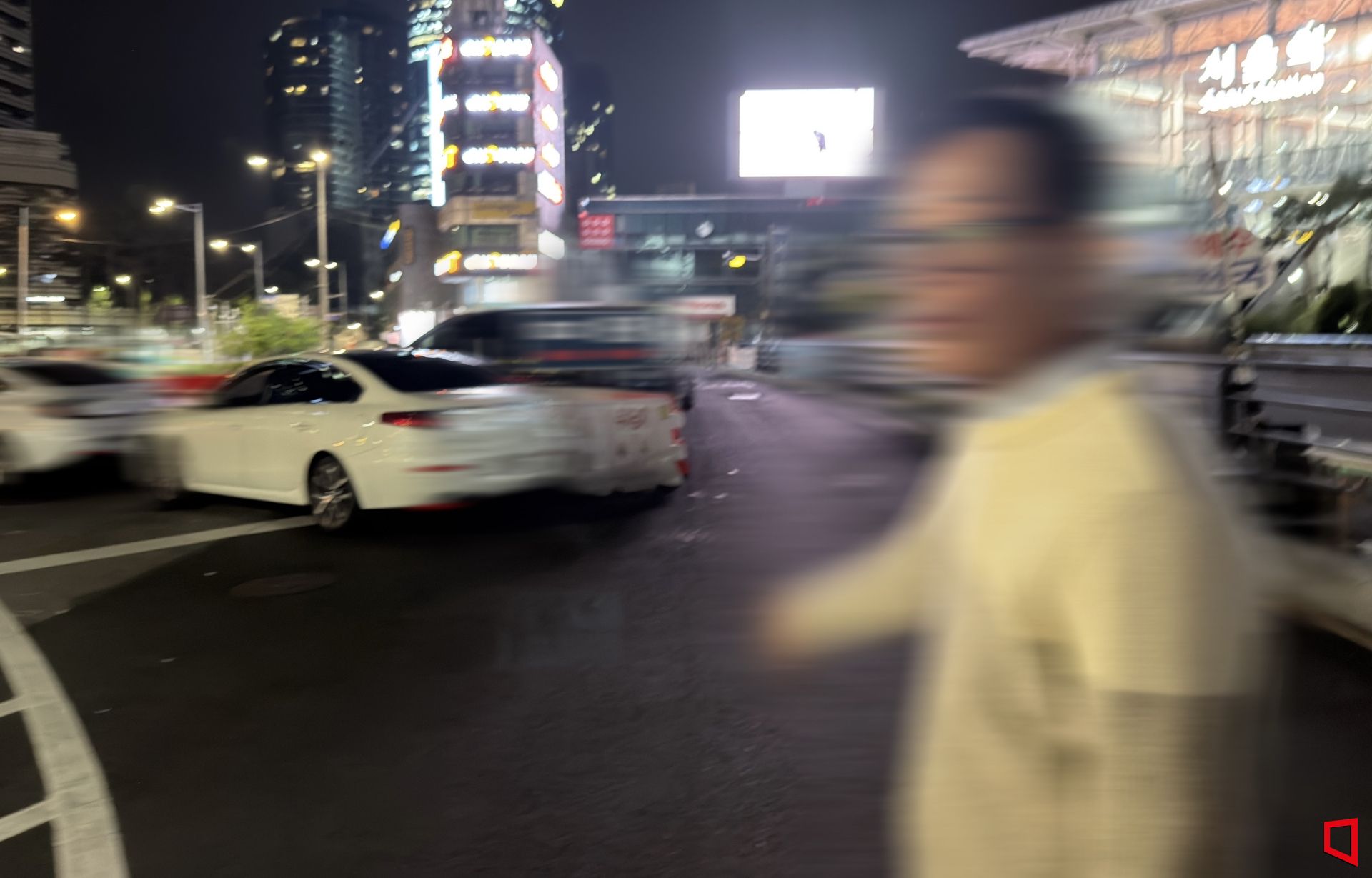
In the early morning hours of May 7, in front of the Seoul Station Bus Transfer Center, as soon as the announcement for the last KTX train's departure was made, a surge of foreigners and citizens dragging suitcases poured out. As the reporter was about to cross the street, a man in his 60s suddenly grabbed the reporter’s wrist. The spot he indicated was lined with four regular passenger vehicles, not any of the official taxi license plates such as ‘Ba’, ‘Sa’, ‘A’, or ‘Ja’. These were illegal taxis operating without a taxi license.

When the reporter said, "I'll try to call a taxi using an app," the man retorted, "Do you think you can catch a taxi at this hour? If you're scared because you've never seen a car like this, take a picture of the license plate and send it to your mother or something." Although he claimed to have 10 years of experience, his car had neither a meter nor a card payment terminal. It was a lawless zone accepting only cash or wire transfer.
As late-night transportation woes continue, illegal for-hire vehicles are operating openly throughout the city center. In areas around stations or other crowded spots, it is easy to spot these drivers soliciting both foreign tourists and locals with little restraint. The problem has worsened due to a shortage of taxis and overcrowding of late-night buses.

According to data from the Seoul Metropolitan Government as of January this year, the number of registered taxis in Seoul was 64,933, a decrease of about 6,800 from 71,806 in 2019. During the same period, the number of taxi drivers dropped by nearly 10,000, from 30,527 to 20,501. Analysts point out that the late-night transportation crisis in Seoul remains unresolved, as many drivers who switched to delivery or courier work during the COVID-19 pandemic have not returned.
Dozens of people were lined up at the taxi stand, but taxis rarely appeared. After the last subway train stopped running, demand increased even further, and illegal vehicles filled the gap. Solicitors repeatedly approached foreigners, haggling in broken English with phrases like "30,000 won okay?" Hannah Davies, a 47-year-old tourist from the UK, frowned and said, "It's frightening when someone grabs you and urges you to get in, especially on streets where drunk people and the homeless are mixed together. I came here believing Korea is safe, but this is unsettling."

After 1 a.m., the taxi queue grew even longer. Eventually, a Chinese tourist got into a black sedan after hearing, "50,000 won to Sillim." According to the KakaoT app at that time, the estimated taxi fare from Seoul Station to Anyang Station was about 37,000 won, and to Sillim Station about 18,000 won. Not only were illegal for-hire vehicles and aggressive soliciting targeting foreign tourists, but the prices demanded were sometimes more than double the normal fare.
Under the Passenger Transport Service Act, driving a private vehicle for pay without a license is punishable by up to two years in prison or a fine of up to 20 million won. The Seoul Metropolitan Government and local districts respond to illegal for-hire taxi operations by referring cases reported to the police for investigation, but they explain that direct crackdowns are difficult.

In the early hours of the 7th, after the last subway train stopped running, foreign tourists near the taxi stand at Seoul Station were waiting while looking at their phone screens to catch a taxi. Photo by Hosoo Park
원본보기 아이콘An official from Yongsan District said, "When complaints including photos or videos are received, we refer them to the relevant police station for investigation; however, on-site crackdowns are realistically difficult." An official at the Seoul Station police substation of Namdaemun Police Station also said, "Without reports from the public and with limited enforcement personnel, it is difficult to conduct direct crackdowns."
Experts point out that reporting and enforcement alone are not enough. Kim Pilsoo, professor in the Department of Future Automotive Engineering at Daelim University, said, "As the shortage of taxis during late-night hours has continued for a long time, illegal for-hire transportation has become entrenched like an underground market. To address the increase in foreign tourists and late-night travel demand, measures such as adding more late-night buses and introducing public late-night transportation options should be implemented to increase overall supply."
-

Reporter Park Hosu lake@asiae.co.kr
-
Edit Kim Mina alskv@asiae.co.kr
© The Asia Business Daily(www.asiae.co.kr). All rights reserved.




![[Reportage]"It Only Leads to Arguments"... Chungnam's True Sentiments Hide Deeper After Martial Law](https://cwcontent.asiae.co.kr/asiaresize/304/2026051223490460082_1778597344.jpg)