① The Journey from Busan to Seoul of a 40-something Infertility Patient
Advanced Age and Severely Diminished Ovarian Reserve... Why She Chose Treatment in Seoul
20 Round Trips Over 400km in 3 Months
Infertility Patients Aged 40-44 Increased by 31.1% in the Past 5 Years
The Largest Increase Among All Age Groups
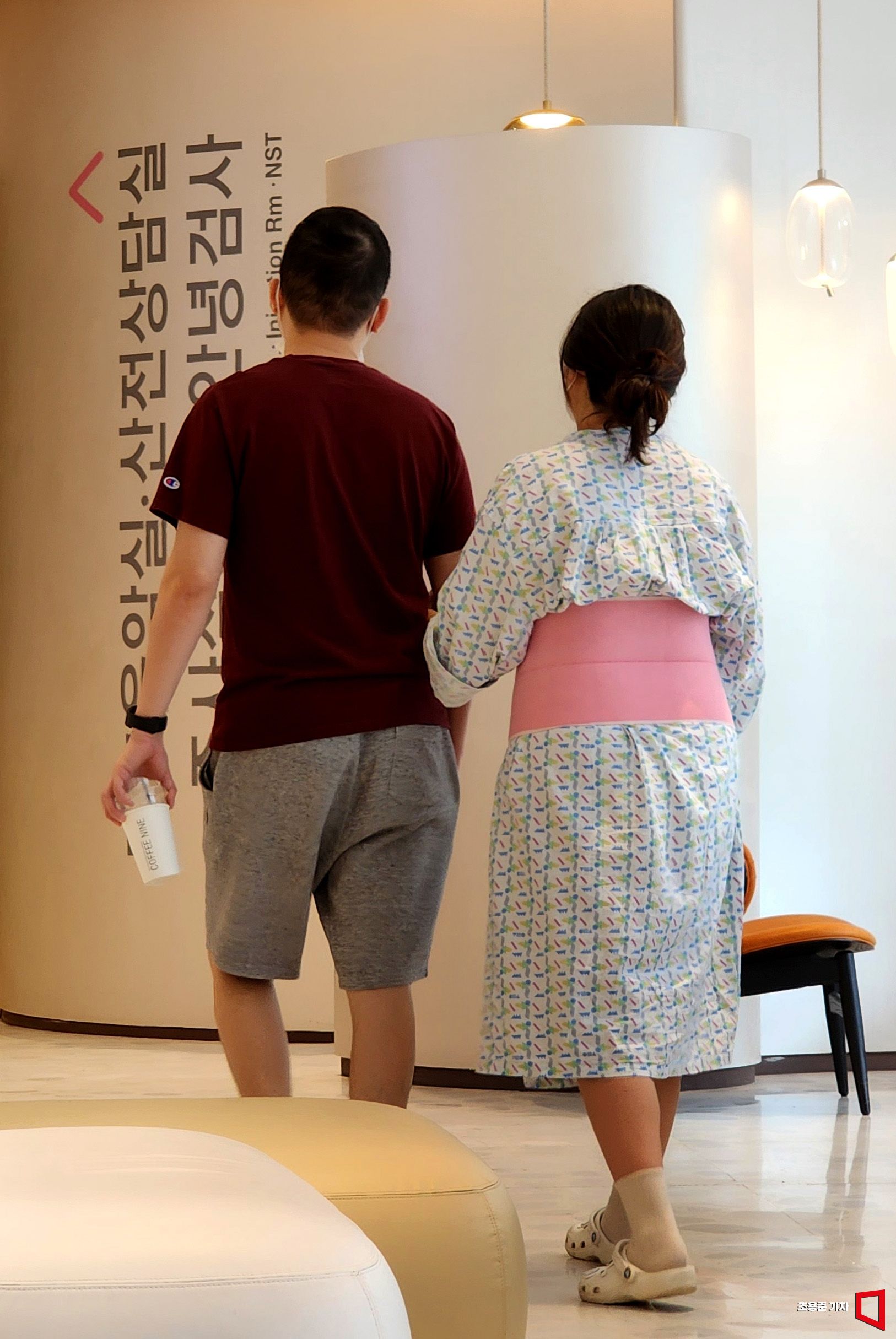
Cha Eunhwa (44), who lives in Busan, married her husband of the same age this January after 10 years of dating. She left Seoul, where she had lived her whole life, quit her job, and moved to Busan to be with her husband, who worked there. In the past three months, she has traveled nearly 20 times to Seoul, a distance of 400km. She started visiting a major infertility clinic in Jamsil, Seoul, in May. There are 15 infertility clinics in Busan (as of March this year) that can perform in vitro fertilization (IVF). Before choosing Seoul, she also underwent tests at clinics in Busan. However, she ultimately decided to have her first IVF procedure in Seoul. When we met Eunhwa near the hospital last month, she explained that her decision was due to being "in her 40s" and having "severely diminished ovarian reserve." According to the Health Insurance Review and Assessment Service (2023), the number of infertility patients aged 40-44, including Eunhwa, increased by 31.1% over the past five years until 2022, the largest increase among all age groups.


Late Marriage and Delayed Childbirth Lead to More Infertility... Medical Institutions Concentrated in the Seoul Metropolitan Area
The number of infertile couples visiting clinics to have children is increasing. Infertility is defined as the inability of a couple to conceive within one year despite regular unprotected intercourse. According to the National Health Insurance Service, there were a total of 251,173 infertility patients nationwide last year. By gender, there were 160,000 women and 90,000 men. The number of infertility patients, which was around 230,000 in 2018, has been steadily increasing. As people focus on their careers, delay marriage, postpone pregnancy for housing stability, and continue economic activities, the age at which they have children naturally becomes later. Last year, the birth rate for women in their early 40s was 7.9, more than double that of women in their early 20s (3.8). This structure inevitably leads to more couples visiting clinics for infertility issues.
In an era of a total fertility rate of 0.72, the word "low birthrate" seems meaningless as those desperately wishing for pregnancy flock to infertility clinics. Like most medical infrastructure, infertility clinics are concentrated in the Seoul metropolitan area. As of the end of March, there were 269 infertility treatment institutions designated by the Ministry of Health and Welfare. Of these, 21.9% (59) are in Seoul and 20.1% (54) in Gyeonggi-do, meaning the majority are in the metropolitan area. Infertility treatment institutions, designated by the government, are clinics that perform artificial insemination and IVF, the representative infertility procedures. There are 154 clinics nationwide that can perform both procedures, and 45.5% of these are in Seoul and Gyeonggi-do. Including Incheon, the proportion in the metropolitan area is exactly 50%.

Infertile couples from all over the country gravitate toward the Seoul metropolitan area, where medical facilities are concentrated. Data from the Health Insurance Review and Assessment Service shows that the proportion of infertility treatment (assisted reproductive technology) patients receiving care at metropolitan hospitals continues to rise. The percentage of patients treated at hospitals in Seoul, Gyeonggi, and Incheon increased from 64.5% in January 2019 to 67.7% in January this year, a 3.2 percentage point increase over six years. This figure has been steadily rising each year. This means that 68 out of every 100 infertility treatments are performed at metropolitan hospitals. According to data submitted by the National Health Insurance Service to the National Assembly in 2019, among the top 20 infertility treatment institutions nationwide by patient volume, 8 were in Seoul, 6 in Gyeonggi, 2 in Busan, and 1 each in Daegu, Gwangju, Daejeon, and Ulsan.
"If an Unpredictable Appointment Comes Up, I Can't Get a Train Ticket and Get Anxious"
Eunhwa is one of the many infertile couples who decided to travel to Seoul. Although she persuaded her husband, who was against IVF, and finally chose a hospital, Eunhwa confessed that it was much harder than expected. After quitting her job to get married and starting her own business, she said that if she had continued working, she would have had to either quit her job or give up the treatment. "I heard I would have to go to the hospital often, but I didn't know it would be this much. The waiting times are long. I've waited for three hours before. So even if my appointment is in the morning, I buy a train ticket for 5 p.m. because I don't know when I'll be finished."
There are many things that make Eunhwa's infertility treatment difficult. She has to take injections and medication at specific times several times a day. She visits the hospital countless times for procedures and tests. According to Health Insurance Review and Assessment Service data, the average number of hospital visits per infertility patient last year was six, but IVF patients often visit several times a month for egg retrieval, ultrasound exams, embryo transfer, and more. She also has to endure the extreme waiting lines at large hospitals. Actual consultation time is only about 10 minutes. She can't help but feel anxious about whether the results will be good.

What makes Eunhwa's already difficult infertility treatment even harder is the issue of transportation. To visit the hospital for treatment, she needs a train ticket or plane ticket, but getting one is a challenge in itself. Eunhwa, who travels from Busan Station to Jamsil, Seoul, via Suseo High-Speed Railway (SRT), said she has even reserved train tickets for the whole week just to secure a seat. This is because the hospital instructs her to visit "on the 2nd or 3rd day after her period starts," but it's impossible to predict when that will be. "There are cancellation fees, of course. But if I don't do it that way, I can't go to the hospital at all. So I had no choice but to do it."
If she can't get a train ticket, she quickly tries to get a plane ticket to find a way to Seoul. On those days, she takes three or four types of public transportation in a single day: first from Busan to Gimhae Airport, then from Gimhae Airport to Gimpo Airport, and finally from Gimpo Airport to the hospital in Jamsil, Seoul, by taxi, plane, and subway. Such travel quickly drains her energy.

Spending 800,000 Won a Month on Transportation to the Hospital... Plus Accommodation Costs
The transportation costs are enormous. Even when traveling alone for treatment, a round trip in a day costs 150,000 won. If she and her husband travel together, it costs 300,000 won a day. This is why her husband only accompanies her when a guardian is absolutely necessary, such as for procedures requiring anesthesia. Last August, for two egg retrievals, Eunhwa spent 700,000 to 800,000 won on transportation in just one month.
IVF consists mainly of various procedures such as egg retrieval and embryo transfer, as well as tests like ultrasounds. For some procedures, like egg retrieval, if she doesn't arrive at the hospital at the exact time, all the preparation goes to waste. When such an appointment is scheduled, Eunhwa comes to Seoul the day before and stays overnight. Since she has experienced flight delays, this is an unavoidable choice to ensure she arrives on time. This adds another 200,000 won for accommodation.
Inevitable Choice: The Difficult Journey of Traveling to Seoul for Infertility Treatment
This situation is not unique to Eunhwa. Provincial infertile couples who travel to Seoul for treatment say things like, "As soon as I leave the consultation room, I book my train ticket," "I'm so exhausted physically. I overthink things alone, and as my stamina drops, my mind goes blank," "Traveling back and forth by plane, the cost, time, and physical toll are all overwhelming."
The only reason they endure this grueling process and choose to go to Seoul is simple: to have a child.
IndexDifficult Business Conditions
- As Marriage and Pregnancy Are Delayed, 1 in 7 Couples Faces Infertility
- "Six Hours of Travel for Just Ten Minutes of Infertility Treatment: Couples Are Growing Weary"
- On the Way to Seoul to Have a Baby... Feels Like the 'Punishment of Sisyphus'
- Why Fertility Doctors Are Boarding Flights to Jeju Island...
- "They Said on Online Forums... You Absolutely Have to Go to a Famous Hospital"
- "Infertility Clinic Evaluation System? I Didn't Even Know That Existed"
- Even the Government Doesn't Know... Flaws in the Infertility Treatment Support Program for Couples
- Local Governments' Infertility Treatment Support Exceeds 100 Billion Won... Gyeonggi Ranks First
- Central Government to Integrate Infertility Policies... Need for Standardized Services Across Regions
-
Reporter Jeong Hyunjin jhj48@asiae.co.kr
-
Edit Choo Myeonghoon chox2mh@asiae.co.kr
© The Asia Business Daily(www.asiae.co.kr). All rights reserved.



![[Reportage]"It Only Leads to Arguments"... Chungnam's True Sentiments Hide Deeper After Martial Law](https://cwcontent.asiae.co.kr/asiaresize/304/2026051223490460082_1778597344.jpg)