"Turning Apartments into 'Senior Facilities'... Creating a 'Residential Life Platform' [My Home as Senior House]"
"State to Establish 'Elderly Residential Life Platform'"
Interview with Joo Hyunghwan, Vice Chairman of the Low Birthrate and Aging Society Committee
Korea's 'Apartment Culture' Can Be Utilized
to Make Apartments Equivalent to Elderly Facilities
Even if Services Are Monetized,
Caregiving Coverage Should Be Expanded to All Elderly
Government, Local Authorities, and Companies to Collaborate
in Building an 'Elderly Residential Life Platform' That Provides Caregiving Services

On November 6 last year, elderly people are spending time together at an apartment playground in Daedeok-gu, Daejeon. Photo by Kang Jin-hyung
View original imageSouth Korea is an "apartment republic." Many elderly people also live in apartments. According to the "2023 Elderly Survey" released by the Ministry of Health and Welfare, 5.5 out of 10 elderly people living in cities reside in apartments. Although it is also a super-aged society, the residential environment differs from Japan, where detached houses are more common.
Joo Hyung-hwan, Vice Chairman of the Low Birthrate and Aging Society Committee, said, "The wish of the elderly is to spend their later years healthily in their own homes," adding, "The apartment-centered culture is a unique characteristic of Korea, and if utilized well, it can be a tremendous advantage."
For the elderly to live at home, medical care, caregiving, meals, and home renovations are basically necessary. The committee's plan is to build an "Elderly Residential Life Platform" that can quickly provide these services all at once to elderly people living in apartments. Chairman Joo said, "If this happens, apartments will be no different from elderly welfare facilities."

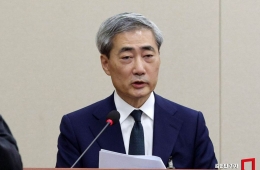
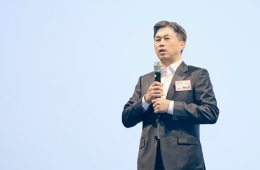
On November 28 last year, Joo Hyung-hwan, Vice Chairman of the Low Birthrate and Aging Society Committee, is being interviewed by Asia Economy at the Government Seoul Office in Jongno-gu, Seoul. Photo by Jo Yong-jun
View original image-Despite being a super-aged society, noticeable elderly policies are lacking.
▲I completely agree. When I visited nursing facilities, I thought, "Is it right for the state to let people spend their final days like this in an era of $36,000 per capita income?" Life expectancy increases by two years every decade. Elderly people with longer lifespans will come like a tsunami. If we don't prepare measures quickly, it will become difficult to handle.
There are three directions for elderly housing policy. The first is to help them spend their later years at home. Elderly people's hope is to age healthily in their own neighborhoods. The second is to make the most of apartments. If caregiving services can be well provided, there is no difference between apartments and elderly facilities. The third is to expand caregiving coverage to middle-class elderly as well. For example, support for age-friendly home renovations currently targets only low-income or ill elderly, but middle-class elderly also need it. Even if services are monetized, it is important to expand caregiving to all elderly regardless of income.
-How can apartments be made like elderly facilities?
▲Meals are especially important for the elderly. Newly built apartments have places that provide meals. Many elderly also live in older apartments that have been around for decades. Securing dining space there is a concern, and we are looking for solutions. For new apartments, it is also important to create an environment suitable for elderly from the start by eliminating level differences and installing anti-slip facilities. If nursing staff can reside within apartment complexes to look after the elderly, apartments can become equivalent to elderly facilities. Rather than increasing elderly welfare housing exclusively for elderly residents, making apartments like elderly facilities is the ideal approach.

On November 28 last year, Joo Hyung-hwan, Vice Chairman of the Low Birthrate and Aging Society Committee, is being interviewed by Asia Economy at the Government Seoul Office in Jongno-gu, Seoul. Photo by Jo Yong-jun
View original image-The key is to conveniently and quickly provide caregiving services to elderly people's homes.
▲Elderly people with mobility difficulties might say, "It's hard to go to the hospital, so I want home medical care," "I have difficulty cleaning and cooking, so I need housekeeping support," or "I want a haircut but prefer home beauty services." They often don't know whom to contact or where to get help. Therefore, the government plans to create an "Elderly Residential Life Platform" that connects these services with elderly people. Central and local governments and private companies will participate to establish a system that provides caregiving services to the elderly in a timely manner. Starting next year, "Integrated Care" will be implemented nationwide, and this concept aims to expand on that.
-What can we learn from other countries?
▲Japan already has an "Age Tech" market that utilizes technologies like care robots in elderly caregiving services. Sensors under beds monitor elderly people's sleep patterns, and bathing robots help wash them. Japan applies long-term care insurance to such medical devices to reduce cost burdens. Korea already has these technologies as well. To grow the caregiving medical device market, regulatory sandboxes should be applied, and support for long-term care insurance benefits should be provided. There is already a shortage of caregiving personnel, which is problematic. Once convenience is proven and prices drop, caregiving robots will become widespread in no time.
Hot Picks Today
 "Six Months After 'Mom's Touch Troublesome Woma...
- Popcorn Container Craze at Theaters Sparks Sell-Out Frenzy, Emerges as New Reven...
- "With This Certificate, Even Those in Their 60s Can Get Hired and Earn 3.69 Mill...
- Man in His 30s Sentenced to 2 Years in Prison for Stealing from TV Personality N...
- Female Game Caster Makes Bold Move After Criticism Over "Short Skirt" on Broadca...
!["Turning Apartments into 'Senior Facilities'... Creating a 'Residential Life Platform' [My Home as Senior House]"](http://www.asiae.co.kr/news/img_view.htm?img=2025021616064033719_1739689600.jpg)
© The Asia Business Daily(www.asiae.co.kr). All rights reserved.



!["They Said It Was 'Delicious' Milk... Is the 'List of Fake Milk Products in Korea' for Real? [Matjal X-File]"](https://cwcontent.asiae.co.kr/asiaresize/307/2023072413274517286_1690172865.jpg)