'Drugs to Prevent Aging' Enter Their First Target Year... First Patient Dosed in the US [New Path for Bio, Anti-Aging] ①
Cumulative Big Pharma Investment Surpasses $11 Billion
First Clinical Trial for Epigenetic Reprogramming Begins
Consensus Reached on 14 Aging Biomarkers for Clinical Trials
① 'The Fight Against Aging' as an Established Global Industry
② The Untapped Gap in Anti-Aging Drugs Even Big Pharma Hasn't Solved—Now Open to Korea
③ Why Did Samsung's Anti-Aging Research, Once Faster Than Google, Fall 13 Years Behind?
④ K-BigHeart Aiming for a Korean Version of IMEC

The year 2026 is considered the first year in which aging itself has become the direct target of new drug development. In January, U.S.-based Life Biosciences received Investigational New Drug (IND) approval from the U.S. Food and Drug Administration (FDA) for its epigenetic reprogramming therapy 'ER-100' and began dosing the first patient in March. This marks the first time in history that a drug designed to reverse aging itself has been administered to a human. What was once seen as the private domain of Silicon Valley billionaires is now officially part of the global pharmaceutical industry's research and development (R&D) pipeline. Aging is no longer confined to academic inquiry but is being transformed into a new drug development arena attracting enormous capital.
According to the UK-based longevity industry platform Longevity.Technology, global anti-aging biotech funding inflows reached $3.74 billion (about 5.5 trillion won) in the first quarter of 2026, a 56% surge compared to the same period last year. The number of deals increased from 43 to 49. Annual investment is projected to reach $9 billion (about 13.265 trillion won). Regulatory doors for clinical entry are beginning to open, while investment capital is rapidly flowing into the field.
!['Drugs to Prevent Aging' Enter Their First Target Year... First Patient Dosed in the US [New Path for Bio, Anti-Aging] ①](http://www.asiae.co.kr/news/img_view.htm?img=2026051209285058820_1778545730.jpg)
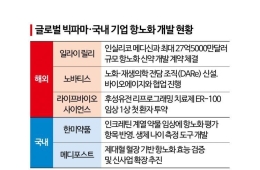
Anti-aging has already become part of mainstream R&D for big pharma. According to the nonprofit research organization Aging Biotech Info, the cumulative value of announced big pharma deals in anti-aging has surpassed $11 billion (about 16.3306 trillion won). The major deal driving capital inflow was the collaboration agreement between Eli Lilly and Insilico Medicine. In March, they entered into a new drug development partnership worth up to $2.75 billion (about 4 trillion won). Lilly paid an upfront fee of $115 million (about 170.7 billion won) and secured global exclusive rights to Insilico's preclinical oral drug candidates—molecules discovered using an AI platform based on aging biology. Novartis established a new aging and regenerative medicine (DARe) division and is collaborating with anti-aging biotech BioAge in a deal worth up to $550 million (about 816.4 billion won).
Tools for measuring aging in the clinical setting are also being established. Last year, the international journal 'The Journals of Gerontology' published 14 aging biomarkers identified by international aging researchers through a Delphi consensus process. These include molecular markers such as IGF-1, GDF-15, hsCRP, IL-6; functional indicators like muscle mass, grip strength, gait speed; and epigenetic clocks such as the DunedinPACE. A study published in 'Biomarker Research' in March this year by the Berlin Aging Study reported that among the 14 biomarkers, the pace of epigenetic aging was the most predictive of mortality. This means that the first outlines of standardized measurement tools for clinical trials are being drawn.
Korea Joins the Anti-Aging Front—Government and Corporates Alike
In Korea, R&D directly targeting aging with new drugs has begun simultaneously in both the public and private sectors. The Ministry of Health and Welfare, in its 2026 healthcare R&D implementation plan announced last December, established 'anti-aging and rejuvenation regenerative medicine translational clinical research' as a new initiative. The six-year translational clinical program aims to achieve IND approval for phase 1 clinical trials. This is the first project to allocate a budget for cell and gene therapy R&D that targets aging itself, not merely as a consequence of disease.
Hanmi Pharmaceutical, a traditional pharmaceutical company and a leader in R&D, has identified anti-aging as its next growth engine after obesity treatments. The company is paying attention to the latest research showing that GLP-1-based obesity drugs can also delay aging by reducing inflammation and neuroinflammation. This mirrors how Lilly is seeking its next growth engine in aging biology after GLP-1. Hanmi is incorporating anti-aging efficacy evaluation into clinical protocols for incretin-based drugs and is developing its own omics-based biological age measurement tools.
MediPost, the first in the world to commercialize allogeneic stem cell therapy among biotechs, has found clues for its anti-aging business in its existing umbilical cord blood pipeline. After establishing an anti-aging research team in 2023, the company began verifying the aging-inhibitory effects of umbilical cord blood plasma. According to a recent study published in the international journal 'Rejuvenation Research,' cord blood plasma significantly reduced the expression of aging-related genes. The company plans to expand into new businesses targeting skin regeneration and anti-aging using components derived from cord blood.

Research results confirming the inhibition of skin cell aging and increase of antioxidant enzymes through umbilical cord blood plasma. Medipost
View original image"In the Next Two Years, Data—Not Hype—Will Define the Field"
Experts predict that the next one to two years will determine the fate of the anti-aging sector. This is because key clinical results, early investment returns, and big pharma's next portfolio decisions will all converge during this period. Clinical data will come first. The first phase 1 signal for Life Biosciences' ER-100 is expected by the end of this year or early next year. IND approval for the Lilly-Insilico candidate and phase 1/2 data for BioAge and Rubedo will also be released during the same period. For the first time, the clinical validity of the entire aging-targeted drug category will be put to the test.
The capital market will also demand a scorecard on returns. The inflow of 5.5 trillion won in the first quarter will put both the end of the first generation of biotech series and big pharma collaboration milestones to the test. Unity Biotechnology, a first-generation senolytics company, raised $200 million up to its Series C but shut down after clinical failure. Decision-making timelines for big pharma are accelerating. Blockbuster drugs with cumulative sales expiring through the early 2030s exceed $300 billion. The glucagon-like peptide (GLP)-1 market will grow to $150 billion by 2030, but after that, aging biology is essentially the only megacategory candidate.
Hot Picks Today
 Investment Warnings Surge... "Warning Light" Flashes as KOSPI Nears 8,000 Points
- "Those Who Hesitated at 3,000 Still Haven't Bought" 7 Trillion-Won Asset Manager Says "Opportunities Remain" [Investment Strategies of the Wealthy] ⑦
- Snapping a Careless 'V' Pose... "All Your Personal Data Could Be Stolen" Warning Spreads on SNS
- "SK hynix Could Reach 2.8 Million Won; Why Securities Firms Are Confident That the Main Chapter of AI Has Not Even Begun Yet [Click eStock]"
- 'Drugs to Prevent Aging' Enter Their First Target Year... First Patient Dosed in the US [New Path for Bio, Anti-Aging] ①
An industry insider commented, "Aging-targeted drugs are no longer at the stage of validating potential, but have entered the phase of category establishment. Clinical data from the next one to two years will determine the direction of big pharma's growth trajectory after GLP-1."
© The Asia Business Daily(www.asiae.co.kr). All rights reserved.