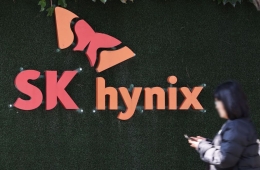
SK hynix: "Memory Demand Exceeds Supply Capacity"...Expanding HBM4 Shipments to Nvidia (Comprehensive)
First Quarter Earnings Call
Higher Proportion of High-Value Products Amid Rising Prices
Focus on HBM Performance, Yield, and Quality Competitiveness
On Supply Glut Concerns: "Investing with Demand Visibility in Mind"
SK hynix anticipates that the current trend of increasing memory demand and supply shortages will continue for the time being. As a result, the company believes that even with expanded facility investment, it will be difficult to catch up with demand in the short term, so the likelihood of a supply glut similar to the past is low. Regarding the 6th generation High Bandwidth Memory (HBM4), which entered full-scale mass production this year, SK hynix emphasized its focus on increasing supply to Nvidia, as well as strengthening its overall competitiveness in terms of quality, yield, and supply stability.
Woo Hyun Kim, Chief Financial Officer (CFO) of SK hynix, announced during the first quarter earnings conference call on April 23 that, “The combination of rising prices across DRAM and NAND and a higher proportion of high-value-added products led to an operating profit of 37.6 trillion won in the first quarter, nearly doubling from the previous quarter.” On this day, SK hynix disclosed that it recorded sales of 52 trillion 576.3 billion won and operating profit of 37 trillion 610.3 billion won in the first quarter.
The company cited increased memory demand as the main driver behind higher sales. In particular, it emphasized that customer demand is exceeding the company’s supply capabilities. Kim stated, “Not only is demand for high-performance memory centered on High Bandwidth Memory (HBM) increasing, but the total memory volume required for server DRAM modules and enterprise SSDs (eSSD) is also expanding, and demand bases for both DRAM and NAND are broadening.” He added, “Additionally, the ongoing software and hardware optimization efforts in the artificial intelligence (AI) industry are further driving up memory demand.”

Regarding HBM4, the company signaled plans to increase shipments to Nvidia. CFO Kim said, “We are closely collaborating with customers from the initial stages, and are planning to ramp up supply of products that meet customer-required performance according to the agreed schedule.” He further explained, “Since comprehensive execution capabilities—encompassing performance, yield, quality, and supply stability—determine a company’s competitiveness, we are focusing our resources on strengthening these areas.” He particularly emphasized that not only speed and power efficiency, but also quality, yield, and supply stability are critical competitive factors.
Amid continued increases in memory prices, the company announced a significant expansion of capital expenditures for this year. Kim said, “This year’s facility investment is expected to increase significantly compared to last year, with most of the investment focused on expanding the operation rate at ‘M15X,’ preparing infrastructure centered on the Yongin Cluster, and securing key equipment such as extreme ultraviolet (EUV) tools.” He continued, “Since it takes several years from groundbreaking to full-scale operation of semiconductor production infrastructure, and since there are considerable lead times for key equipment, we plan to strategically secure a production base to respond proactively to medium- and long-term demand growth.”
The company expects that the memory supply shortage will persist for now. During the Q&A session, CFO Kim explained, “It is difficult for suppliers to increase supply in the short term,” adding, “With the ongoing supply shortage, the memory price upcycle is likely to last longer than in the past.”
Regarding increased requests from customers for LTAs (long-term agreements), he said, “As the memory supply shortage becomes more prolonged, requests from customers to secure mid- to long-term volumes have increased significantly. However, given current supply constraints, it is difficult to accommodate all such requests.” He added, “Unlike past long-term agreements (LTAs), we are now comprehensively reviewing various forms and structural alternatives.”
He continued, “If LTAs are established on a stable basis, investment efficiency will naturally improve thanks to demand visibility and stable profitability. By reducing the volatility that has been repeated in the memory industry, we also expect the market’s evaluation of the entire memory business to improve to a higher level.”
Addressing concerns that memory efficiency efforts could reduce future demand, Kim dismissed such worries, saying, “We believe that the broadening of the AI ecosystem will ultimately act as a catalyst for increasing total memory demand.” He added, “As AI services diversify, memory will become tiered, and the demand for high-performance memory will remain strong. In the future, areas requiring fast response will be handled by LPUs (Language Processing Units), while complex, large-scale computations will be handled by HBM-based GPUs (Graphics Processing Units), leading to a likely hybrid structure.”
In response to concerns that expanded investment could result in a supply glut, Kim said, “We are making investments based on demand visibility.” He emphasized, “Currently, both customers and memory suppliers recognize the importance of securing long-term demand and supply visibility, so we believe the risk of a supply glut as seen in the past is low.” The company stated, “We are rapidly building the Yongin Cluster fab to secure medium- to long-term production capacity. Following the completion of Phase 1 early next year, we plan to make phased investments through Phase 6, and will also execute essential equipment investments for advanced process transition as scheduled by next year.”

The company also stressed that, in response to the upcoming proliferation of artificial intelligence (AI), it is accelerating its technology and product strategies to preemptively secure the next-generation memory market. In DRAM, the company will begin full-scale mass production this month of SoCam2 products based on LPDDR5X (low-power DRAM) utilizing the 1c nanometer (nm) process. As a next-generation memory technology, the company also introduced CXL (Compute Express Link)-based solutions. CXL is a next-generation connectivity technology that allows diverse computing components such as CPUs, GPUs, memory, and accelerators to be connected quickly and without latency. Through second-generation products supporting CXL 3.0, the company plans to enhance capacity and performance. In NAND, SK hynix has also begun work on global standardization for HBF, the next-generation memory.
For HBM4E, the company is in close discussions with major customers regarding shipment schedules and product specifications. Internally, it plans to begin sample supply in the second half of this year, with full-scale mass production targeted for 2027. The core die will use the 1c nanometer process to further boost performance.
Regarding the impact of the Iran war on raw material supply, Kim said the company is fully aware of the risks and has already secured countermeasures. He explained, “We have already diversified suppliers for raw materials such as helium and bromine and have secured sufficient inventory. In the case of tungsten, while prices have risen, inventory is sufficient and there are no supply disruptions.”
Meanwhile, as the memory industry is experiencing unprecedented boom times, the company said it will also focus on strengthening its financial soundness. Kim stated, “Achieving a net cash position of over 100 trillion won and expanding shareholder returns are parallel goals. We will actively consider additional shareholder return measures such as share buybacks and cancellations in conjunction with the foundation, and will prepare implementation plans within this year.”
Hot Picks Today
 Chilling Timing "Did They Know Again?"... $640 ...
- Thailand and India Surpass 50%, but Korea Only at 37%... Falling Behind in the A...
- Both 'Cargo Solidarity Fatality' Driver and 'Police Barricade Ramming' Union Mem...
- "Woke Up to a Strange Smell"...Both Feet Placed on KTX Front Armrest
- "If You Have This at Home, Remove It Immediately"... 'This Item' Is as Harmful a...
Regarding the planned ADR listing on the US stock market this year, the company said that specific details have not yet been finalized, and that it will make a decision after comprehensively considering future market conditions and demand forecasts.
© The Asia Business Daily(www.asiae.co.kr). All rights reserved.