[Hotly Contested Preview]②Nakdong River Belt... 'Again 2018' at a Crossroads as Centrist Voters Become the Deciding Factor
PK's Most Hotly Contested Battleground, Results Split Every Election
Shifting Center and Conservative Consolidation Rock the Race
All Eyes on Busan Mayoral Election and Bukgu-gap By-election as Key Variables
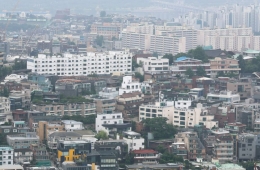
Busan’s western “Nakdong River Belt” is once again emerging as a watershed moment for reshaping the political landscape. Particularly because this region is highly sensitive to swings in centrist voters, elections here are often referred to as a “microcosm of Korean politics.”
The Nakdong River Belt encompasses six western districts along the Nakdong River: Sahagu, Sasanggu, Bukgu, and Gangseogu in Busan, as well as Gimhae and Yangsan in South Gyeongsang Province. As new residential towns, industrial complexes, and logistics zones have developed together, the progressive bloc has shown relative competitiveness even in PK (Busan and South Gyeongsang), a region traditionally dominated by conservatives. Therefore, voting patterns in this area are more strongly influenced by the appeal of individual candidates or the local economic situation than by party loyalty.
In the 2018 local elections, the Democratic Party virtually swept all six basic local government heads in the Nakdong River Belt, cracking the conservative stronghold. However, in the 2022 elections, the People Power Party succeeded in regrouping, flipping the outcome back to 6-0. As a result, the Nakdong River Belt has become a quintessential swing region where results shift with every election and serves as a barometer for national electoral trends.
![[Hotly Contested Preview]②Nakdong River Belt... 'Again 2018' at a Crossroads as Centrist Voters Become the Deciding Factor](http://www.asiae.co.kr/news/img_view.htm?img=2026042310383737567_1776908317.jpg)
Once again, the swing of centrist voters is considered the key variable in this election. Political commentator Park Sangbyung analyzed, “This local election effectively serves as a midterm evaluation of the first year of the Lee Jaemyung administration,” and added, “If the Democratic Party’s approval is at 40% and the People Power Party’s at 20%, it means some People Power Party supporters have shifted to the center, and some centrists have moved to the Democratic Party.” He continued, “Ultimately, the competition is over who can win over the remaining centrists, but as things stand, it will not be easy for the People Power Party to secure them.”
There is also a growing sense of caution inside the People Power Party. One Busan-area lawmaker said, “It’s difficult to expect a landslide victory in the basic local government races as we did in 2022,” and added, “It’s highly likely that the Democratic Party and the People Power Party will be exchanging wins in some areas.”
Both parties are tailoring their strategies to focus on “winning over the center.” While the Democratic Party maintains a lead in the polls, they are also wary that excessive optimism could provoke a conservative consolidation, so they are focusing on managing voter sentiment until the very end. Byun Sungwan, head of the Democratic Party’s Busan city chapter, said, “Busan is by no means an easy region, and as time goes on, conservative consolidation becomes more apparent here. We cannot afford to let our guard down until the end.”
Meanwhile, the People Power Party is prioritizing a “catch-up strategy” that focuses on consolidating its traditional base while narrowing the gap to within the margin of error. Park Sunghoon, People Power Party lawmaker for Bukgu-eul in Busan, said, “This is an election where the consolidation of Busan’s centrist-conservative voters is more important than ever. The conservative bloc is already coming together, and as polls show the race within the margin of error, a close contest is expected.”
![[Hotly Contested Preview]②Nakdong River Belt... 'Again 2018' at a Crossroads as Centrist Voters Become the Deciding Factor](http://www.asiae.co.kr/news/img_view.htm?img=2026042310391437569_1776908353.jpg)
In political circles, there is talk of the possibility of “coattail voting,” where the outcome of the mayoral race could sway the basic local government contests. Another People Power Party lawmaker from Busan remarked, “In many local elections, the results for metropolitan mayors affect outcomes for lower-level local governments. The mayoral outcome will have a major impact on the Nakdong River Belt races.”
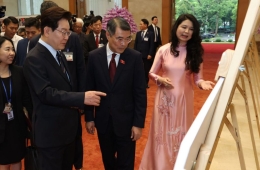
The policy competition for western Busan is also drawing attention in the mayoral race. Incumbent Mayor Park Hyungjun, the People Power Party candidate, is highlighting his efforts to promote major projects such as the Western Busan Administrative Complex Town, the construction of a Western Busan Medical Center, and the creation of the “Nakdong Five Parks” eco-park. He stated, “We are concentrating policy resources on the development of western Busan to address the imbalance between eastern and western Busan.” Jeon Jaesu, the Democratic Party candidate from Bukgu, also said, “If only eastern Busan grows while the old downtown and western Busan are left behind, the competitiveness of the entire city will be weakened,” and revealed that he is preparing various pledges to narrow the east-west gap.
The two sides’ visions for regional development are also differentiated in their approach. Jeon’s “Bu-Ul-Gyeong Megacity” is a “cooperation-based model” that aims to link Busan, Ulsan, and South Gyeongsang Province into a joint economic zone, whereas Park’s “Gyeongnam-Busan Integrated Metropolitan City” is a “consolidation-based model” that seeks to operate the region as a single city by easing regulations and concentrating authority.
Hot Picks Today
 Chilling Timing "Did They Know Again?"... $640 ...
- Thailand and India Surpass 50%, but Korea Only at 37%... Falling Behind in the A...
- "You Don't Have to Go to Work When It Rains"... Chinese Food Company Offers Paid...
- "Woke Up to a Strange Smell"...Both Feet Placed on KTX Front Armrest
- "I Can't Believe They're Real": Cockroaches Squirm Inside Transparent Jacket in ...
Another point of interest tied to the local elections is the by-election for Bukgu-gap in Busan. With former People Power Party leader Han Donghoon declaring an independent candidacy, if the People Power Party nominates its own candidate, a three-way race becomes inevitable. In that case, the race could shift dramatically depending on whether the conservative bloc unites behind a single candidate. The aforementioned Busan lawmaker said, “As the election nears, Park will inevitably raise the level of rhetoric with the possibility of a Park-Han alliance in mind. The entire conservative bloc will need to unite to overcome the current situation.”
© The Asia Business Daily(www.asiae.co.kr). All rights reserved.