[Redirecting the Flow of Capital]②[Interview] "Growth Momentum Fueled by the National Growth Fund... The 'K-Certification' Attached to Rebellion"
640 Billion Won in Combined Policy and Private Funding Fuels AI Semiconductor Drive
"Government-Accredited Innovative Company" Symbolism Spurs the "K-Certification" Effect in Attracting Foreign Capital
Boosting Global Trust and Investment... Accelerating Growth as "Patient Capital"
On April 13, we visited the Rebellion headquarters in Bundang-gu, Seongnam-si. The eight-story building, without factories or smokestacks, was a textbook example of a fabless company specializing in the design of NPUs (Neural Processing Units). Entering the company's exhibition space on the third floor, we saw Rebellion's main products on display, and on one side, a card for the first-generation ATOM-Max NPU featuring President Lee Jae-myung's handwritten message. The card read, "To the world's top three with the AI superhighway!" in President Lee's handwriting.

President Lee Jae-myung's handwritten signature on Rebellion's first-generation NPU 'ATOM-Max' card. Provided by Rebellion
View original imageLatecomer Rebellion Achieves Tenfold Revenue Growth in Five Years... Accumulates 1.3 Trillion Won in Investment
Rebellion, which started in a leaky office, has written a completely different history in just five years since its founding. While GPU powerhouse Nvidia has built a dominant position in the training market, Rebellion has carved out a niche by focusing on large inference chips for data centers. Although it was a latecomer compared to the wave of AI semiconductor startups that emerged after AlphaGo in 2016, Rebellion's strategy of reducing power consumption and maximizing computational efficiency has gradually begun to shine.
Revenue in 2025 soared tenfold compared to two years ago, and the number of employees grew from five to 300. Currently, about 70% of the 300 employees are engineers. This growth has attracted engineers from Samsung Electronics and SK hynix to join Rebellion. As its technological strength was recognized, external capital flowed in rapidly. Rebellion stands out among domestic AI semiconductor companies for attracting foreign investment. The company has secured investors from eight countries, including Korea, the United States, the United Kingdom, Saudi Arabia, France, Japan, Taiwan, and Singapore.
![[Redirecting the Flow of Capital]②[Interview] "Growth Momentum Fueled by the National Growth Fund... The 'K-Certification' Attached to Rebellion"](http://www.asiae.co.kr/news/img_view.htm?img=2026042408590838884_1776988749.jpg)
The National Growth Fund as "Patient Capital"... Enables Bolder, Faster Decisions in the Supply Chain Race
The National Growth Fund has played a key role in supporting this growth. Last month, the fund selected Rebellion as its very first direct investment company. As a result, 300 billion won in policy funds and 340 billion won in private funds led by Mirae Asset Group—a total of 640 billion won—were instantly injected. With this, Rebellion has secured a cumulative investment of 1.3 trillion won since its founding in 2020, progressing through Series A (92 billion won), B (185 billion won), and C (350 billion won), and now attracting the National Growth Fund at the pre-IPO stage. After receiving this investment, the company's valuation soared to approximately 3.4 trillion won.
In the AI competition, where capital is both strategy and a survival tool, the funds provided by the National Growth Fund have been a decisive turning point that accelerated Rebellion's growth. Sung Sungkyu, Chief Financial Officer (CFO) of Rebellion, emphasized, "This investment is more than just financial support—it will be a momentum for the company's growth. We are now able to accelerate development and secure the capabilities to compete globally."
With greater financial capacity, the company can now make quicker and bolder decisions, such as securing supply chains and making preemptive investments. Representative examples include procuring key components like high-bandwidth memory (HBM) in advance or making early server purchases. In the semiconductor market, where "who invests first" determines business success or failure, preemptive investment creates a "speed difference," which directly translates to company growth. This year is especially crucial for Rebellion, with new product launches and mass production of HBM-integrated products scheduled. In other words, this year is the company's "golden time" for market expansion.
CFO Sung explained, "The semiconductor business involves very high development and mass production costs, especially for mask production and foundry services, and ultimately, the scale of capital determines the speed of technology development." He defined the National Growth Fund as "patient capital" with a long-term investment perspective. While companies usually feel pressure for short-term results when capital is injected, the National Growth Fund is willing to wait for growth from a long-term perspective. Sung said, "Thanks to the National Growth Fund, we now have the courage to take risks and even face failure."
Funds labeled as the "National Growth Fund" carry significance beyond ordinary investment. Unlike private investment, they come with strong symbolism and credibility. CFO Sung stressed, "For foreign investors, the fact that a company is recognized by the Korean government is a positive signal," adding, "There's a kind of 'K-certification effect' at play."

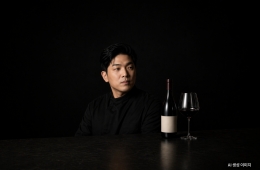
Sung Sungkyu, Chief Financial Officer (CFO) of Rebellion, is explaining the company's investment history at the Rebellion headquarters located in Bundang-gu, Seongnam-si, on April 13.
View original imageTargeting Global Markets After Domestic Listing Next Year... Contributing to the Korean AI Semiconductor Ecosystem
The company expects this credibility to have a positive impact in attracting overseas investment and in future global listing efforts. CFO Sung said, "We originally planned to pursue an IPO right away, but this investment has provided a foundation for greater growth. First, we are aiming for a domestic listing next year, and will then consider entering the global market."
Rebellion chips are produced using Samsung Foundry's 5-nanometer and 4-nanometer processes. The company actively leverages the Korean semiconductor ecosystem, not just for design but also for production. It has established memory partnerships with Samsung Electronics and SK hynix, while KT and SK Telecom participate as clients applying Rebellion's AI services. This structure demonstrates that Rebellion is not just a fabless company, but is helping build a "Korean AI semiconductor ecosystem" that connects memory and foundry services.
Hot Picks Today
 A Single Card Worth 24 Billion Won... "Over 3,0...
- Trump: "Thought It Was the Sound of a Tray Dropping... Shooting Likely Unrelated...
- Cho Kyung-ho: "If Daegu Falls, Conservatism Collapses at Its Roots... I Will Def...
- "I Just Wore My Dad's Coat"... Diagnosed with Malignant Lung Cancer Decades Late...
- No Work, No Inheritance for the Eldest... 30 Billion KRW in Shares Gifted to Sec...
Rebellion expressed its commitment to contributing to the expansion of Korea's semiconductor industry beyond its traditional memory focus and into system and AI semiconductors. CFO Sung said, "If we can build an ecosystem in Korea that covers development, production, and services, we can strengthen non-memory semiconductor competitiveness and contribute to the expansion of the entire industry. Through continued growth, we aim to create an environment where subsequent companies can also attract investment."
© The Asia Business Daily(www.asiae.co.kr). All rights reserved.