Policy
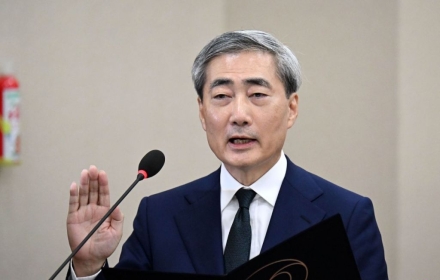
Bank of Korea Governor Shin Hyun-song to Hold First Meeting with Deputy Prime Minister Koo Yoon-cheol on the 23rd
Shin Hyun-song, the new Governor of the Bank of Korea, will meet with Deputy Prime Minister for Economic Affairs and Minister of Economy and Finance Koo Yoon-cheol just three days after taking office. According to the Bank of Korea on April 21, Governor Shin is scheduled to meet with Deputy Prime Minister Koo on April 23 to exchange views on domestic and global economic conditions. This meeting is primarily a courtesy call, with Deputy Prime Minister Koo congratulating Governor Shin on his appointment and exchanging greetings. It is reported that there are no specific agenda items planned for discussion.
-
Financial Services Commission Launches Public Proposal Center for the Financial Sector Starting April 20
-
"Risk Increases with Scale of Promissory Notes and IMA Funding"... Financial Supervisory Service Urges Risk Management for Comprehensive Investment Firms
- Public Fund Recovery Rate Reaches 72.6%...161 Billion Won Recovered in Q1 from Seoul Guarantee Share Sale
-
"Finally Coming"... Samsung Electronics, SK hynix 2x Leveraged ETF to Be Listed on the 22nd of Next Month
- Financial Security Institute to Hold Financial Security Manager Qualification Exam in July
-
BIS Secretary General: "Shin Hyunsong Provided Intellectual Leadership... Congratulations on Appointment as BOK Governor"
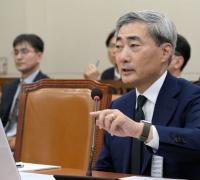
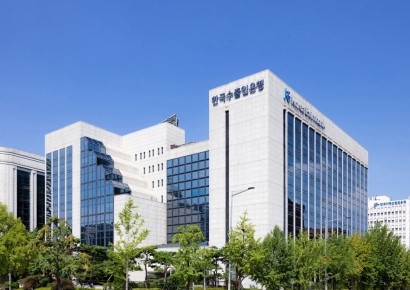
Korea Eximbank Begins Comprehensive Overhaul of Credit Evaluation System
The Export-Import Bank of Korea announced on April 21 that it has begun a comprehensive overhaul of its credit evaluation system to enhance its credit assessment work. The credit evaluation system is a framework for preemptively measuring the risk of default by client companies. It serves as a core infrastructure for sound bank management, used in post-management tasks such as credit approval limits, interest rate calculations, and provisioning. The Export-Import Bank of Korea plans to update its financial evaluation models to reflect current market conditions, strengthen the quantification of AI-based non-financial evaluations, and enhance its financial analysis capabilities to improve the discrimination and stability of credit ratings. In addition, a dedicated credit evaluation model for investments will be newly introduced. Separate evaluation models will be established for direct and indirect investment types, and the assessment system for recipients of productive finance?such as
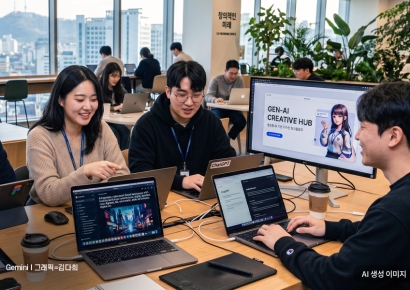
4 Out of 10 Seoul Residents Use Generative AI...Distinct Generational Divide Evident
Last year, 4 out of 10 Seoul residents reported having experience using generative artificial intelligence (AI). This figure has tripled in just two years. However, a clear generational gap has emerged in both AI usage and preparedness. The Seoul AI Foundation announced on April 20 the results of its "2025 Seoul Citizens' Digital Competency Survey," conducted with 5,500 Seoul residents. The findings show that generative AI has become a regular part of daily life for Seoul citizens and that overall digital competency has improved. Nonetheless, the survey revealed a distinct generational divide in both AI usage and readiness. Digital competency among Seoul residents showed overall improvement compared to 2023. The "digital information comprehension" category saw the largest increase, rising from 53.8 to 57.6 points. The "digital safety" category also increased, from 49.6 to 51.7 points. Other categories, such as digital service utilization (68.1 to 68.2 points), digital device usage (67
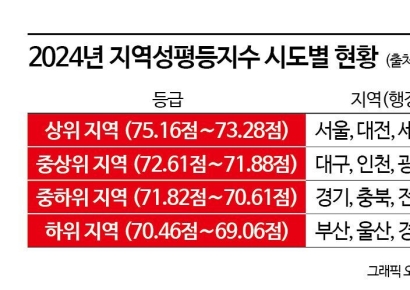
National Gender Equality Index at 67.1 Points... Low Gender Equality in "Women's Representation" and "Care"
As of 2024, South Korea's National Gender Equality Index reached 67.1 points, an increase of 2.1 points compared to the previous year. The Ministry of Gender Equality and Family announced this on April 20 during the 19th Gender Equality Committee meeting, chaired by Prime Minister Kim Minseok. This meeting was held in person for the first time in five years since 2021.The National Gender Equality Index, mandated by Article 19 of the Framework Act on Gender Equality, has been published annually since 2010 to quantitatively assess the level of gender equality in South Korea and to establish and review policy directions. The 2024 National Gender Equality Index scored 67.1 points, up 2.1 points from 65.0 points in 2023. By category, among the seven areas measured, the highest levels of gender equality were observed in education (95.7 points) and health (91.5 points). This indicates that there is almost no gender gap in access to educational opportunities and healthcare. The next highest ca
Non-Life Insurers Refund KRW 1.36 Billion to 2,289 Auto Insurance Fraud Victims Last Year
Last year, non-life insurance companies refunded a total of KRW 136 million in unfairly surcharged auto insurance premiums to 2,289 victims of insurance fraud. This amounts to an average of about KRW 600,000 per person. According to the Financial Supervisory Service on April 20, since the refund system was introduced in June 2009, non-life insurers have refunded a total of KRW 1.12 billion to approximately 24,000 victims of auto insurance fraud. Looking at the past five years, an average of 2,540 victims received about KRW 121 million in refunded surcharged premiums each year. The Financial Supervisory Service promoted a plan last year to manage long-term unclaimed surcharged premiums more systematically and efficiently by converting those amounts into dormant insurance funds and contributing them to the Korea Inclusive Finance Agency. For unclaimed surcharged premiums of over KRW 8.7 million that have not been claimed for more than 10 years, each insurance company will notify the vic
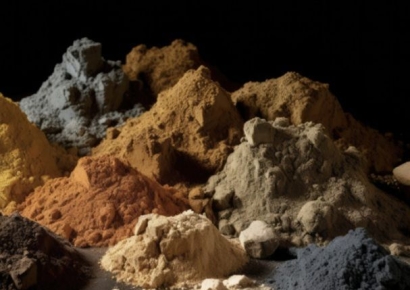
Pursuing Rare Earth Independence from China, But Self-Sufficiency Remains Distant... Urgent Need for International Cooperation
As the U.S.-China trade conflict and wars in the Middle East have unfolded, the resource war front has expanded to rare earth elements. Rare earths are widely used as essential materials in advanced industries such as electric vehicles, semiconductors, petrochemicals, and defense, and are evaluated as security assets by various countries. China, the undisputed dominant player, has expanded its global market share by supplying rare earths at low prices. It accounts for about 70% of global production and over 80% of refining and processing. In February 2026, the United States officially launched "Project Vault," a strategic core minerals stockpiling initiative worth USD 12 billion (approximately KRW 17 trillion). While core minerals needed for the defense industry have already been stockpiled at the national level, this is the first time a core minerals stockpile project has been established to meet private-sector demand. The United States, together with the Australian government, has pl
Housing Finance Corporation Expands Preferential Guarantee Fee Benefits
Korea Housing Finance Corporation is expanding the scope of preferential guarantee fees for housing guarantees to alleviate the housing cost burden on low-income and vulnerable groups.On April 20, the Housing Finance Corporation announced that, starting with guarantee applications submitted on this date, it will strengthen guarantee fee benefits for small business owners, disaster-affected households, families with children, and low-income individuals. This measure aims to reduce financial costs for groups in need of policy support and to enhance the corporation's role in inclusive finance. First, the discount rate for guarantee fees for small business households and disaster-affected households will be increased. Small business households will receive a 0.1 percentage point discount for individual guarantees and a 0.02 percentage point discount for Jeonse deposit return guarantees. Disaster-affected households will benefit from a 0.2 percentage point reduction for individual guarantee
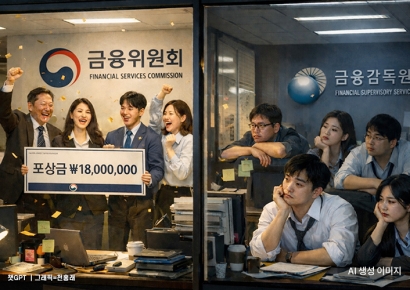
"They Gave Out 18 Million Won in Special Bonuses... Why Don’t We Get a Raise Despite Constant Overtime?" Feelings of Deprivation
The "clear rewards and punishments" principle of the Lee Jaemyung administration's civil service is a hot topic even within financial authorities. While the Financial Services Commission (FSC) has boosted organizational morale by awarding a total of 18 million won in special bonuses to employees who delivered outstanding results, these rewards remain out of reach for the Financial Supervisory Service (FSS), a public institution. According to voices within the FSS, especially among younger staff, there is a growing sense of envy and relative deprivation. According to financial authorities on April 20, this year's annual internal reward budget for the FSS is set at 85 million won. While the external reward budget increased by 4.0% to 231.38 million won, the internal reward budget for employees remained at the same level as the previous year. The FSS conducts its internal annual awards at the end of the year, with prize amounts reaching up to 1 million won per recipient, though awards ty
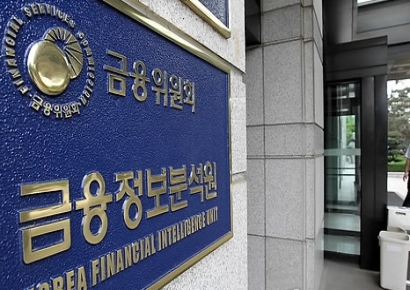
FATF Ministerial Meeting Reaffirms Multilateral Cooperation and Joint Response to Illicit Finance
Member countries of the Financial Action Task Force (FATF) reaffirmed their commitment to strengthen international cooperation against money laundering, terrorist financing, and the financing of the proliferation of weapons of mass destruction, and to jointly respond through multilateral collaboration. The Financial Intelligence Unit (FIU) under the Financial Services Commission announced on the 20th that 40 member countries attended the FATF Ministerial Meeting held at the International Monetary Fund (IMF) headquarters in Washington, D.C., United States, on the 17th (local time), and adopted a joint declaration. Established in 1989, FATF is an international organization whose main missions are anti-money laundering (AML), countering the financing of terrorism (CFT), and preventing the financing of the proliferation of weapons of mass destruction (CPF), with 40 member countries currently participating. At this meeting, ministers from each country reviewed FATF's work achievements over
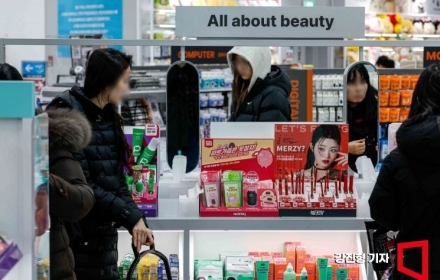
![[K-Shaped Consumption] ④A Steam Iron for 4,980 Won? Ultra-Low-Priced Private Labels Attract Big Corporations Too](https://cwcontent.asiae.co.kr/asiaresize/303/2026041309444223093_1776041081.jpg)
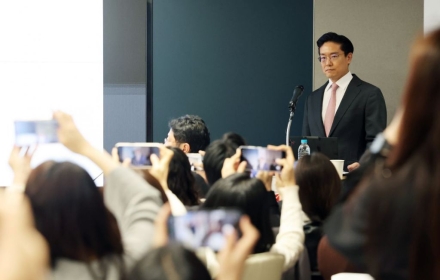
![[Market Trust Shaken by Samchundang]③Regulatory Gaps, Persistent Risks](https://cwcontent.asiae.co.kr/asiaresize/303/2026041314131323688_1776057194.jpg)
![[Trust in the Market Shaken by Samchundang] ②The Art of Promotion That Sways Investor Sentiment](https://cwcontent.asiae.co.kr/asiaresize/303/2026041314131423689_1776057195.jpg)
In the News

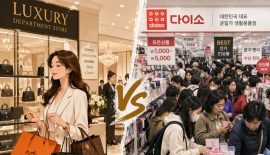
- Is This a Boom or a Recession? Queues for Both Luxury and Bargain Goods [K-Shaped Consumption Era]
- KOSPI Closes at All-Time High, Nears 6,400 Mark
- "I Used It for 10 Years, But I'm Leaving"... Natural Cosmetics Brand Faces Backlash After Featuring BJ Gwajeupseyeon as Model
- "Please Launch It in Korea!" After All the Hype... This Coffee Finally Arrives in Korea
- Could Not Hold His Second Grandchild... A Man in His 60s Saves Three Lives Before Passing Away
- "ID? Not Required"...Warehouse Pharmacies Fueling Drug Misuse