Park Wonseok: "Hwang Kyoik Should Step Down," Lee Taekyu: "Ominous Signs" [Current Affairs Show]
Park Wonseok and Lee Taekyu: "A Seriously Flawed Appointment"
Who Recommended Hwang Kyo-ik and Seungman Seo?
Cultural and Arts Community: "Inappropriate—The President Should Apologize"
■ Broadcast: The Asia Business Daily "So Jongseop's Current Affairs Show" (Mon-Fri, 4-5 PM)
■ Host: So Jongseop, Political Specialist ■ Director: Lee Kyungdo, Producer
■ Guests: Former Justice Party lawmaker Park Wonseok, Former People Power Party lawmaker Lee Taekyu (April 20)
※ When quoting this article, please be sure to cite "So Jongseop's Current Affairs Show."
So Jongseop: Hwang Kyo-ik, well-known as a food columnist, has been appointed as President of the Korea Culture and Tourism Institute. Questions are being raised over whether this is an appropriate appointment. What is your view?
Park Wonseok: It is true that Hwang Kyo-ik has a somewhat special relationship with President Lee Jae-myung. They are alumni, and Hwang is known to have had close interactions with President Lee in the past... This is a parachute appointment. However, there are different types and degrees of parachute appointments, and in this case, it is an extreme example. There are about 60 organizations under the Ministry of Culture, Sports and Tourism. The Korea Culture and Tourism Institute is the only research institute among them. Therefore, expertise is required; if you look at the staff, they are mostly master’s or Ph.D.-level experts. It is difficult to say that Hwang Kyo-ik possesses the expertise required for the position. The fact that this is an extreme case of parachute appointment is, I think, the first issue here.

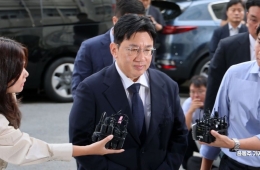
Choi Hwiyoung (left), Minister of Culture, Sports and Tourism, presents a certificate of appointment to Hwang Kyoik, President of the Korea Culture and Tourism Institute, on the 17th and poses for a commemorative photo. Provided by the Ministry of Culture, Sports and Tourism
View original imageThe second issue is that this is not the first such appointment in an agency under the Ministry of Culture, Sports and Tourism. For example, Minister Choi Huieoung is actually a platform expert, not a specialist in the field of culture. There has been controversy over her administrative experience and abilities. Not long ago, Seungman Seo was appointed CEO of the National Jeongdong Theater. The Jeongdong Theater is a venue for performances by traditional comedians. But where in his career can we find qualifications suitable for such a position? Furthermore, before that, actor Jang Dongjik was appointed as the chairman of the Jeongdong Theater’s board. There was controversy about this at the time. So it is not just Hwang Kyo-ik’s appointment that is being questioned; these issues have accumulated over time. My view is that even artists and organizations in the cultural sector that are considered relatively close to this administration are now publicly expressing dissatisfaction and raising concerns.
Accumulated Dissatisfaction in the Cultural and Arts Community Over Appointments
So Jongseop: Out of so many possible candidates, why Hwang Kyo-ik?
Lee Taekyu: Civil society groups like the Cultural Solidarity Movement have criticized that rather than expertise or public interest, factors such as public recognition, political interests, and personal connections are being excessively prioritized. I do not believe all parachute or patronage appointments are bad. In some cases, an appropriately chosen outsider can increase organizational tension and creativity and play a very positive role. But when a parachute appointment is made incorrectly, it can instead hinder the development of the organization and spark various controversies.
From this perspective, this appointment is a mistake. The fact that it so blatantly disregards proper principles and standards ultimately reflects the privatization of power. I see ominous signs in President Lee Jae-myung’s personnel appointments. I believe that the fields of culture and the arts are the highest expression of humanity and the finest outcomes of human interaction. Those leading cultural and arts institutions should possess the character and many qualities required for such a role, but Hwang Kyo-ik is extremely partisan.
For example, when Cho Kuk’s wife, Chung Kyungshim, was sentenced to four years in prison, he made an absurd comparison, saying she was carrying the cross up Golgotha, thus defending admissions fraud and comparing her to Jesus. Also, in 2021, when there was a fire at the Coupang logistics center in Icheon, then-Governor Lee Jae-myung stopped by briefly and did a tteokbokki mukbang (eating show) with Hwang Kyo-ik. This was heavily criticized at the time, as it was seen as lacking basic respect for those affected by the incident.
Is someone with this level of awareness and mindset appropriate to lead a cultural and arts institution? I think this is a question that must be thoroughly examined. For these reasons, I believe the President is making a serious mistake with this appointment.
The President's Mistaken Appointments Signal Ominous Signs
So Jongseop: Would you say there is a red flag or a warning sign regarding appointments in the Lee Jae-myung administration?
Park Wonseok: Every administration appoints people who contributed to their rise to power—these are called parachute appointments. This has always been controversial in the past. But there is a big difference between a parachute appointee who at least has some relevance or expertise, and one who is parachuted in with no such qualifications whatsoever. This case is closer to the latter.
Hwang Kyo-ik is known as a food columnist and is a familiar face on TV and YouTube, but it is difficult to say he has the expertise required by the Korea Culture and Tourism Institute. President Lee Jae-myung may feel differently, but I personally have never seen evidence of such expertise. There has been much criticism even regarding his expertise as a food columnist. There is a growing sense of displeasure at the idea that just anyone can be parachuted into this field.

The Ministry of Culture, Sports and Tourism appointed Seungman Seo as the CEO of the National Jeongdong Theater on the 10th. Photo by Yonhap News
View original imageExperts and practitioners in the culture and arts sector are very proud of their work. With repeated appointments like this, there is a sense that not only do these appointees not know the field, but they do not respect it. In fact, there are dissenting voices even from within the administration’s own camp. That is why I believe President Lee Jae-myung needs to listen more carefully to complaints and concerns. Ideally, I think Hwang Kyo-ik should step down voluntarily. Of the 60 agencies under the Ministry of Culture, Sports and Tourism, this is the only research institute, and it is difficult for him to fulfill the required level of expertise. If such appointments continue, people will conclude that this government is no different from past administrations. This will raise the question of how President Yoon Suk-yeol’s appointments, which the opposition so heavily criticized, are any different from those being made now.
Patronage Appointment—Hwang Kyo-ik Should Step Down
So Jongseop: There must be a reason for appointing people like Seungman Seo and Hwang Kyo-ik among so many candidates.
Park Wonseok: I just see this as a patronage appointment—an act of rewarding loyalists. I don’t know exactly what contributions Hwang Kyo-ik made, but it is hard to understand this appointment otherwise. It is appropriate to appoint people to roles that match their abilities, but placing them in completely unsuitable positions is a problem. Also, though it has not become a major controversy yet, there are some puzzling appointments—for instance, several lawyers involved in the Daejang-dong case are now placed in key positions in the presidential office, particularly the Office of Civil Affairs. Or, in the case of the UN ambassador, which requires special expertise in multilateral diplomacy, the President appointed his own Daejang-dong defense attorney to the position. These are difficult appointments to accept.
So Jongseop: Is there any chance that Hwang Kyo-ik will resign from his post as president?
Lee Taekyu: I don’t think so. The opposition is currently so weak that there is no political force to provide checks and balances or correct such reckless appointments. In fact, if you look at President Lee Jae-myung’s past as party leader, there was a period when the term ‘honorable death’ was used to describe how thoroughly he excluded opponents and always managed to give nominations to his own loyalists, including his defense attorneys. I think this style of personnel management is now being reflected in these appointments. There is no effective opposition, his approval ratings are high, and for these reasons, I think the President is overlooking the problem.
These things may seem to pass at the time, but public sentiment accumulates over each of these incidents. Eventually, when a certain threshold is crossed, I believe public disillusionment will begin. Historically, the fall of administrations due to public backlash was sometimes triggered by power-related corruption, but since democratization in 1987, personnel mismanagement has been the main cause.
※ Click the video to view the full content.
The Beginning of Public Disillusionment Lies in Personnel Choices—Hwang Kyo-ik Appointment Runs Counter to Public Sentiment
As I mentioned earlier, whenever a party is in opposition, it criticizes government appointments as patronage or parachute appointments, but when it becomes the ruling party, it defends and justifies the very same practices it once condemned. This is the reality of Korean politics. However, there is a limit to how far this can go. When such appointments repeatedly exceed the public’s expectations, people start to feel disappointed and turn away.
Hot Picks Today
!["Only the Top 1% Winning Big in Stocks Smile... '300 Million Won Splurges' or '10-Won Wars,' the Middle Disappears [K-Shaped Consumption Era]①"](https://cwcontent.asiae.co.kr/asiaresize/93/2026042114121434484_1776748334.png) "Only the Top 1% Winning Big in Stocks Smile......
"Only the Top 1% Winning Big in Stocks Smile......
- "If Relocated, I'll Resign"?40% of Millennial and Gen Z Employees Threaten to Qu...
- "Left Even Their Phones Behind: 11 U.S. Scientists Dead or Missing, Prompting Po...
- Kim Keon Hee Fined 3 Million Won for Failing to Appear as Witness in "Julie Alle...
- Couple Secretly Making Love on Mountain Summit... Broadcast Live on the Internet
For example, the People Power Party is still trapped in the so-called rebellion frame. If the public delivers a clear verdict on this through the upcoming June 3 local elections, it will become increasingly difficult for the ruling party and government to rely on such narratives. If these kinds of appointments continue, the public will grow weary and begin to scrutinize the administration more closely, questioning why such people are in important, taxpayer-funded positions. That is why I believe careful judgment is needed. This is precisely why the appointment of Hwang Kyo-ik runs counter to the public’s expectations.
![Park Wonseok: "Hwang Kyoik Should Step Down," Lee Taekyu: "Ominous Signs" [Current Affairs Show]](http://www.asiae.co.kr/news/img_view.htm?img=2026042110482334157_1776736103.jpg)
© The Asia Business Daily(www.asiae.co.kr). All rights reserved.




![Is This a Boom or a Recession? Queues for Both Luxury and Bargain Goods [K-Shaped Consumption Era]](https://cwcontent.asiae.co.kr/asiaresize/307/2026042114133834494_1776748418.png)