[Shaken Public Institutions] "Acting for Acting, Repeated Recruitment, Term Extensions"... Appointment Delays Trigger Domino Effect
LH Faces Unprecedented "Acting for Acting" Leadership Amid 16 Trillion Won Orders and Delays in Third-Generation New Towns
Korea Gas Corporation Sees "Three Consecutive Re-announcements"; Ministry of Culture Affiliates Hit by "Reward Appointment" Backlash
Concerns of "Reward-Based" Appointments After Local Elections... "Even Parachute Appointments Must Have Basic Expertise"
One out of every four public institutions is currently experiencing a leadership vacuum, leading to recurring disruptions in executive appointments across the sector. In particular, major state-owned enterprises are facing a series of unprecedented and abnormal situations, such as "acting for acting" systems, repeated re-announcements of recruitment, and indefinite term extensions.

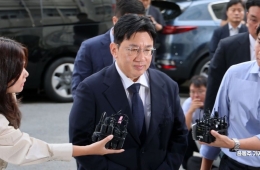
The most representative example is Korea Land & Housing Corporation (LH). Despite being a key player in the public market, responsible for driving the recovery of the construction industry and expanding public housing supply under the Lee Jaemyung administration, the position of president has been vacant for over six months. This year, LH's project orders amount to 17.9 trillion won, with construction work accounting for nearly 15.8 trillion won. In particular, LH must invest 12.8 trillion won—equivalent to 71% of the total volume—into third-generation new towns such as Wangjuk in Namyangju and Changneung in Goyang, and must also achieve the goal of starting construction on 52,000 public housing units within the year. Kim Heondong, former president of Seoul Housing & Communities Corporation (SH), has publicly expressed his intention to apply for the ongoing re-announcement for the LH president position. Although the process from open recruitment to appointment usually takes two to three months, there are expectations that, if expedited, the new president may take office within the first half of this year.
Executive appointments at energy-related public enterprises are also facing significant complications. At Korea Gas Corporation, the appointment of a successor has been endlessly delayed since the term of former President Choi Yeonhye ended. Although candidates were shortlisted through a recruitment process in November last year, opposition from the labor union and the Ministry of Trade, Industry and Energy’s assessment of ineligibility led to a re-announcement. Korea Gas Corporation already went through a re-announcement process for the appointments of both Chae Heebong and Choi Yeonhye, and is now facing the unprecedented situation of selecting a president through three consecutive re-announcements.
![[Shaken Public Institutions] "Acting for Acting, Repeated Recruitment, Term Extensions"... Appointment Delays Trigger Domino Effect](http://www.asiae.co.kr/news/img_view.htm?img=2026042109515733943_1776732718.jpg)
At KEPCO KPS, President Kim Hongyeon, who took office in June 2021, remains in the position for the 22nd month after completing his three-year term, due to delays in appointing a successor. Kim has served under three administrations: Moon Jae-in, Yoon Suk Yeol, and Lee Jaemyung. At Korea Gas Technology Corporation, the top executive position had remained vacant for over two years after the dismissal of former President Cho Yongdon in May 2024. After many twists and turns, a human rights lawyer—known to be close to the current ruling party—has been nominated and is scheduled to take office on the 23rd. However, there has been criticism regarding their lack of expertise.
Agencies under the Ministry of Culture, Sports and Tourism have been caught up in the fallout from so-called "appointment rewards." On the 20th, the appointments of actor Jang Dongjik as chairman of Jeongdong Theater, comedian and broadcaster Seo Seungman as CEO of National Jeongdong Theater, and food columnist Hwang Kyoik as president of the Korea Culture & Tourism Institute sparked strong backlash both inside and outside the arts and culture community. Previously, at Korea Creative Content Agency, actor Lee Wonjong emerged as a leading presidential candidate, but after controversy, all candidates were dropped and the recruitment process is being repeated. All of these individuals have openly supported President Lee Jaemyung and the ruling party.
In contrast, organizations such as Korea Hydro & Nuclear Power (with Kim Hoecheon, former CEO of Korea South-East Power), Korea National Oil Corporation (Son Jooseok, former chairman of Korea Petroleum Management Institute), Korea Institute for Advancement of Technology (Jeon Yoonjong, former president of Korea Institute of S&T Evaluation and Planning), Home & Shopping (Lee Ilyong, former CEO of Home & Shopping), and Seoul Arts Center (cellist and conductor Jang Hanna) have appointed so-called "expert-type" executives with a high level of understanding in their respective fields, providing a stark contrast.
The real issue lies ahead. Seventeen institutions—including Korea Workers' Compensation & Welfare Service, Teachers' Pension, Korea Water Resources Corporation, and Korea Energy Economics Institute—face additional term expirations within the first half of the year. Alongside top executive appointments, fierce competition is expected for auditor and board member positions. Given the upcoming local elections in June, there is growing realism that "reward appointments" for election contributors and close associates will be inevitable.
Hot Picks Today
!["Only the Top 1% Winning Big in Stocks Smile... '300 Million Won Splurges' or '10-Won Wars,' the Middle Disappears [K-Shaped Consumption Era]①"](https://cwcontent.asiae.co.kr/asiaresize/93/2026042114121434484_1776748334.png) "Only the Top 1% Winning Big in Stocks Smile......
"Only the Top 1% Winning Big in Stocks Smile......
- "If Relocated, I'll Resign"?40% of Millennial and Gen Z Employees Threaten to Qu...
- "Left Even Their Phones Behind: 11 U.S. Scientists Dead or Missing, Prompting Po...
- Kim Keon Hee Fined 3 Million Won for Failing to Appear as Witness in "Julie Alle...
- Couple Secretly Making Love on Mountain Summit... Broadcast Live on the Internet
Experts point out that the prolonged leadership vacuum is especially painful at a time when the protracted Middle East war has triggered energy shocks, global supply chain instability, high exchange rates, and inflation, exacerbating internal and external economic crises. Concerns are mounting that, with ongoing discussions about merging and relocating public institutions, policy momentum may weaken and organizational inertia may intensify. Kang Minseong, professor of public administration at Kyung Hee University, stated, "Even parachute appointments must possess at least a minimum level of expertise to understand the institution’s work. In the face of major external variables, such as the Middle East war and tariffs, the leadership vacuum at public institutions—which are at the forefront of national policy implementation—must be filled as soon as possible to prevent administrative failures at the national level."
© The Asia Business Daily(www.asiae.co.kr). All rights reserved.




![Is This a Boom or a Recession? Queues for Both Luxury and Bargain Goods [K-Shaped Consumption Era]](https://cwcontent.asiae.co.kr/asiaresize/307/2026042114133834494_1776748418.png)