[Initial Insight] Soaring After Impeachment... The 2025 Real Estate Market Resembling 2017
Severe Supply Shortage in Seoul
Ministry of Land, Infrastructure and Transport's Housing Supply Policy Faces Setbacks
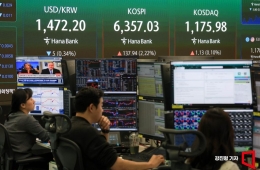
With Exchange Rates and Stocks Volatile,
Soaring Housing Prices Will Worsen Citizens' Lives
Though Hard to Shake Off the Label of a Passive Administration,
The Ministry Must Do Its Job to
Recover Even a Little of the Shattered National Trust
![[Initial Insight] Soaring After Impeachment... The 2025 Real Estate Market Resembling 2017](http://www.asiae.co.kr/news/img_view.htm?img=2024110613053188484_1730865932.jpg)
"There is no sale date?" I asked the staff member who wrote the material after seeing a sales press release from a major construction company last week. "Originally, we planned to start next Friday, but we deliberately left it out because we didn’t know how the political situation would unfold." This meant that they were anxious about setting a date hastily during the impeachment crisis, fearing it might cause the project to fall out of public interest.
"I thought we were finally taking the first step, but what a sudden blow..." The real estate community is abuzz with concerns from residents of the first-generation new town redevelopment pilot districts. For the project to proceed as scheduled, the National Assembly must pass the ‘Special Act on Promotion of Reconstruction and Redevelopment.’ This would simplify procedures and relax floor area ratios. However, due to conflicts between the ruling and opposition parties, all legislative discussions have come to a halt.
Since the emergency martial law situation, the real estate market has been filled with uncertainty. The key theme of this year’s real estate market was ‘supply shortage.’ Last summer’s soaring Seoul housing prices also stemmed from predictions of a drought in new apartment supply. The Ministry of Land, Infrastructure and Transport (MOLIT) devoted all its efforts to housing supply. Starting in January with ‘Starting reconstruction of 30-year-old apartments without safety inspections to expand urban supply,’ the government released supply-related data 28 times throughout the year until November.
This trend abruptly stopped the day after the emergency martial law situation, on the 4th. MOLIT had planned to announce ‘Public Housing Performance and Plans’ that day, intending to convey the message that ‘public housing is increasingly entering the market, so there is no need to worry.’ However, MOLIT sent a briefing cancellation message to reporters as soon as they arrived at work that day.
Unexpected events have frozen the real estate market, and forecasts predict falling housing prices. The same happened eight years ago when former President Park Geun-hye was impeached. In December 2016, when the impeachment motion passed the National Assembly, the Korea Real Estate Board reported that actual transaction prices of Seoul apartments fell by 0.62% (compared to the previous month). The downward trend continued until January the following year (-0.28%). The impact of this event can be confirmed through the ‘Weekly Apartment Price Trends’ to be announced by the Real Estate Board on the 12th.
However, more important than these market forecasts is the disruption of MOLIT’s housing supply policies. Even during the impeachment crisis, if supply is lacking, prices will soar. When former President Park stepped down, the housing price decline did not last long. From February 2017, when the impeachment trial took place, apartment prices actually rose. Seoul apartment prices jumped by a staggering 10.6% over that year.
Looking back, the 2017 real estate market was also dominated by concerns over supply shortages. According to KB Real Estate, the number of apartment move-ins in Seoul was 20,000 units in the first half of 2017 but dropped to 14,000 units in the second half. The downward trend continued into the first half of 2018. At that time, real estate experts said, "Seoul’s housing prices will not easily fall due to supply shortages."
Unfortunately, the supply shortage expected from next year will be much more severe than back then. The number of apartment move-ins in Seoul, which was 19,000 units in the second half of this year, will fall to 18,000 units in the first half of 2025 and 12,000 units in the second half. In 2026, the total for both halves will be less than 10,000 units?the lowest level since surveys began in 1990. Although stricter loan regulations can curb housing prices, if new apartments are this scarce, the effect will be limited.
Hot Picks Today
![[Exclusive] Latest Cancer Treatment Costs Rise by 40 Million Won... War Disrupts Raw Material Supply, Domestic Production Stalled Without Budget](https://cwcontent.asiae.co.kr/asiaresize/93/2026042109055833701_1776729958.jpg) [Exclusive] Latest Cancer Treatment Costs Rise ...
[Exclusive] Latest Cancer Treatment Costs Rise ...
- As Oil Prices Soar and Criticism Mounts, Trump Announces "Special Measures"...In...
- [Breaking] Police Request Arrest Warrant for Bang Si-hyuk on Charges of Fraudule...
- Female Game Caster Makes Bold Move After Criticism Over "Short Skirt" on Broadca...
- Couple Secretly Making Love on Mountain Summit... Broadcast Live on the Internet
With exchange rates and stock prices fluctuating wildly, if housing prices also become unstable, people’s lives will become even more impoverished. Livelihood depends on policy, and policy is made by politics, but for the time being, it is hard to expect anything from politics. Although it will be difficult to shed the label of a ‘plant government,’ now is the time for MOLIT to find what it can do and execute it. Doing so is the only way to recover even a little of the shattered national trust.
© The Asia Business Daily(www.asiae.co.kr). All rights reserved.



!["They Said It Was 'Delicious' Milk... Is the 'List of Fake Milk Products in Korea' for Real? [Matjal X-File]"](https://cwcontent.asiae.co.kr/asiaresize/307/2023072413274517286_1690172865.jpg)