Finance Ministry Contacts Credit Rating Agencies This Week... Attempts to Curb Anxiety
No Resolution Without Ending Political Deadlock
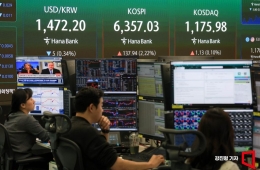
The failure to hold a vote on the impeachment motion against President Yoon Suk-yeol has triggered another political turmoil, further increasing uncertainty surrounding the business community. As the political situation remains shrouded in a zero-visibility fog, with no clear outlook, the economic aftershocks such as a sharp stock market decline and a rapid surge in exchange rates due to foreign capital outflows have continued, prompting the government to hastily engage in appeasing overseas counterparts. However, if the current political turmoil shaking the economy is not fundamentally resolved, there are concerns that the government's crisis management will reach its limits, potentially leading to the worst-case scenario of a downgrade in the country's credit rating.

According to related ministries on the 9th, the Ministry of Economy and Finance plans to hold conference calls this week with the three major global credit rating agencies: S&P, Fitch, and Moody's. This is intended to monitor developments following the failure of the impeachment vote against President Yoon at the National Assembly last weekend, which has expanded political uncertainty surrounding the president's position.
An official from the Ministry of Economy and Finance stated, "We plan to hear the positions of the three major rating agencies regarding the impeachment vote failure and share the current economic situation and the government's commitment to market stabilization," adding, "We are considering various formats such as face-to-face meetings, video conference calls, and emails." The ministry also plans to engage successively with overseas institutional investors and international organizations in addition to the global rating agencies.
The aim is to actively explain the robustness of economic fundamentals and policy responsiveness to minimize the economic impact of the impeachment failure and prolonged political turmoil. At a joint briefing with related ministries held the previous day, Deputy Prime Minister Choi emphasized, "Above all, external credibility is crucial. We will firmly maintain it without any wavering." Considering the export-driven economic structure and financial market conditions that are highly sensitive to external variables, external credibility can directly affect national competitiveness.
Domestically and internationally, there are concerns that if the current situation escalates to the worst-case scenario of a sovereign credit rating downgrade, the Korean economy will pay an irreparable and enormous price. Currently, Korea's sovereign credit rating is at an advanced country level of 'AA' (according to S&P).
Earlier, Fitch, one of the three major rating agencies, warned that prolonged political uncertainty could exert downward pressure on credit ratings. On the 6th (local time), before the impeachment vote, Fitch stated, "The key is how quickly the series of events are resolved," adding, "If political uncertainty is swiftly resolved, growth risks can be mitigated, and the government's proactive policy response may offset risks."
However, it warned, "If political uncertainty is prolonged, it could lead to deterioration in household and corporate credit and pressure on public finances." Another rating agency, Moody's, also pointed out that if the aftershocks of the martial law situation are not resolved in a timely manner, it could negatively affect government capabilities.

The rating agencies' evaluations of the current situation have been limited to a 'wait-and-see' stance, but these views were expressed before the impeachment vote and do not reflect the assumption that political upheaval will be prolonged due to the failure of the impeachment. If political risks are confirmed to adversely affect the economy, a downgrade (or negative outlook) is inevitable.
In fact, the current impeachment political crisis occurred during an economic slowdown cycle, which increases the risk of spreading negative shocks. During the impeachment of former President Park Geun-hye, the domestic economy and financial markets quickly normalized and rebounded due to the semiconductor export big cycle and fiscal capacity. However, the current domestic and external environment is challenging due to export peak-out, trade risks following the launch of Trump's second term, and domestic demand contraction.
Hot Picks Today
!["Only the Top 1% Winning Big in Stocks Smile... '300 Million Won Splurges' or '10-Won Wars,' the Middle Disappears [K-Shaped Consumption Era]①"](https://cwcontent.asiae.co.kr/asiaresize/93/2026041409371024802_1776127030.jpg) "Only the Top 1% Winning Big in Stocks Smile......
"Only the Top 1% Winning Big in Stocks Smile......
- "If Relocated, I'll Resign"?40% of Millennial and Gen Z Employees Threaten to Qu...
- "Finally Coming"... Samsung Electronics, SK hynix 2x Leveraged ETF to Be Listed ...
- Female Game Caster Makes Bold Move After Criticism Over "Short Skirt" on Broadca...
- Couple Secretly Making Love on Mountain Summit... Broadcast Live on the Internet
If the impeachment crisis is prolonged, there are strong concerns that foreign capital outflows will accelerate, domestic demand will worsen due to reduced corporate investment activities and deteriorating consumer sentiment, and this could drag down Korea's economic growth rate itself. Professor Kang Sung-jin of Korea University’s Department of Economics pointed out, "If political instability is prolonged, overseas capital will exit, inevitably affecting the country's credit rating downgrade. Unless the ruling and opposition parties stop clashing and quickly resolve the deadlock, it will be difficult for the economy to stabilize."
© The Asia Business Daily(www.asiae.co.kr). All rights reserved.



!["They Said It Was 'Delicious' Milk... Is the 'List of Fake Milk Products in Korea' for Real? [Matjal X-File]"](https://cwcontent.asiae.co.kr/asiaresize/307/2023072413274517286_1690172865.jpg)