Kim Won, who proposed the 'Haepung Act,' says "Will reintroduce within the year... Will reduce permits to within 3 years" [Domestic Offshore Wind Power Crisis]⑨
Automatic Expiration After Proposal in the 21st National Assembly
6 Years Just for Offshore Wind Power Permitting Process
"Tax Benefits and Subsidies Will Not Be Included in the Law"
![[Image source=Yonhap News]](http://www.asiae.co.kr/news/img_view.htm?img=2024060714174398745_1717737463.jpg)
One of the biggest concerns in the offshore wind power industry is the complex licensing process. Due to the involvement of multiple stakeholders, obtaining business permits takes an average of up to six years, making it difficult to guarantee business feasibility. In response, there is a movement in the National Assembly to propose a special offshore wind power law that simplifies the procedures.
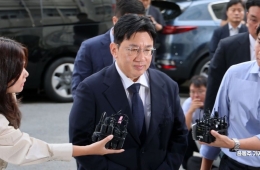
On the 7th, Kim Won-i, a member of the Democratic Party of Korea, stated in a phone interview with Asia Economy, "I will reintroduce the Offshore Wind Power Special Act within this year." Kim had previously proposed the Offshore Wind Power Special Act in the 21st National Assembly to simplify the licensing process for wind power generation, but it was automatically discarded with the end of the National Assembly session.
The 'Special Act on Promotion of Wind Power Generation (Korean-style One-Stop Shop Act)' that Kim introduced as the main proposer in May 2021 structures the licensing-related tasks and dispersed licensing authorities?normally handled individually by project operators and various agencies?into a single institution responsible for "discovering suitable sites, designating consideration zones, forming private councils, and obtaining residents' consent." The aim was to drastically reduce the project period, which takes 5 to 6 years just for licensing procedures, down to 2 years and 10 months.
![Kim Won, member of the Democratic Party of Korea. [Photo by Kim Won's office]](http://www.asiae.co.kr/news/img_view.htm?img=2024060707551298107_1717714512.jpg)
Kim said, "The originally proposed Wind Power Support Special Act was intended to cover both offshore and onshore wind power." He added, "It is very regrettable that it stayed dormant for three years and was discarded, but we are considering reintroducing it with a focus on offshore wind power." He also mentioned, "At the time when some bipartisan agreement was reached, issues regarding local government authority and existing power producers involved in offshore wind projects were insufficiently addressed. We are currently in the process of revising and supplementing these aspects."
He pointed out that the biggest obstacle to expanding wind power generation is the delay or failure to properly proceed with projects due to complicated licensing procedures. Kim explained, "To advance the offshore wind power industry according to the government's plan, procedures must be carried out urgently, but due to institutional matters requiring licensing processes under up to 10 ministries and 29 laws, it takes an average of 6 to 7 years, and up to 10 years in some cases." He continued, "The core idea was to reduce this to within 3 years, which is why it was nicknamed the 'One-Stop Shop Act'." He emphasized, "We are working to consolidate the complex licensing procedures into a single one-stop process to drastically shorten the project period and give momentum to offshore wind power projects."
However, tax benefits or subsidies will not be included in the proposed bill. Kim said, "It is not possible to include everything in one bill, so these will not be part of this bill."
According to the Ministry of Trade, Industry and Energy, renewable energy accounted for 9.2% of total electricity production last year. Among this, wind power accounted for only 0.6%, increasing by just 0.3 percentage points compared to 2013. Although the government has declared its intention to develop wind power as a key energy source to achieve the 2030 greenhouse gas reduction target (NDC) and carbon neutrality by 2050, there is no mid- to long-term roadmap for expanding wind power generation. Even if the renewable energy targets presented in the 11th Basic Plan for Electricity Supply and Demand are implemented, South Korea remains among the lowest in the OECD member countries. This contrasts with countries like China, Taiwan, and Japan, which are actively establishing supply chain plans and increasing offshore wind power capacity. Notably, China installed 16.9 gigawatts (GW) and 5 GW of offshore wind power in 2021 and 2022 respectively, surpassing Europe to become the world's largest offshore wind power producer.
Hot Picks Today
!["Only the Top 1% Winning Big in Stocks Smile... '300 Million Won Splurges' or '10-Won Wars,' the Middle Disappears [K-Shaped Consumption Era]①"](https://cwcontent.asiae.co.kr/asiaresize/93/2026041409371024802_1776127030.jpg) "Only the Top 1% Winning Big in Stocks Smile......
"Only the Top 1% Winning Big in Stocks Smile......
- "If Relocated, I'll Resign"?40% of Millennial and Gen Z Employees Threaten to Qu...
- Department Stores Shine with Gourmet Offerings, Discount Marts Rival 1,000-Won S...
- Female Game Caster Makes Bold Move After Criticism Over "Short Skirt" on Broadca...
- Couple Secretly Making Love on Mountain Summit... Broadcast Live on the Internet
Kim said, "Foreign countries have announced energy transitions aiming to achieve 40-50% carbon zero by 2030," adding, "The current government's will and interest will be the most critical factor in expanding renewable energy, including wind power." He also stressed, "Communication with stakeholders such as local governments and civil society organizations cannot be overlooked in relation to the bill."
© The Asia Business Daily(www.asiae.co.kr). All rights reserved.



!["They Said It Was 'Delicious' Milk... Is the 'List of Fake Milk Products in Korea' for Real? [Matjal X-File]"](https://cwcontent.asiae.co.kr/asiaresize/307/2023072413274517286_1690172865.jpg)