[Politics That Day] Farmlands in Gyeonggi-do Turn into Cities... The Great Expansion of Seoul in 1963
1963 Seoul Area Doubled
Yangju, Gwacheon, Gimpo Counties Incorporated into Seoul
Ruling Party Highlights Gimpo City's Seoul Incorporation as Election Factor
![[Politics That Day] Farmlands in Gyeonggi-do Turn into Cities... The Great Expansion of Seoul in 1963](http://www.asiae.co.kr/news/img_view.htm?img=2023110216512338974_1698911483.png)
Seoul is a pure Korean word meaning the capital city. Undoubtedly, Seoul Special City is the center of South Korea's politics, economy, society, and culture. Seoul has continued to develop in tandem with social changes, and the ‘era of great expansion’ that formed the backbone of today's Seoul took place in 1963.
At that time, an administrative district reorganization of Seoul was carried out, expanding its area from 268㎢ to 593㎢, more than doubling in size.
The Seoul Special City History Compilation Committee explained this in the book ‘2000 Years of Seoul History’ as follows.

On August 23rd, around Seoul City Hall in Jung-gu, Seoul. Photo by Jinhyung Kang aymsdream@
View original imageAt that time, urban expansion was the prevailing trend. The capital Seoul was filled with people coming from all over the country. Seoul was no longer a city centered around the Four Great Gates. Areas that were once rice paddies and fields in Gyeonggi Province were newly incorporated. This is today’s Gangnam.
Gangnam District Office introduced through the ‘Gangnam History Museum’ materials that “the entire Eonju-myeon (彦州面) and five dong-ri (Ilwon, Suseo, Sigok, Yulhyeon, Segok) of Daewang-myeon (大旺面), which belonged to Gwangju-gun, were incorporated into Seongdong-gu, and most of these areas now belong to Gangnam-gu.”
The reason the 1963 Seoul expansion drew attention was that Seoul’s area more than doubled. Ten years later, in 1973, Seoul’s area expanded again with the establishment of Dobong-gu and Gwanak-gu. From the mid-1970s, including the establishment of Gangnam-gu, the current shape of Seoul’s boundaries was formed.
Seoul’s expansion brought challenges. As the population continued to grow in a limited space, shortages of basic infrastructure such as housing, roads, and water and sewage facilities worsened. The importance of urban planning emerged to create a sustainable Seoul. Government-level safeguards, including green belts (development restriction zones), were established to curb Seoul’s expansion.

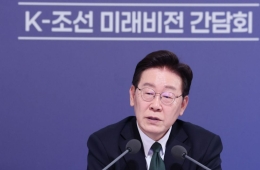
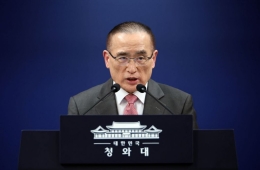
Kim Ki-hyun, the leader of the People Power Party, is speaking at the Supreme Council meeting held at the National Assembly on the 2nd. Photo by Kim Hyun-min kimhyun81@
View original imageSeoul’s population growth has stopped, and efforts to make the city more livable have continued. Seoul remains the center of South Korea, but its population size has long been surpassed by Gyeonggi Province. In 1992, Seoul’s population approached 11 million, but as of this September, it stands at about 9.4 million. This means the population has decreased by 1.6 million over the past 30 years.
On the other hand, Gyeonggi Province had about 7 million people in 1993, but as of this September, its population has nearly doubled to 13.6 million. Over time, Gyeonggi’s population is increasing while Seoul’s is decreasing.
Although Seoul has lost the title of the most populous city, it is transforming into a more pleasant and livable city. However, it now faces a turning point of change for the first time in 60 years since the heated development of 1963.

On April 14th, citizens are using the train at Pungmu Station on the Gimpo Gold Line in Gyeonggi. Photo by Jinhyung Kang aymsdream@
View original imageThe People Power Party’s public discussion of incorporating Gimpo-si in Gyeonggi Province into Seoul has reignited the ‘Mega Seoul’ issue. Gimpo-si covers an area of 276㎢. The current area of Gimpo-si is similar to the total area of Seoul before the great expansion in 1963.
Will the era of Seoul’s great expansion experienced in 1963 be reenacted? Whether such a change attempt is a suitable choice for the country’s development direction is a matter to be carefully considered.
Many believe the Mega Seoul project is not an issue to be rushed, but it has already become a political issue ahead of next year’s general election. On the 2nd, the People Power Party launched the ‘Special Committee for Improving the Convenience of Capital Region Residents’ (tentative name) to discuss the incorporation of Gimpo-si into Seoul. Five-term lawmaker Jo Kyung-tae was appointed as the committee chair.
Hot Picks Today
 Even with High Oil Price Relief Payment, Additional 300,000 Won Per Person to Be Provided... Applications Open from the 18th in This Region
- "Invested 95% in Hynix and Reached 10 Billion Won"... Japanese Investor's Proof Post Goes Viral
- "Why Is the Korean Stock Market Surging?"... Even Italy Is Astonished by the KOSPI Rally
- "You Don't Need to Go to the Gym": The Best Exercises for Lowering Hypertension
- "That Thing Wakes Up Every Night" ... Suspicious Object Covers Rural Village
People Power Party leader Kim Gi-hyeon said, “Our party is launching a special committee directly under the party leader today to actively listen to residents’ opinions and support necessary measures. If residents in Seoul-adjacent cities like Gimpo gather their opinions, the party will actively consider them.”
© The Asia Business Daily(www.asiae.co.kr). All rights reserved.