Kang Jung-gu, President of HIRA, "DTx Guidelines to Be Decided Soon... Must Balance Medical Advancement and Non-Covered Services"
With the first and second digital therapeutics (DTx) devices of this year having obtained approval from the Ministry of Food and Drug Safety, it is expected that reimbursement guidelines will be released soon. These guidelines are anticipated to be a significant turning point for the activation of DTx prescriptions and commercialization.
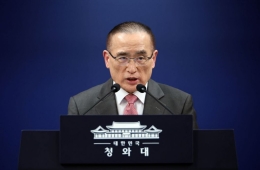
![Kang Jung-gu, President of the Health Insurance Review and Assessment Service, is delivering a greeting at a press conference held at EL Tower in Seoul on the 27th. <br>[Photo by Health Insurance Review and Assessment Service]](http://www.asiae.co.kr/news/img_view.htm?img=2023062715540877897_1687848848.jpg)
Kang Jung-gu, President of the Health Insurance Review and Assessment Service, is delivering a greeting at a press conference held at EL Tower in Seoul on the 27th.
[Photo by Health Insurance Review and Assessment Service]
Kang Jung-gu, President of the Health Insurance Review and Assessment Service (HIRA), held a press conference on the 27th at EL Tower in Seocho-gu, Seoul, and stated regarding the DTx guidelines, "Discussions are progressing quickly, so I believe a decision will be made soon."
Previously, the Ministry of Food and Drug Safety approved Aimmed's 'Somz' and Welt's 'PillowRx' as the first and second domestically produced DTx devices for insomnia. It is expected that the development of DTx will accelerate further. President Kang explained, "As digital technology advances, therapeutic devices related to sleep have been developed in clinical settings, and I understand that many programs assisting various diagnoses and surgeries are being developed," adding, "Through the guidelines, we will allow these to be implemented on a priority and preliminary basis." He continued, "In the past, when new technologies emerged, there were concerns that regulations would hinder them, but now you don't have to worry about that." If HIRA's DTx reimbursement guidelines are released, it is expected to accelerate commercialization by development companies as well as usage in medical institutions.
Along with this, President Kang emphasized the need to balance medical advancement and non-reimbursed items in managing non-reimbursed services. Since it is difficult to convert all non-reimbursed items into reimbursed ones, he mentioned that items with significant weight should be reimbursed, and controlling non-reimbursed items through selective reimbursement is also being considered. Kang said, "If the proportion of non-reimbursed items increases, the coverage rate decreases. Overall, non-reimbursed items need to be identified and reduced to some extent," adding, "Medical care has advanced a lot recently. It will develop tremendously over the next 30 years, so setting a long-term direction is important." He further stated, "Compared to 20 years ago, HIRA reviews about 1.5 billion cases, with the number of reviews increasing 3.5 times and medical expenses increasing about eightfold," and added, "While it is necessary to reduce these as much as possible, it must be done alongside medical advancement. Rather than focusing solely on reducing non-reimbursed items, a balance must be maintained."
Regarding cases where some pharmaceutical companies have stopped drug production due to price cuts, he mentioned the need for appropriate evaluation and relief measures. Kang said, "I remember drugs that disappeared in the past because they were not given proper prices," pointing out, "The ones who suffer in such cases are the public." He continued, "There are cases where drugs are not produced because prices are too low in Korea, and there are quite a few such drugs," adding, "There are items that feel unfair as therapeutics, and I believe those items should be rescued." This is understood as a commitment to devise relief measures to revive drugs necessary for the public but whose production has been halted due to pricing below cost.
Amid plans to disclose expenditure reports from next year to enhance transparency in the pharmaceutical industry's management, President Kang explained that this is a necessary measure despite opposition from the medical and industry sectors. He said, "Since this is the first time, there will be resistance, but eventually, we have to go that way," adding, "I think now is the time to organize and move forward." Regarding the opening of medical data, he stated, "Opening data is indeed the trend, so we are moving toward openness while discussing ways to ensure that those providing data and the public do not suffer losses," and added, "We are considering these aspects while creating guidelines, and a conclusion will be reached soon."
Hot Picks Today
 Even with High Oil Price Relief Payment, Additional 300,000 Won Per Person to Be Provided... Applications Open from the 18th in This Region
- "Invested 95% in Hynix and Reached 10 Billion Won"... Japanese Investor's Proof Post Goes Viral
- "Why Is the Korean Stock Market Surging?"... Even Italy Is Astonished by the KOSPI Rally
- "You Don't Need to Go to the Gym": The Best Exercises for Lowering Hypertension
- "That Thing Wakes Up Every Night" ... Suspicious Object Covers Rural Village
President Kang also emphasized efforts to establish a stable review and evaluation system through the efficiency and advancement of health insurance reviews, as well as to improve the efficiency of health insurance expenditures, a national agenda. He said, "We will specialize reviews and revise standards in detail to ensure rational reviews that prevent unfair cases," adding, "We aim to strengthen critical and essential medical care, supply treatments for rare and intractable diseases in a timely manner, and improve the post-management system so that appropriate patients receive treatment at the right time."
© The Asia Business Daily(www.asiae.co.kr). All rights reserved.