Due to rising bread prices, demand for frozen dough that can be easily prepared at home is rapidly increasing.
Editor's NoteAccording to consumer price trends released by Statistics Korea, while the price of processed foods rose by 4.1% year-on-year in May, bread prices increased by as much as 6.4%. The consumer price index for bread reached 138.48, which is a 38.48% increase over five years compared to the base year of 2020 (100). This rise is steeper than that of other popular Korean snacks such as tteokbokki and fried chicken. Bread, once a snack enjoyed by everyone, has now become a luxury that is difficult to choose due to its high price. How did the price of bread in Korea continue to rise so sharply?

As of the second quarter of this year, the sales volume of frozen dough on the e-commerce platform Kurly has increased by about 80% compared to the same period last year.
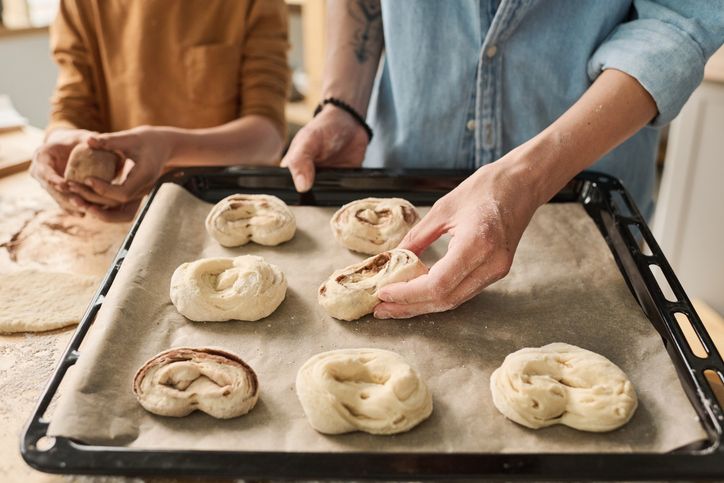
The cooking method is simple, but the taste and texture are comparable to those sold at bakeries, making it an advantage that even home baking beginners can easily try.
Due to rising bread prices, demand for frozen dough that can be easily prepared at home and for mass-produced bread that can be easily found at supermarkets and convenience stores is rapidly increasing. Products that reduce the price burden while improving taste and quality are gaining significant popularity among consumers, especially through word of mouth on social networking services (SNS).
Bread that used to cost 3,000 won at bakeries, now 2,000 won at home... Rising demand for frozen dough
As of the second quarter of this year, the sales volume of frozen dough on the e-commerce platform Kurly increased by about 80% compared to the same period last year. This is a steeper increase than the 66% growth seen in the first quarter. Frozen dough is a product in which flour dough that has already been fermented and shaped is rapidly frozen. After thawing, it can be baked in an oven or air fryer to produce freshly baked bread. The cooking method is simple, but the taste and texture are comparable to those sold at bakeries, making it an advantage that even home baking beginners can easily try. In the past, home baking was considered a hobby that required a lot of effort due to the complex processes of kneading and fermentation, but the spread of air fryers and the popularization of frozen dough have significantly lowered the entry barrier.

If you search for 'frozen raw dough' on YouTube, you can find various recipe videos using it. YouTube
원본보기 아이콘Price competitiveness is also a factor driving the popularity of frozen dough. Salt bread sold at bakeries typically costs around 3,000 won per piece, and at premium bakeries, prices can reach 4,000 to 5,000 won. In contrast, frozen salt bread dough sold on online platforms is priced in the low 1,500 to 2,000 won range, which is only about half the price of the finished product. This price competitiveness comes from the fact that consumers bake the bread themselves, eliminating additional labor costs and fixed expenses associated with operating a store, as well as shortening the production process and improving distribution efficiency.
Consumer reactions on SNS are also positive. The simple cooking method, reasonable price, and the ability to use the dough in various recipes are all factors contributing to its popularity. In fact, there are about 25,000 posts related to "frozen dough" on Instagram, and content introducing homemade recipes such as "How to use pastry dough," "Super simple pain au chocolat," and "How to make pizza with frozen dough" is being uploaded one after another.
In line with this trend, the frozen dough market is expected to grow further in the future. Nielsen Korea forecasts that the frozen dough market will expand from 41.3 billion won in 2020 to about 1.3 trillion won by 2030. The average annual growth rate is expected to be about 5%, and demand for frozen dough that is both affordable and convenient is projected to increase in this era of high prices.
'Cheap, tasteless bread' is a thing of the past... 'Convenience store bread' gains popularity amid high prices

Mass-produced bread, which can be easily purchased at convenience stores, is also attracting consumer attention due to its price competitiveness. Mass-produced bread, which is manufactured in factories and distributed to supermarkets and convenience stores, is inexpensive and highly accessible. In the past, it had a strong image as "cheap, tasteless bread," but recently, as quality has improved and collaborations with well-known brands have increased, consumer perceptions are changing.
According to the Fair Trade Commission's report "Market Analysis of the Bakery Industry and Major Regulatory Competition Impact Assessment," domestic sales of mass-produced bread increased from 2.8372 trillion won in 2018 to 3.9589 trillion won in 2022, with an average annual growth rate of 8.7%. This is higher than the average annual growth rate of total food sales during the same period (6.0%), indicating that the mass-produced bread market is growing at a faster pace. The share of mass-produced bread in total food sales also rose by 0.5 percentage points, from 4.9% in 2018 to 5.4% in 2022.

A representative example of successful mass-produced bread sales is CU convenience store's "Yonsei Milk Cream Bread," launched in partnership with Yonsei Milk in 2022. Filled more than halfway with cream, this bread sparked a "half-cut shot" trend on SNS (photos of the bread cut in half), and surpassed 50 million units in cumulative sales within two years of its launch. The Yonsei Milk Cream Bread series now includes more than 10 varieties, with prices ranging from the high 2,000 won to the low 3,000 won range. CU's bread sales growth rates have remained in double digits: 51.1% in 2022, 28.3% in 2023, and 33.0% in 2024.
IndexThe Secret of Bread Prices
- Sellouts, Shortages, and Open Runs... The 'Chronicles of Bread' That Shook Korea
- "Expensive, but Still Filling Their Baskets"... London Bagel Earns 80 Billion Won on Word of Mouth Alone
- '1,000 Won Bakeries' Sell 500 Breads a Day: "If You Go at 3 PM, They're Sold Out"
- 2000-Won Bread, 200 Billion-Won Boom...The Secret Behind Seongsimdang's Soaring Sales
- Picked Up a Franchise Cream Bread and Gasped... Why Do Prices Differ by Neighborhood?
- "Is It Really Just Raw Material Costs?"...Other Reasons Behind Korea's Soaring Bread Prices
- "Even a Single Slice Costs 10,000 Won... 'Cake Slices' Now as Expensive as Lunch"
- Salt Bread That Used to Cost 5,000 Won at Bakeries... "Only 2,000 Won at Home"
- "I Want to Try Slow Aging Too"... 'Health Breads' See Explosive Sales Despite Double the Price
-

Reporter Heo Midam damdam@asiae.co.kr
-
Edit Kwon Sooyoun afineday75@asiae.co.kr
© The Asia Business Daily(www.asiae.co.kr). All rights reserved.