Financial Supervisory Service announces ETFs Investment Precautions
Branch Opened Pension Accounts fees can be up to 10 times higher Certain Money Trusts may incur additional fees Bank ISA limits real-time trading... ETF selections also vary
Financial Supervisory Service: “Check structure and costs before investing”
Photo by Getty Images Bank
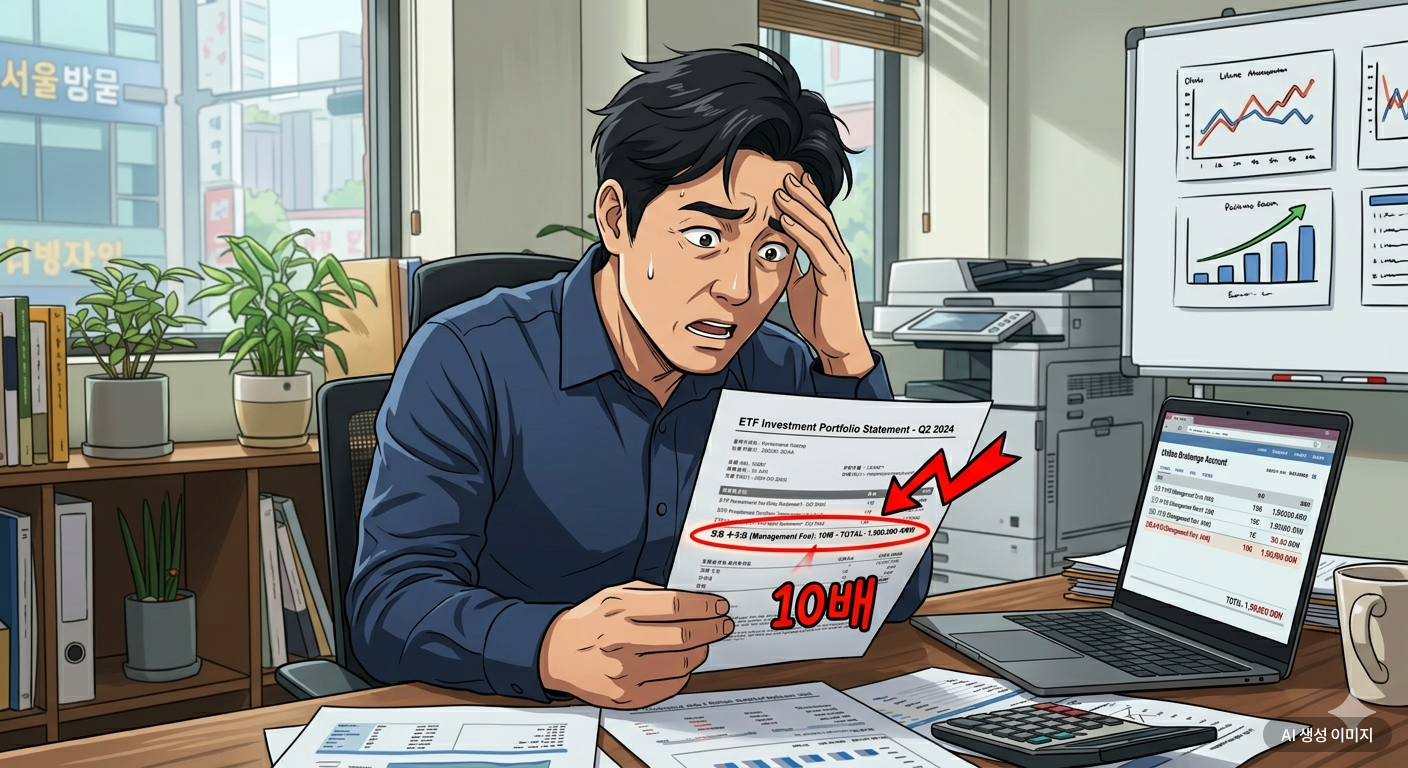
Mr. A, who opened a pension savings account at a securities company branch and has been trading Exchange-Traded Funds (ETFs) via the securities company's application for five years, recently discovered that the transaction fees were about 10 times higher compared to accounts opened online. Meanwhile, Mr. B invested in ETFs through a Certain Money Trust but was not informed by the bank branch staff that additional trust fees would be charged.
These are among the main complaints recently submitted to the Financial Supervisory Service as the ETF market has rapidly expanded.
On May 21, the Financial Supervisory Service released a report, "Precautions for ETF Investments Based on Major Complaint Cases," highlighting key points that consumers should consider when investing in ETFs, including ▲ETF fees ▲pension savings account fees ▲investment products ▲timing of transactions ▲auto-sell services and more.
First, when investing in ETFs through a Certain Money Trust, in addition to the transaction fee of about 0.1%, investors may also incur trust fees (0.03% to 2.0%) and early redemption fees (0.0% to 1.0%). This can result in the actual ETF return being lower than the initially targeted return.
Additionally, it is important to note that if you open a pension savings account at a branch rather than online via website or application and then invest in ETFs, the transaction fee may be relatively higher. According to the Financial Supervisory Service's review of fee rates, when trading through HTS or MTS with an account opened online, the fee rate is 0.01% to 0.015%, whereas with an account opened at a branch, the HTS·MTS transaction fee rate is 0.1% to 0.2%. For branch-based transactions, the fee rate can reach 0.4% to 0.5%. An official from the Financial Supervisory Service emphasized, "If you invest in ETFs through a pension savings account, you should check the transaction fee in advance."
ETF products sold by banks are more limited compared to those offered by securities companies, and the selection may also vary by bank. This is another important point to consider. Before transferring your Individual Savings Account (ISA), you should check in advance if the ETF you wish to purchase is available at the bank.
Mr. C, who had been investing in ETFs using a brokerage ISA account at a securities company, closed the account on the advice of a bank employee and opened a bank trust-type ISA account, only to find that he could not purchase the ETF products he used to trade. He subsequently filed a complaint. In the case of bank trust-type ISAs, ETF transactions are entrusted to the bank, and only the ETF products designated by the bank can be traded. In contrast, for brokerage ISAs at securities companies, investors can trade ETFs directly and invest in listed domestic ETFs.
Furthermore, banks cannot offer real-time ETF trading as securities companies do, so it is important to check in advance the actual time when ETF trades are executed. According to the Financial Services Commission's legal interpretation, ETF brokerage is classified as the brokerage of listed securities, and since it is not included in the scope of collective investment securities brokerage permitted for banks, banks must process customers' ETF buy and sell orders through partner securities companies. As a result, real-time trading is not available. Each bank's ETF buy and sell order times can be found on its website, application, or product description.
Lastly, when investing in ETFs through a Certain Money Trust, it is also important to check in advance whether you are enrolled in the auto-sell service and the target return rate. Recently, the Financial Supervisory Service has received complaints such as bank branch staff arbitrarily setting the auto-sell service's target return rate, or investors not understanding why the actual return rate was lower than the target. An official from the Financial Supervisory Service suggested, "ETF Certain Money Trusts are more suitable for long-term investment than short-term, so it is advisable to set your target return rate after considering your investment style and the risks associated with asset allocation and investment products."