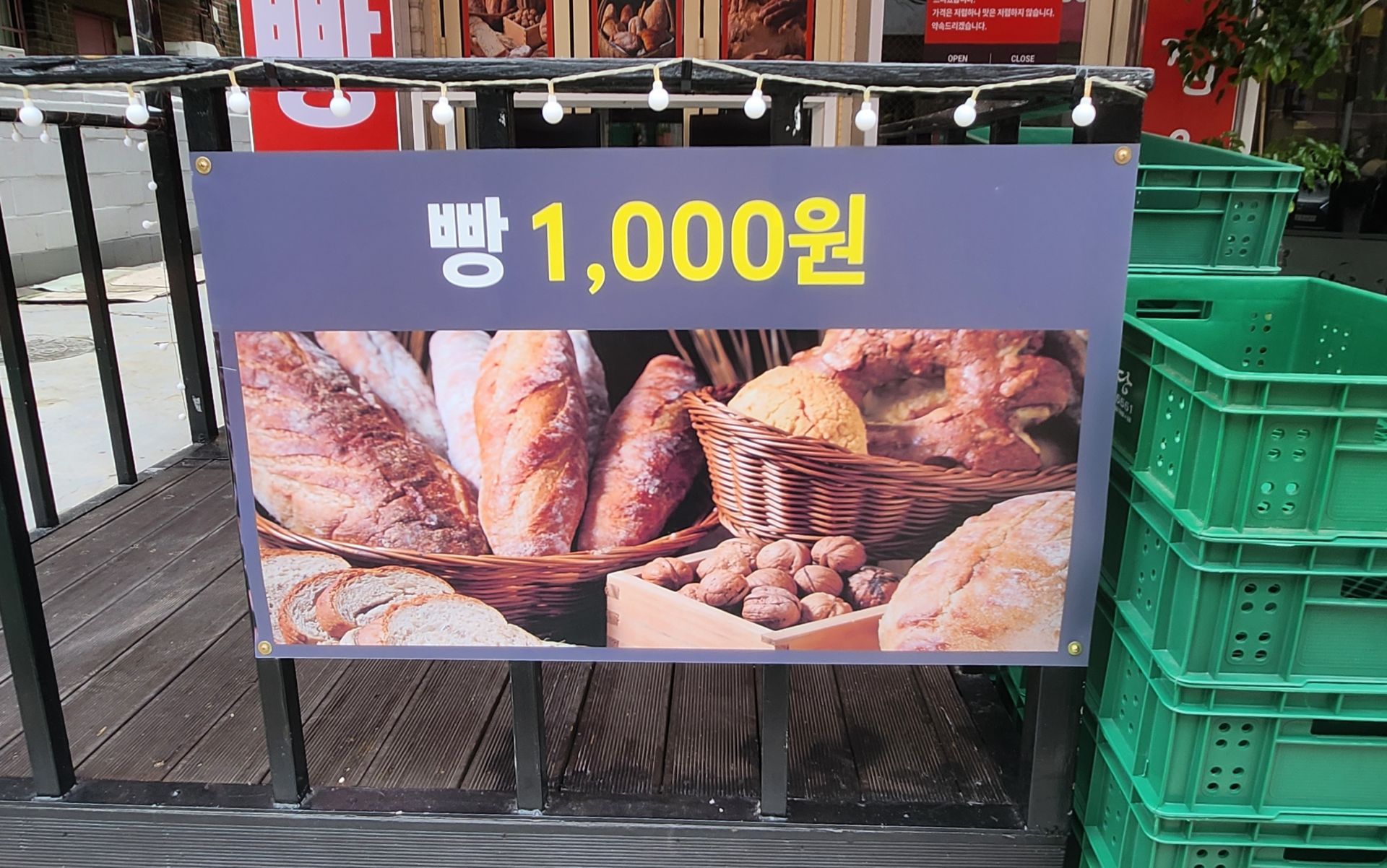
This place became popular by selling most of its 28 items, including red bean bread and soboro bread, for 1,000 won each. The most expensive item, rye bread, is only 3,500 won.
Editor's NoteAccording to the consumer price trends announced by Statistics Korea, the price of processed foods rose by 4.1% in May (compared to the same period last year), while bread prices surged by as much as 6.4%. The consumer price index for bread reached 138.48, which is a 38.48% increase over five years compared to the base year of 2020 (100). This is a steeper rise than for other popular Korean snacks such as tteokbokki and fried chicken. Bread, once a snack enjoyed by everyone, has now become something that is difficult to choose due to its high price. How did bread prices in Korea end up rising so rapidly?
'1,000 Won Bakeries' Resurface Amid High Inflation
"We are sold out for today and must close early."
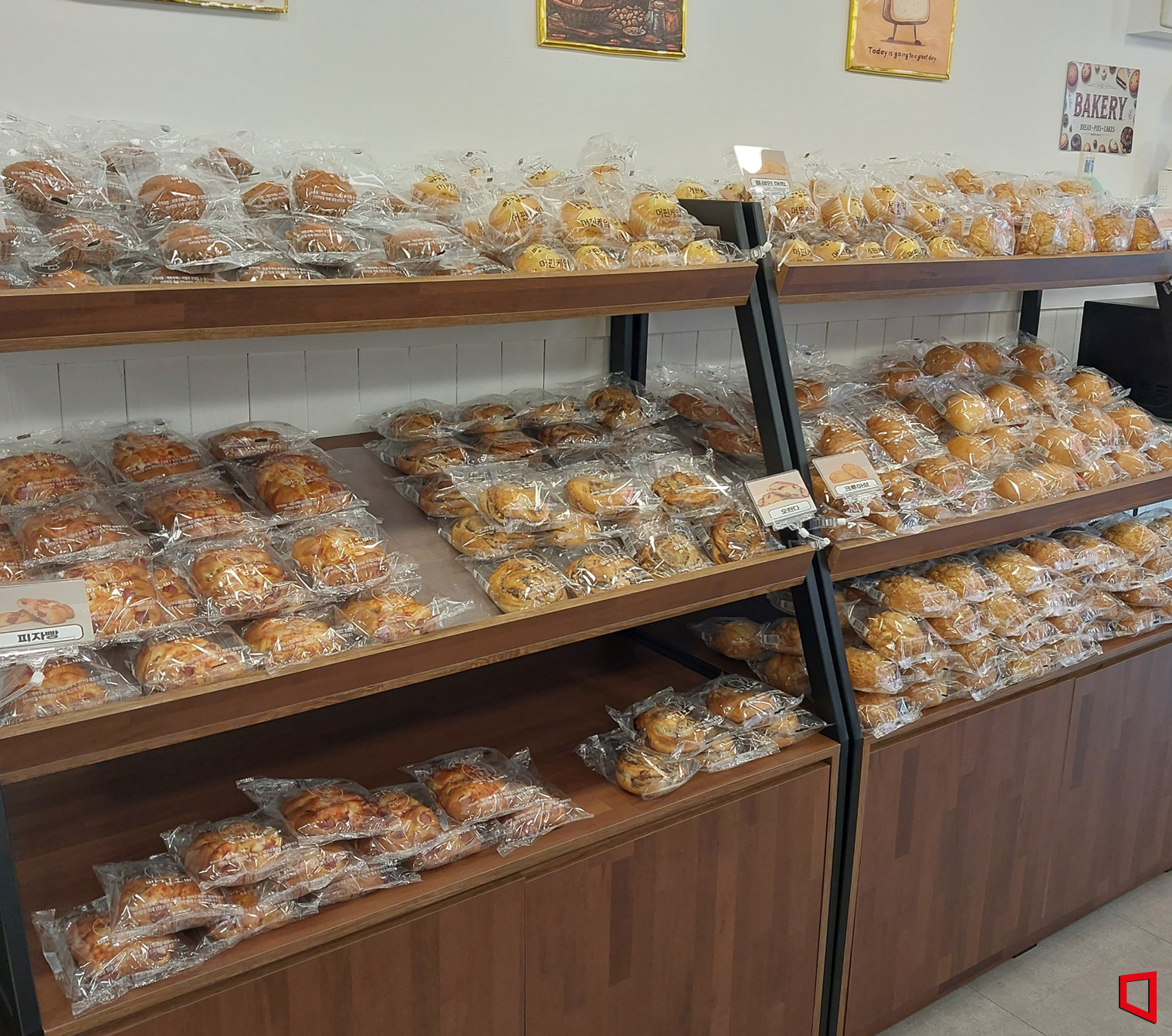
On June 24 at around 3 p.m., a visit to the "1,000 Won Bakery" near Hwagok Station in Gangseo-gu, Seoul, revealed that the shop had already closed for the day, despite it being late lunchtime. A "Sold out" notice was posted on the entrance, and several customers who saw it turned away with disappointed expressions. This bakery became popular by selling most of its 28 items, including red bean bread and soboro bread, for 1,000 won each. Even the most expensive item, rye bread, costs only 3,500 won, giving it a significant price advantage compared to other bakeries.

A sold-out notice is posted at a low-cost bakery near Hwagok Station in Gangseo-gu, Seoul. Photo by Heo Midam damdam@
원본보기 아이콘True to its value-for-money concept, signs emphasizing "Bread 1,000 won" could be seen all over the exterior walls. At the bakery entrance, there were also phrases such as "The economy is tough. We will offer you high-quality, delicious handmade bread at a good price," and "The price is low, but the taste is not." The bakery is operated by a man in his 50s surnamed Han, who said, "We sell more than 500 pieces a day on average, and we often receive group orders from churches and universities. Because there are so many customers, we have to close early about once every ten days." He added, "We also offer discounts on products that are close to their expiration date, and if you buy 10 pieces, you get one more for free."
"Relatively Low Purchase Rate Among Those in Their 20s"
The main customer base ranges widely from people in their late 30s to those in their 80s and 90s. Han said, "We do get customers in their 20s, but most of them are single people living alone," and explained, "Younger customers tend to prefer bread with attractive appearances, so when they visit with friends, their purchase rate is relatively low."
True to its value-for-money concept, signs emphasizing 'Bread 1,000 won' were seen all over the exterior walls. At the bakery entrance, there was also a phrase stating, "The price is low, but the taste is not."
What is the secret of places that can sell bread for 1,000 won like this? Choosing raw materials that allow cost reduction is the background that makes it possible to lower prices.
Because the prices are low, some consumers express concerns about quality. Han said, "All ingredients and nutrition information are clearly labeled on the bread packaging, and we have received HACCP (Hazard Analysis and Critical Control Points) certification, so customers can eat with confidence. We adhere to a no-preservatives policy, and for bread loaves, we use low-sugar recipes to reduce the glycemic burden, among other efforts to ensure quality."
'1,000 Won Bakeries' can also be easily found in subway stations throughout the Seoul metropolitan area, where there is heavy foot traffic. Jo, age 48, who sells 1,000-won bread inside Yeongdeungpo-gu Office Station, said, "In the evening, most customers are middle-aged people in their 40s and 50s. Many pick up bread on their way home from work because it's affordable and the smell is inviting." The main items here include: ▲Kkaechal bread 1,000 won ▲Corn bread 1,000 won ▲Sausage bread 1,500 won, with most products priced in the 1,000-won range. Lee Haeun, a 23-year-old university student, said, "It's hard to find bread for 1,000 won at major bakery chains, but here, the prices are so low that I can buy several without worrying. At first, I bought it without much expectation because of the low price, but the taste was good, so I come back often."

A banner advertising "1000 Won Bread" is set up in front of a low-cost bakery inside the subway station. Photo by Heo Midam damdam@
원본보기 아이콘The Key Is a High-Volume, Low-Margin Business Model
Although bread prices in Korea have risen by more than 38% over the past five years, what is the secret of bakeries that can still sell bread for 1,000 won? One background factor is the choice of raw materials that allow for cost reduction. While bakeries that sell bread for around 5,000 won each often emphasize the use of premium French butter, 1,000-won bakeries frequently use relatively inexpensive margarine to cut costs.
A strict high-volume, low-margin strategy is also a key factor that enables these bakeries to sell bread at such low prices. Typically, "1,000 Won Bakeries" purchase bread produced in bulk at large baking factories and sell it at low prices, maximizing sales volume to generate profit. Han explained, "The more we produce, the more we can reduce the unit cost of ingredients, which allows us to lower the selling price. We make about 300 won per 1,000-won bread, so we have to sell as much as possible to keep the business running."

The sharp rise in dining-out prices has boosted the popularity of 1,000-won bread and made the high-volume, low-margin model possible. According to the Korea Consumer Agency's 'Chamka Price,' last month the average price of a roll of gimbap in Seoul was 3,623 won, up 5.8% from a year earlier. Kalguksu was 9,692 won (up 5.9%), bibimbap was 11,642 won (up 5.7%), and jajangmyeon was 7,500 won (up 3.8%). As food prices continue to climb, bread that can be purchased for just 1,000 won has become an attractive option for a quick and affordable meal.
IndexThe Secret of Bread Prices
- Sellouts, Shortages, and Open Runs... The 'Chronicles of Bread' That Shook Korea
- "Expensive, but Still Filling Their Baskets"... London Bagel Earns 80 Billion Won on Word of Mouth Alone
- '1,000 Won Bakeries' Sell 500 Breads a Day: "If You Go at 3 PM, They're Sold Out"
- 2000-Won Bread, 200 Billion-Won Boom...The Secret Behind Seongsimdang's Soaring Sales
- Picked Up a Franchise Cream Bread and Gasped... Why Do Prices Differ by Neighborhood?
- "Is It Really Just Raw Material Costs?"...Other Reasons Behind Korea's Soaring Bread Prices
- "Even a Single Slice Costs 10,000 Won... 'Cake Slices' Now as Expensive as Lunch"
- Salt Bread That Used to Cost 5,000 Won at Bakeries... "Only 2,000 Won at Home"
- "I Want to Try Slow Aging Too"... 'Health Breads' See Explosive Sales Despite Double the Price
-

Reporter Heo Midam damdam@asiae.co.kr
-
Edit Kwon Sooyoun afineday75@asiae.co.kr
© The Asia Business Daily(www.asiae.co.kr). All rights reserved.
!["Please Help Us": How Much Do Those Bowing 90 Degrees These Days Actually Earn? [Data Pick]](https://cwcontent.asiae.co.kr/asiaresize/323/2026052010120870131_1779239528.png)