Donald Trump
Born June 14, 1964 (78 years old) Term 45th and 47th President
by Cha Minyoung
by Kim Boram
Published 25 Feb.2025 15:29(KST)
Updated 25 Feb.2025 15:58(KST)
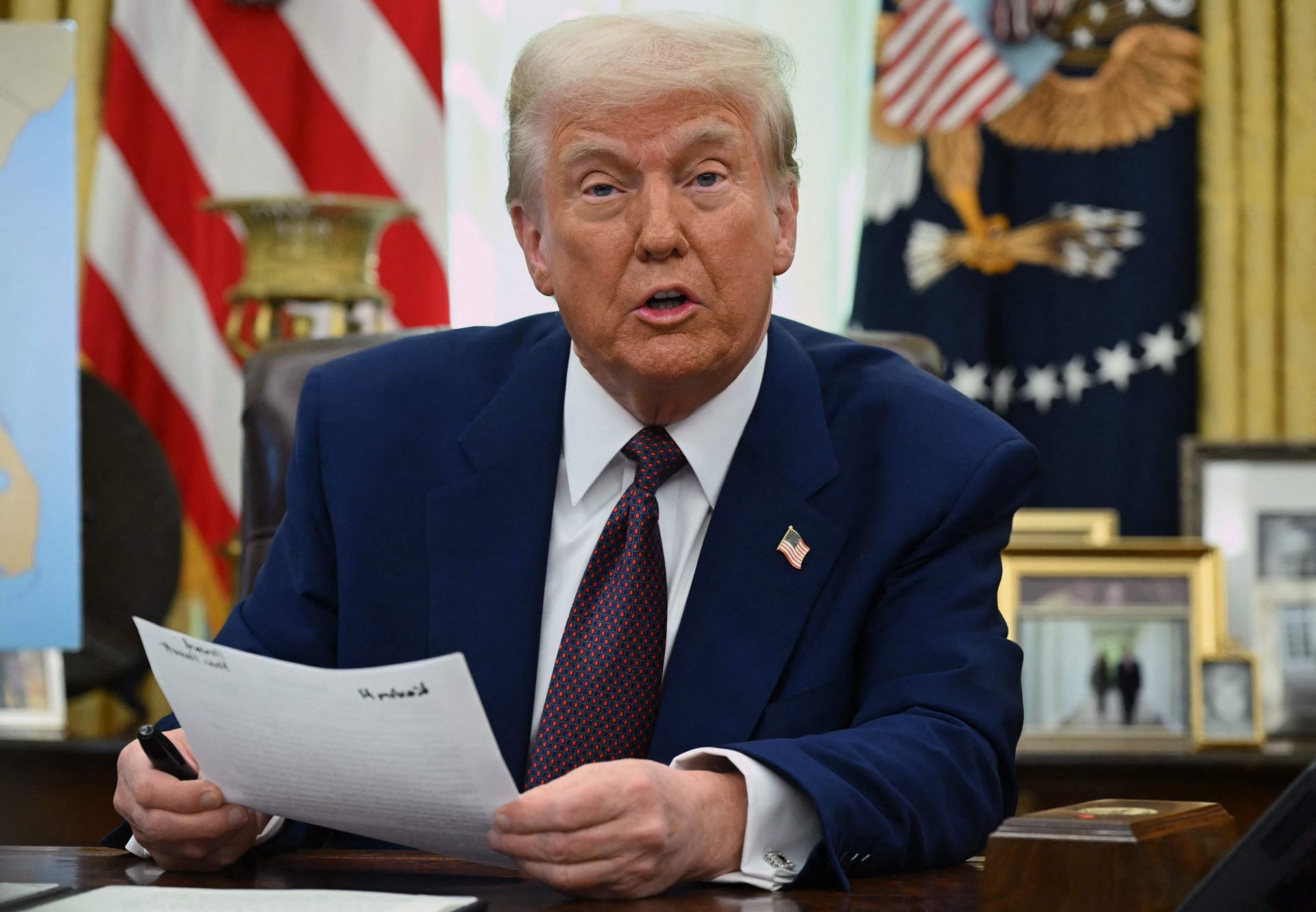
Donald Trump
Born June 14, 1964 (78 years old) Term 45th and 47th President
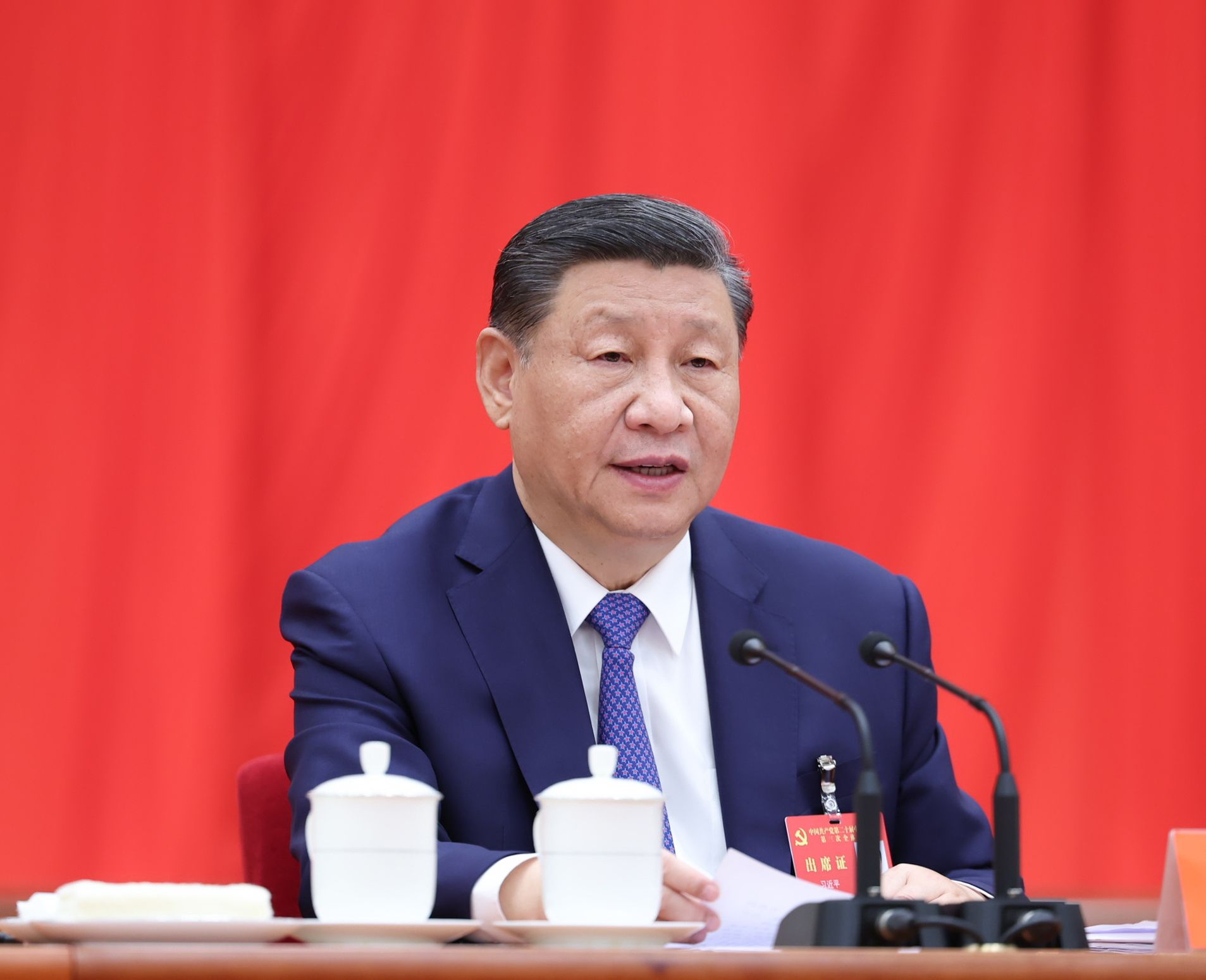
Xi Jinping
Born June 15, 1953 (age 71) Term 3 consecutive terms since elected as the 7th President
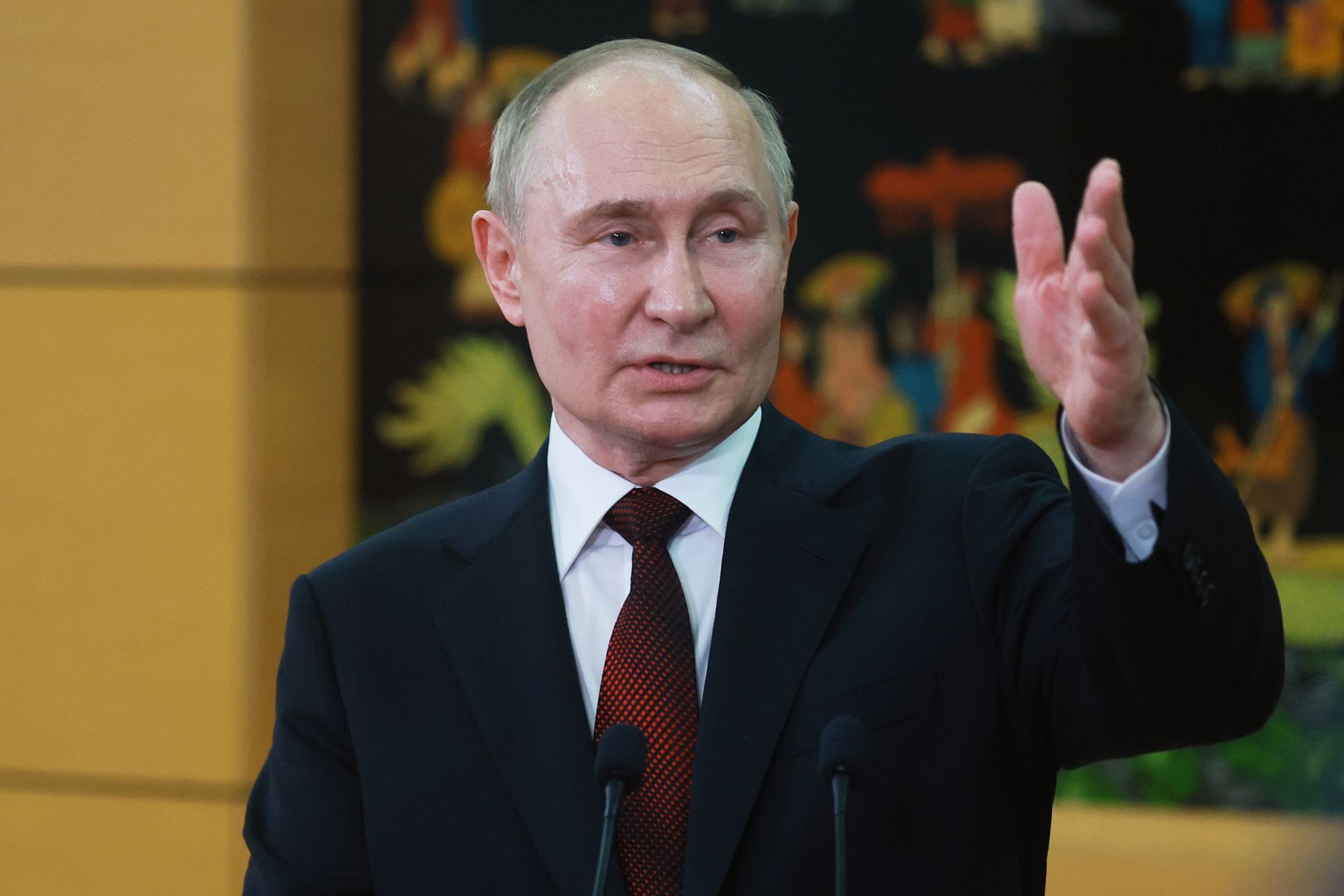
Vladimir Putin
Born October 7, 1952 (age 72) Term 3rd, 4th, 6th, 7th, and 8th President
'73.6 years old'.
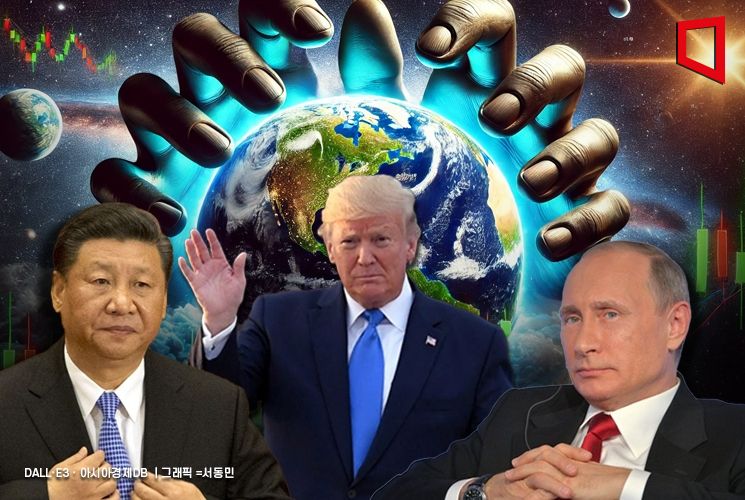
This is the average age of the leaders of the United States, China, and Russia, who are currently at the forefront of conservatism and nationalism, wielding significant influence over the global economy and politics. This figure is more than ten years higher than the global median age of presidents, which was 62 according to a survey by the Pew Research Center last year. It is also more than double the age of Ibrahim Traore, the president of Burkina Faso, who, at 36, is the youngest president in the world. Beyond simply being older, these leaders share a common trait: they advocate for strong leadership.
On the 20th (local time), President Donald Trump of the United States marked one month since his inauguration. When he was sworn in as the 45th president in 2017, President Trump was 70 years old, and this year, at age 78, he has made a triumphant return to the White House. He is about 159 days older than former President Joe Biden was when he entered the White House four years ago. Thus, the United States has had three consecutive presidents in their seventies.
Generally, countries with a high degree of democratic freedom tend to have younger leaders with shorter terms in office. According to Pew Research, "In countries with low levels of freedom, power transitions are rare and long-term rule is common, resulting in older leaders. In contrast, democracies tend to have regular elections and leadership changes, which bring about younger leaders." Cultural factors and historical backgrounds in each region also influence the age of leaders. The fact that leaders in socialist countries with one-man rule, such as China and Russia, are older is also related to this.
The United States is a rare exception to this trend. Looking at history, there have been very few U.S. presidents who took office after the age of 70. According to Pew Research, out of 68 presidential inaugurations between 1789 and 2021, only four were for presidents aged between 70 and 79. The most common age group was 50-59, with 35 inaugurations, followed by 60-69 (19 times), and 40-49 (10 times). These numbers include presidents who were re-elected. The median age of U.S. presidents at inauguration was 55. The median is the value that falls in the middle when numbers are arranged in order. Of course, being older is not necessarily a bad thing. Ronald Reagan, a frequent reference in discussions about age in U.S. politics, was known for his eloquence and famously said, "I will not make age an issue of this campaign. I am not going to exploit, for political purposes, my opponent's youth and inexperience," when he was 73 and his opponent was 56.
When did American voters begin to voluntarily support older presidents? Foreign media point to Trump's victory in the 45th presidential election, campaigning under the slogan "Make America Great Again." President Trump succeeded in appealing to the nostalgia of white Americans by promising to "restore the glory of Detroit." In response, the Democratic Party put forward former Vice President Joe Biden, who served eight years under the Barack Obama administration, and won. Having become a symbol of conservatism, President Trump targeted Biden's "old age risk" and reclaimed the White House after four years. Drawing on his experience of opposition from Congress during his first term, President Trump is now moving quickly on issues such as expelling immigrants, increasing government efficiency, and tariff policies. As a result, the average age of U.S. presidents has soared.
It is also interesting that the only world leaders President Trump treats as serious "counterparts"?the leaders of Russia and China?are both in their seventies. This year, Russian President Vladimir Putin, now 72, has been in power for nearly 30 years. Having become president at a relatively young age of 47, President Putin has focused on building an image of being "young and strong." He has deliberately showcased himself taking ice-cold baths at dawn in minus 5 degrees Celsius or riding horses bare-chested.
President Putin is also an example of benefiting from "seasoned" advisors who have aged alongside him. After the high-level U.S.-Russia talks for ending the Russia-Ukraine war held in Riyadh, Saudi Arabia, on the 18th (local time), foreign media commented that Russia had scored a points victory over the U.S. The combined diplomatic experience of Foreign Minister Sergey Lavrov and Kremlin foreign policy aide Yuri Ushakov, who attended the talks, amounts to 100 years. Lavrov, who joined the Foreign Ministry in 1972, has served as Russia's top diplomat for over 20 years since 2004. President Putin has also worked to create institutional mechanisms to retain these "federal first-team" members. As his close aides entered their 60s and 70s, he repeatedly amended regulations to extend the terms of public officials. Carnegie Politika, a political and diplomatic journal published by the Carnegie Endowment for International Peace, noted, "President Putin finds comfort in seeing familiar faces in the same positions in his old age," and diagnosed that "by doing nothing to change the status quo, he has created a gerontocracy to maintain his team intact."
Even Xi Jinping, the relatively "young blood" among these leaders, has now ruled China for over 12 years. Having first become president in 2013, he succeeded in securing an unprecedented third term in March 2023, breaking the convention since Deng Xiaoping that the Communist Party general secretary and president would serve only two terms. This guarantees his five-year term until 2028. During a recent high-intensity anti-corruption campaign, Xi decisively dismissed some of his close aides. In response to the U.S. 10% tariff policy, China implemented "retaliatory tariffs" starting on the 10th. While Mexico, the top exporter to the U.S., bowed its head, China maintained a hardline stance. Instead, Xi has been strengthening ties with domestic entrepreneurs, such as Jack Ma, founder and honorary chairman of Alibaba, to solidify China's system for countering the U.S.
However, some argue that "elder politics" centered on aging presidents and their close aides fails to represent young voters politically and could even lead to regime collapse. There are criticisms that the current situation resembles the final days of the Soviet Union, which ended with President Mikhail Gorbachev on December 26, 1991. Carnegie Politika pointed out, "The Russian regime is increasingly resembling the gerontocracy that ruled the Soviet Union in its final days." Business Insider also commented, "U.S. leadership has more in common with the late Soviet era than leaders are willing to admit," and "in terms of age, Congress does not represent the general public."
There are also calls within U.S. politics to find a younger successor early. Some argue that Vice President J.D. Vance, Trump's "strategic pick" who is 40 this year, should be given greater power sooner. However, in a Fox News interview aired on the 10th, President Trump drew a line under the Vance succession theory, saying, "It's too early to judge." Currently, those considered likely to inherit Trump's rich political legacy include his eldest son Donald Trump Jr. and his third son Barron Trump, who is often compared to the "youngest son of a chaebol family" in popular dramas.




![[Culture Interview] "Unifying the Fragmented Music Market... Super Fans Are the Next Competitive Edge"](https://cwcontent.asiae.co.kr/asiaresize/304/2026042817051344090_1777363513.jpg)
