

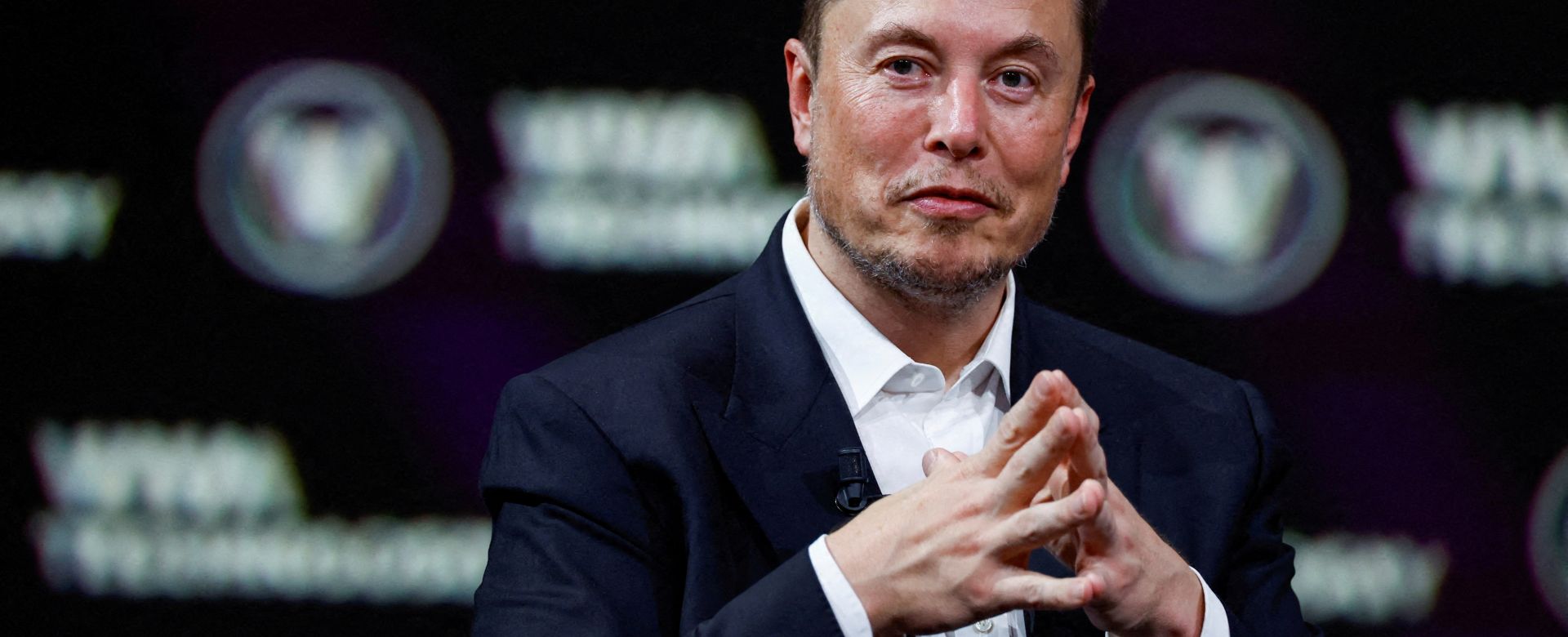
Elon Musk, CEO of Tesla, described the fierce AI talent hunt as "the craziest talent war I have ever seen."
The Core of the US 'AI National Security Memorandum' Is Attracting Top Overseas Talent
Similar to 'Operation Paperclip,' Which Recruited Nazi German Scientists
"The US government's attempt to attract overseas artificial intelligence (AI) talent is reminiscent of 'Operation Paperclip' (the US operation to recruit German scientists after World War II)."
The New York Times (NYT) made this assessment regarding the 'AI National Security Memorandum' signed by President Joe Biden on the 24th of last month (local time). The paper explained that the US effort to secure talent as outlined in the AI security memorandum is similar to the situation where the US worked hard to bring in talented nuclear scientists from abroad after World War II.
What Was 'Operation Paperclip'? "Recruiting German Scientists...US Dominance in Nuclear Development"
Operation Paperclip was a mission by the US Office of Strategic Services (OSS) after World War II to recruit key figures from Nazi Germany. This operation was carried out by the OSS from 1945 to 1946, and after the OSS was dissolved and the Central Intelligence Agency (CIA) became the official US intelligence agency, similar operations to recruit Nazi German scientists continued until 1955. The US recruited German scientific technology and talented scientists, focusing especially on aerodynamics, rocket technology, chemical weapons, chemical reaction technology, and pharmaceuticals. Scientists in these fields immigrated to the US with their families.
Through this, the US gained an edge over Russia in the nuclear arms race. In particular, the US was officially recognized as a nuclear-armed state in the 'Non-Proliferation Treaty' that came into effect in 1970, allowing it to permanently outpace non-nuclear states in terms of nuclear power.
A Second Operation Paperclip Launched to Secure AI Supremacy
The core of the current 'AI National Security Memorandum' is also summarized as attracting 'top overseas AI talent.' The memorandum stipulates that "the Department of State, Department of Defense, and Department of Homeland Security must use all available legal authorities to recruit AI experts." This includes immigration policy. It also states that "within 90 days, the National Security Advisor must convene relevant departments and agencies to streamline visa administrative procedures for AI experts." Furthermore, it instructs that "within 180 days, the Economic Policy Advisor and National Economic Council must prepare an analysis of the AI talent market not only in the US but also overseas." The memorandum also requires the establishment of a 'National Security AI Talent Committee' composed of senior AI officials from all agencies in the coordination group within 90 days.
The AI security memorandum demonstrates the US government's determination to mobilize all its capabilities by designating AI, which has so far been developed mainly by private companies, as a national strategic asset like nuclear weapons and space technology. In particular, it signals to the world the US's intention to widen its lead over China, which is pushing for AI supremacy. Composed of eight sections, the AI National Security Memorandum details the implementation plans of each government department to secure US AI leadership and utilize AI from a national security perspective.
Shortage of US AI Talent Deepens...Musk Calls It "The Craziest Talent War"
The US is currently the unrivaled superpower in the field of AI technology. Major big tech companies such as OpenAI, which sparked the global generative AI boom, Nvidia, which controls 80% of the AI chip market essential for AI training and inference, and Apple, Microsoft (MS), and Amazon, which are pouring astronomical sums into building AI infrastructure, are all based in the US. According to the 2024 Global AI Index published by UK media outlet Tortoise, the US ranks first in the world with an AI capability score of 100. China follows with 53.88, then Singapore (32.33), the UK (29.85), France (28.09), and Korea (27.26).
However, more top AI talent is being produced in China than in the US, putting the US in a difficult position. According to 'Global AI Talent Tracker' by MacroPolo, a think tank under the Paulson Institute at the University of Chicago, as of 2022, China held the largest share of global top AI talent at 47%. The US followed at 18%, less than half of China's share.
There are growing concerns in the US that the domestic pool of talent capable of keeping up with the current pace of AI development is absolutely insufficient. At OpenAI, for example, only about 50% of the 100 AI experts hired in 2016 remain, with co-founder Ilya Sutskever leaving in May. At Meta Platforms, CEO Mark Zuckerberg reportedly made behind-the-scenes offers to some researchers from Google's AI lab DeepMind. Tesla CEO Elon Musk described the intensifying hunt for AI talent across the industry as "the craziest talent war I've ever seen" in April.
China Surpasses US in AI Papers and Patents, "Courting Talent with High Salaries"
Last year, China also overtook the US in the number of top-tier AI papers and major national AI patents. According to the '2023 Global AI Innovation Index' report published in July by the Institute of Scientific and Technical Information of China (ISTIC), China's share of AI papers published in top academic journals and AI patents were 36.7% and 34.7%, respectively, outpacing the US (22.6% and 32%).
According to the South China Morning Post (SCMP), Chinese big tech companies are offering salaries far above the industry average to secure AI talent. A report by Peking University and job platform Zhilian Zhaopin found that in the first half of this year, demand for AI talent surged across China, with both big tech and startups actively recruiting, especially in the natural language processing field. Demand for talent in this field jumped by 111% compared to the first half of last year, and the average monthly salary for these positions was 24,007 yuan (about 465,000 KRW), more than double the IT sector's average monthly salary (11,000 yuan).
"China AI Containment Will Intensify Even in the Trump 2.0 Era"
Ultimately, the US government's effort to recruit AI talent as a national strategic asset is seen as a move to contain its biggest competitor, China. SCMP commented, "This is evidence that the US is seeking to contain China's rise and development in the global AI competition."
Bloomberg reported that although a second Donald Trump administration is expected to overhaul many of the Biden administration's executive orders, the AI security memorandum is likely to be maintained. The sense of crisis that the degree of AI development could directly determine national competitiveness is a bipartisan issue shared by both Republicans and Democrats without disagreement.
The US Treasury Department's new regulation announced on the 29th of last month banning US investment in advanced industries such as Chinese AI is also seen as reflecting the importance of attracting AI talent. US business media outlet Fortune noted, "(Massive foreign investment capital) could be used by China to hire top AI industry talent." Last October, the Biden administration also signed an executive order easing immigration rules to allow overseas AI experts to work in the US. At the time, US big tech companies such as Google and MS welcomed the government's executive order.
IndexGlobal Focus
- AI Talent War... Like a 'Second Operation Paperclip'
- 'Average Age 73': Old Boys Lead the US, China, and Russia
- Imported Rice on Japanese Tables, Easter Eggs Disappear in the US
- Crossing the Line with 'Third-Term Push and Pull'... Three Different Interpretations Drawn
- Trump's 'First Buddy' Is Changing
-

Reporter Byun Seonjin sj@asiae.co.kr
-
Edit Choo Myeonghoon chox2mh@asiae.co.kr
© The Asia Business Daily(www.asiae.co.kr). All rights reserved.

![[Culture Interview] "Unifying the Fragmented Music Market... Super Fans Are the Next Competitive Edge"](https://cwcontent.asiae.co.kr/asiaresize/304/2026042817051344090_1777363513.jpg)