| Mobility Technology Award Asia Economy Representative Award
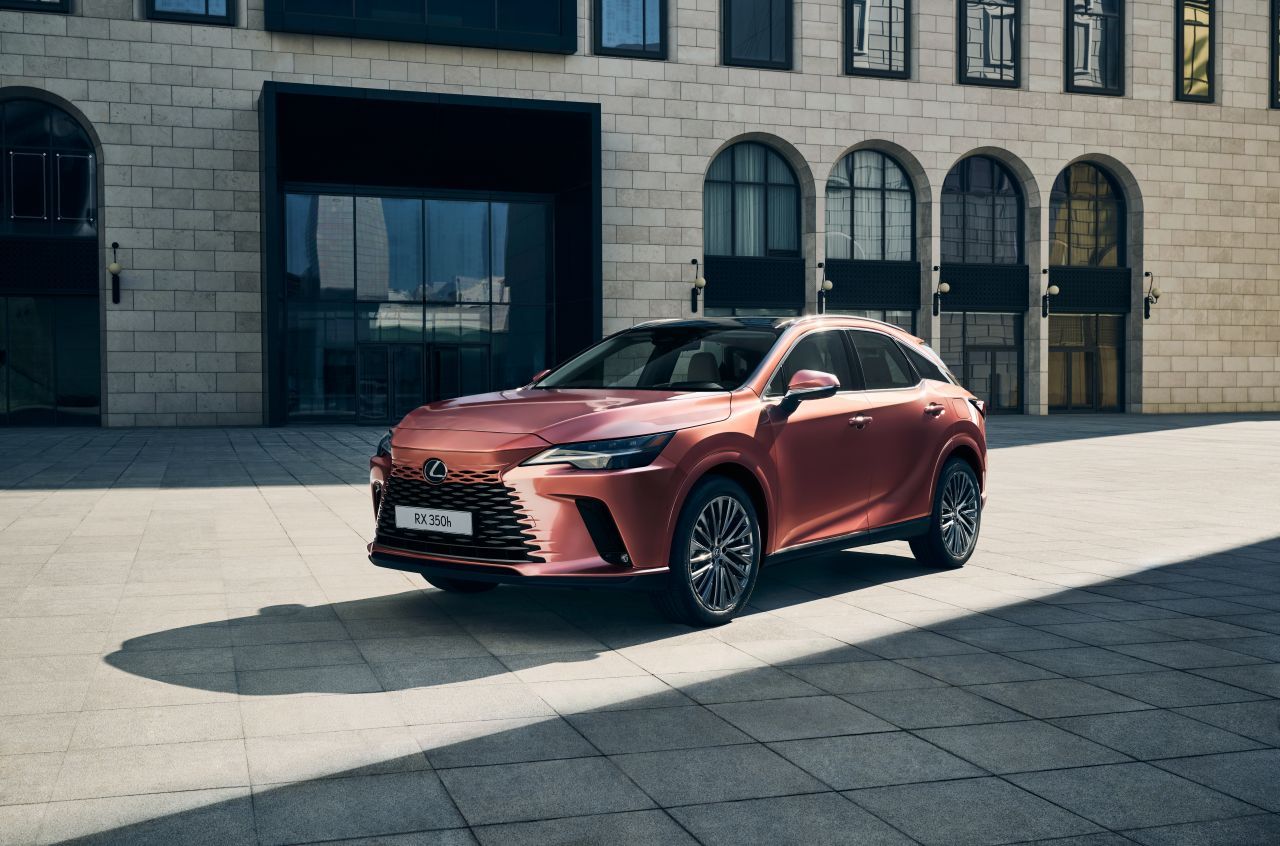
Toyota Motor Corporation has been making continuous efforts toward carbon neutrality since launching the Prius, the world's first mass-produced hybrid model, in 1997. The Toyota Crown and Lexus RX, released in Korea in 2023, are equipped with bipolar battery technology to maximize fuel efficiency.

The bipolar battery departs from the conventional cell-based structure by utilizing both sides of the current collector to form the battery, resulting in reduced volume and increased output. Traditional batteries connect cells in series, which limits current flow and output and increases volume.
However, the bipolar battery applies the anode to one side and the cathode to the other side of a single cell, allowing current to flow freely and enabling a more compact battery design.

A representative from Toyota Korea explained that while bipolar technology is currently applied only to nickel-metal hydride batteries, applying it to lithium-ion batteries could achieve even higher energy density.
Bipolar technology reduces battery volume, making packaging easier, and enables high output due to reduced electrical resistance. In addition, the increased freedom of current flow allows for a higher level of regenerative energy recovery, contributing to improved fuel efficiency.
Toyota has applied bipolar technology to its latest hybrid vehicles. The Toyota mid-size hybrid sedan Crown is equipped with both a 2.4L dual boost hybrid system and a 2.5L inline hybrid system, both utilizing batteries with bipolar technology. This technology is also applied to the Lexus mid-size SUV RX 350h and RX 500h F SPORT Performance hybrid models.

According to Toyota's in-house tests with the compact hatchback Aqua, the conventional lithium-ion battery achieved about 3% higher fuel efficiency compared to Toyota's bipolar nickel-metal hydride battery. However, when the curb weight was increased by about 10 kg, the bipolar nickel-metal hydride battery measured about 3% higher efficiency.
Toyota is steadily practicing carbon neutrality based on its group mission: "Contribute to preserving a beautiful Earth and enriching the lives of people around the world."
Toyota aims to reduce the average carbon dioxide (CO2) emissions of vehicles sold worldwide by 33% in 2030 and by more than 50% in 2035 compared to 2019. To achieve this, Toyota plans to offer a wide range of options to customers under its "Multi Pathway" strategy, which considers future energy supply and demand as well as regional circumstances around the world.

Index2025 Green Mobility
- Hyundai Mobis Leads Future Vehicles... Provides Integrated Mobility Solutions
- BMW Leads Electric Vehicle Popularization... Receives 2,125 Chargers and Adds 600 More
- Hyundai Motor and Kia Overcome 'EV Phobia' with BMS
- Kakao Mobility Shifts to Paperless Taxi Payments
- Toyota Korea Unveils 'Bipolar' Battery Innovation for the Environment
- Boldly Racing Toward Eco-Friendliness
- Kumho Tire Leads Eco-Friendly Tire Market by Reducing Fine Dust and CO2
- Renault Korea's 'Grand Koleos' Makes Waves with Cutting-Edge Technology
-

Reporter Woo Sooyoun yesim@asiae.co.kr
-
Edit Heo Seoyeon lala22@asiae.co.kr
© The Asia Business Daily(www.asiae.co.kr). All rights reserved.