Rediscovering Food Waste ②
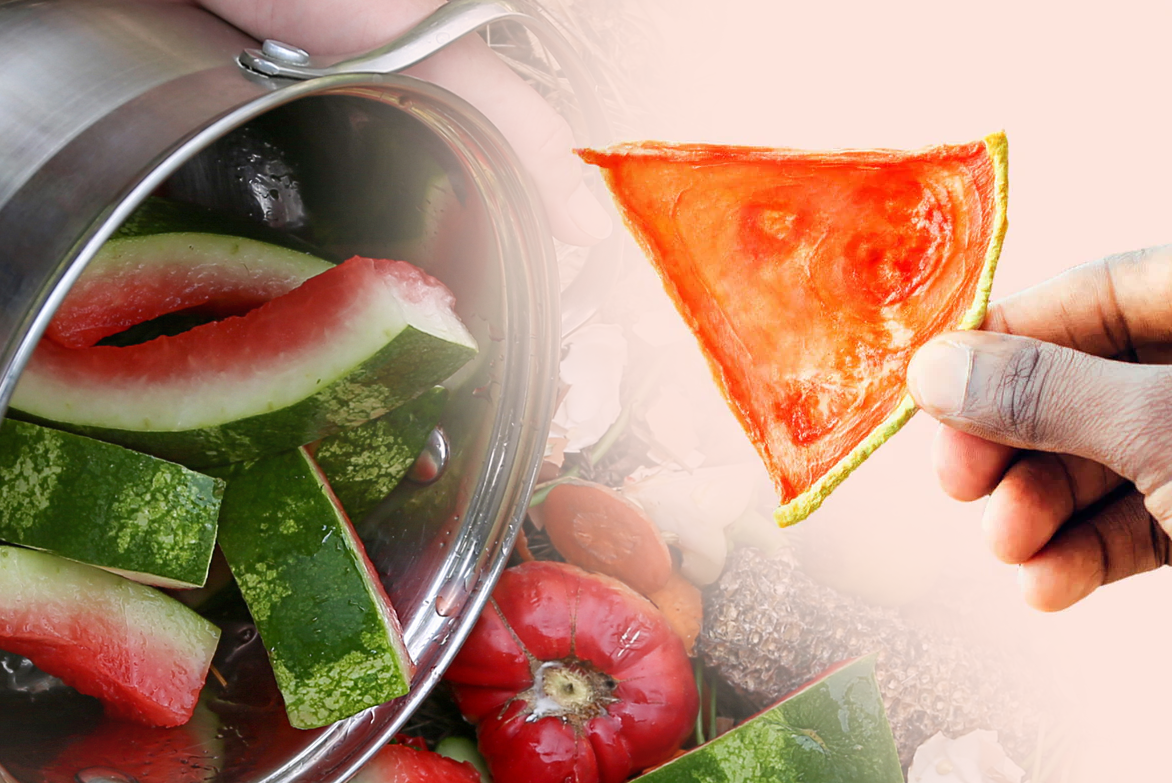
Rind penetrates 12,000 distribution channels with whole-fruit peel snacks
Oat pulp cookie mix easily found at major supermarket chains
"What do watermelon, pear, persimmon, tangerine, coconut, pineapple, and kiwi have in common? Their peels are considered trash. But Rind has succeeded in dramatically rescuing peels that were about to be thrown away at waste facilities. To date, over 1 million pounds (about 454 tons) of peels have been consumed by people." (Derek Smul, Sales Director at Rind)


The hottest topic at the end of June at the Summer Fancy Food Show, the largest food and beverage expo in the U.S. held at the Javits Center in New York, was 'food upcycling.' Among all, the booth that drew the most curiosity from buyers worldwide was that of Rind, a U.S. food upcycling company.
Watermelon, Coconut... Rind, the Fruit Peel Rescue Team, Nears $20 Million in Annual Sales
![A snack made by the American startup RIND, which opened in 2018. <br>[Photo by RIND]](http://www.asiae.co.kr/news/img_view.htm?img=2024092315145435809_1727072094.png)

![It can be purchased through more than 12,000 distribution channels nationwide in the United States, including Walmart, Costco, Whole Foods Market, and CVS. <br>[Photo by RIND]](http://www.asiae.co.kr/news/img_view.htm?img=2024092315150135810_1727072101.png)
[Photo by RIND]
Founded in 2018, U.S. startup Rind creates and sells dried whole-fruit snacks that maximize nutrition and minimize food waste. The company has entered over 12,000 distribution channels across the U.S., including Walmart, Costco, Whole Foods Market, and CVS. In other words, their products are available almost everywhere.
How did discarded peels become snacks? It all started as an effort to practice 'zero waste.' Derek Smul, Sales Director at Rind, said, "The food waste problem in the U.S. is so severe that it's like buying five bags of vegetables at the supermarket and leaving two bags behind in the parking lot." He added, "Whole-fruit snacks are one way to minimize waste and protect the planet."

Rind's expected sales this year are $20 million (about 2.65 billion KRW). This is not money earned just by saving the planet. Rind is also helping people. Smul explained, "Fruit peels contain more vitamins, antioxidants, and fiber, which help reduce cholesterol and lower the risk of heart disease." Recently, U.S. INC Magazine selected Rind as one of the '5000 Fastest-Growing Companies.' Smul commented, "Food upcycling can be good for the planet, the environment, and the economy."
Food Upcycling Becomes Part of Everyday Life for New Yorkers... Supermarket Staff Easily Identify Products
"Do you have this product?"
On the first floor of Whole Foods Market near Madison Square Park in Manhattan, New York, when I showed a clerk a photo of Renewal Mill's cookie mix, a food upcycling company, the response was immediate: "It's on the second floor." Sure enough, after heading upstairs to the baking section, Renewal Mill's products were displayed among regular cookie mixes. This shows that food upcycling is much more closely connected to consumers in the U.S. than one might think.


Renewal Mill makes gluten-free flour from byproducts such as okara left over from tofu production and oat pulp from plant-based milk production. CEO Claire Schlemme decided to start the company after witnessing firsthand, while working at a juice bar as a college student, how much fruit and vegetable pulp was being discarded. Lydia Oxley, Marketing Director at Renewal Mill, explained, "Since June 2022, by selling our products at Whole Foods Market, we've prevented about 30 tons (about 66,000 pounds) of food waste from being discarded."

Skewers made of sausages from leftover salmon, tomatoes, and cheese by the US food upcycling company Blue Circle. Photo by Onyu Lim ioy@
원본보기 아이콘The U.S. at the Center of the Food Upcycling Boom..."A New Opportunity for the Environment and Industry"
It's no coincidence that the U.S. has emerged as the center of the food upcycling boom. That's how serious the food waste problem is. According to Recycle Track Systems, the U.S. produces 6 million tons of food waste annually. That amounts to 40% of all food consumed in the country. It's equivalent to each person throwing away 975 apples every year.

In response, the Upcycled Food Association (UFA) was established in the U.S. in 2019?the first of its kind in the world. In 2021, a food upcycling certification standard was also developed. The number of certified products has surged from about 30 in 2021 to around 480 today. UFA estimates that certified products have helped process 390,000 tons of food waste over the past three years.
Last June, UFA member companies from across the U.S. gathered near SoHo in Manhattan, New York, to declare June as Food Upcycling Month and celebrate. The event featured foods such as sausages made from salmon scraps, chocolate cookies made from oat pulp, and pasta made from overripe tomatoes that would otherwise have been discarded.

Jeremy Kaye, CEO of Spare Food, a leading U.S. food upcycling company, also attended the event. Spare Food produces tonic water using proteins and probiotics from whey left over after making yogurt and cheese. Kaye said, "Until now, we've only thought about how to dispose of food waste, not how to reduce its amount," adding, "Food upcycling will create new opportunities for both the environment and industry."
※ This project was supported by the Press Promotion Fund, created from government advertising fees.
IndexRediscovery of Eumseo
- Turning Discarded Watermelon Rinds into a 26.5 Billion Won Annual Sales Miracle
- Food Upcycling and Lost Muscle... Slowing Down Climate Change
- "Open Only at Night"... Tokyo Bakery Sells Out Within an Hour
- No Longer Food Waste... Japan Finds a 'Gold Mine' by Changing Perspective
- The Country Once Known for the Most Waste in Europe... Turning Beer Residue into High-Protein Grain Powder