![[Image source=UFA (Upcycled Food Association)]](http://www.asiae.co.kr/news/img_view.htm?img=2024092410013436721_1727139694.png)
Why Food Upcycling?
"There is a lot of food in the world, but there are also many hungry people"
"Food upcycling is a way to break the imbalance where waste and hunger coexist and redistribute food"
"At the same time, it can reduce carbon emissions by recycling existing food"
Rediscovering Food Waste ③
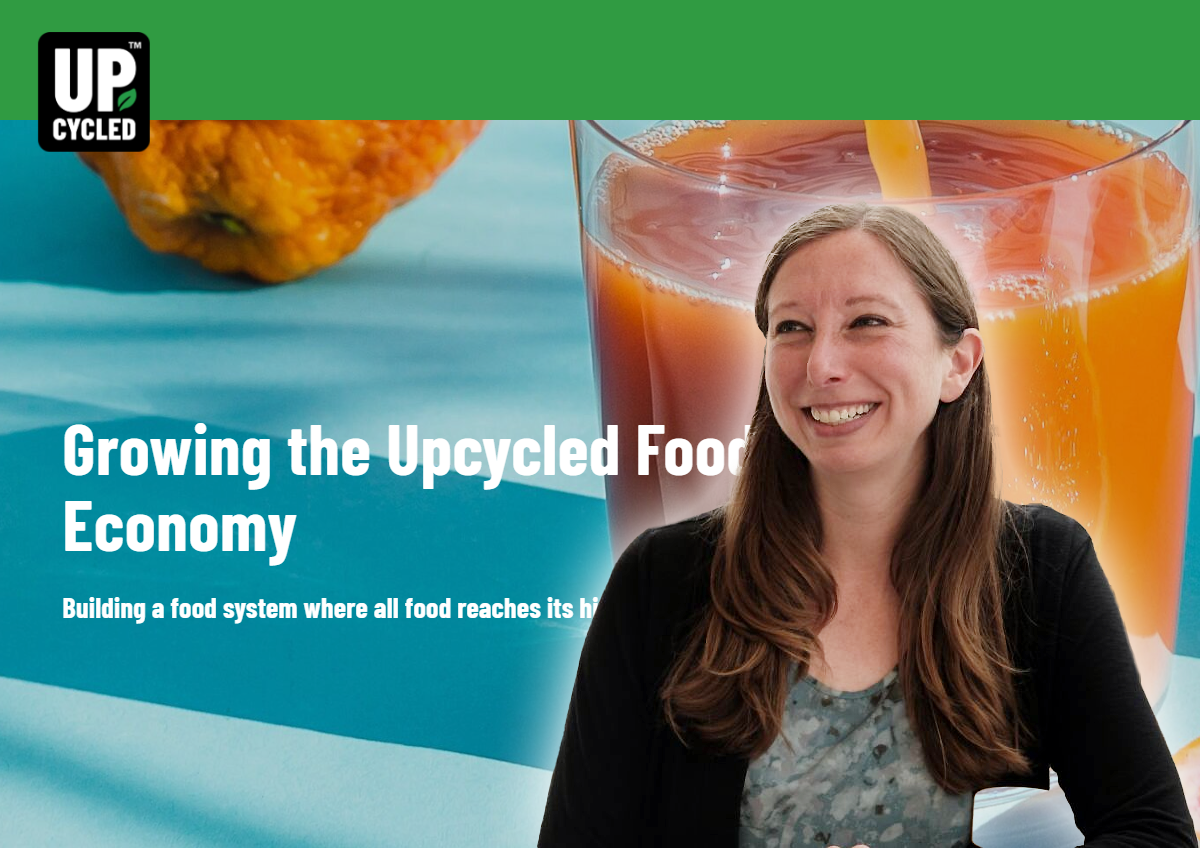
Upcycled Food Association (UFA), USA
Interview with CEO Amanda Oenbring
Solutions for Global Warming and Redistribution of Food
Interview with CEO Amanda Oenbring
Solutions for Global Warming and Redistribution of Food
"During the Great Depression, my grandmother would make soup not only from broccoli florets but also from the stems. Those stems, which now get thrown away in heaps. The way of life in the past, where every part of an ingredient was consumed, was not a matter of choice but a daily practice."
Amanda Oenbring, CEO of the Upcycled Food Association (UFA) in the United States, compared food upcycling to a 'lost muscle'. She meant that it is an ability still within us, simply atrophied from lack of use. Oenbring said, "In the past, we knew how to 'eat everything,'" and added, "Although we have forgotten that memory now in an age of abundance, we can always revive it whenever we want."
Even today, there are people around the world who remember and practice this way of life. She said, "Even if we don't know what to call it, food upcycling is being practiced in various ways in Korea as well," and emphasized, "If the concept of food upcycling becomes widespread and commonly used, it will further drive the recovery of this lost muscle."
Oenbring defined food upcycling as "the act of reproducing ingredients that would otherwise be discarded, through a reliable supply chain, to create a positive impact on the environment."
Why Food Upcycling? "Killing Two Birds with One Stone: Food Redistribution and Solving Extreme Weather"
In an era of food abundance, why should we consume leftover byproducts or agricultural products deemed less valuable? Oenbring cited 'redistribution of food' and 'solving abnormal weather patterns' through food upcycling as the key reasons.
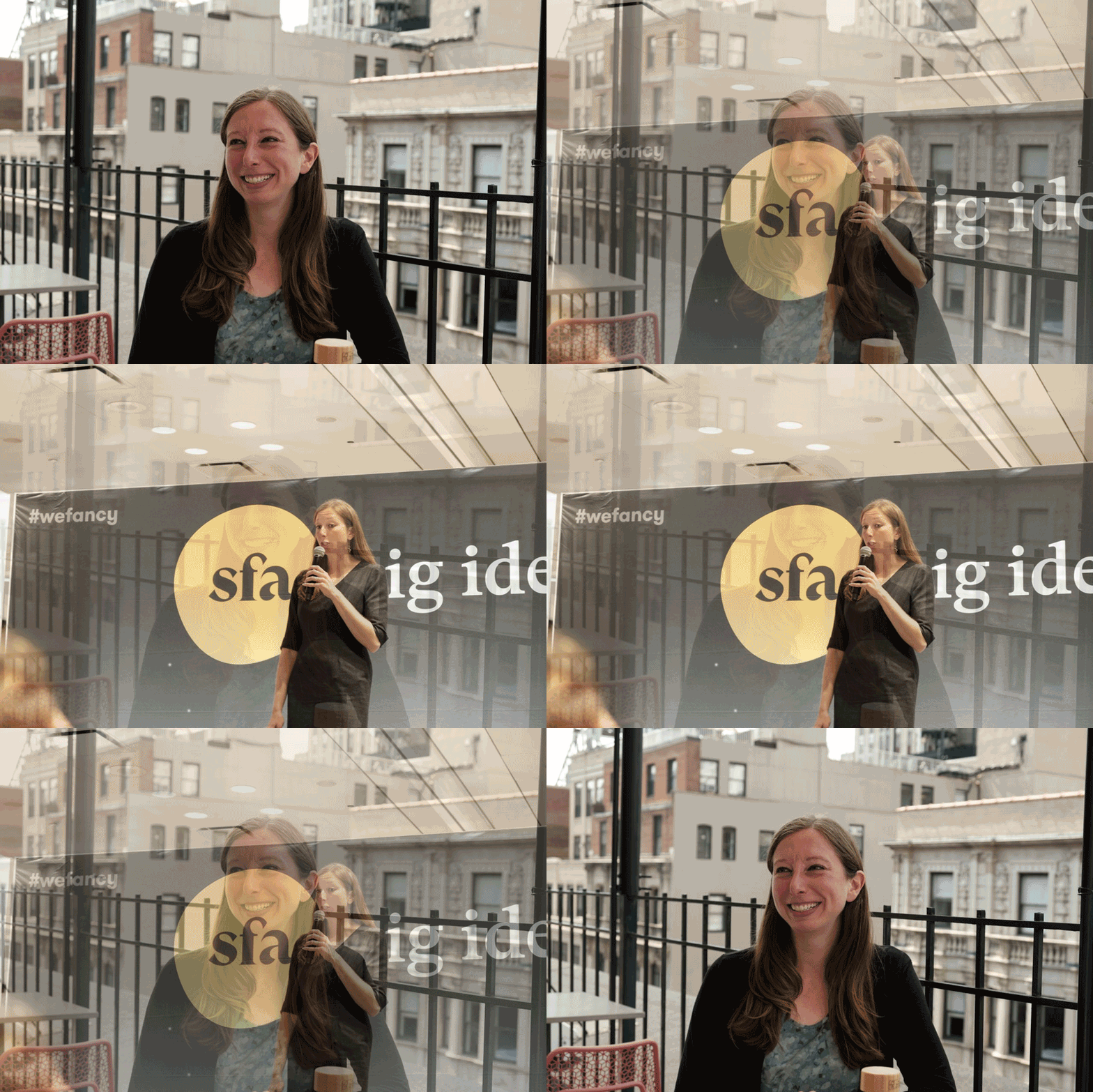
"A way to catch two rabbits: food redistribution and solving abnormal climate"
-Amanda Owenbring CEO of the Upcycling Food Association (UFA), USA
According to the UFA, every year, 45% of all fruits and vegetables, 35% of fish and seafood, 20% of grains, 20% of dairy, and 20% of meat and poultry are lost or wasted worldwide. Oenbring stated, "1.3 billion tons of food waste are generated annually, which is enough to feed 2 billion people every year." She explained, "There is plenty of food in the world, yet there are still many hungry people," and added, "Food upcycling is a way to break the imbalance where waste and hunger coexist and redistribute food."
She also emphasized that food upcycling can be a step toward solving abnormal weather caused by global warming. Carbon emissions from food production and waste not only accelerate climate change, such as heatwaves, droughts, and floods, but are also causing a rapid decrease in arable land worldwide. This is the reason for the recent sharp fluctuations in international prices of corn, wheat, cacao, and coffee due to plummeting production. Oenbring stressed, "The current food market is extremely unstable," and added, "If we can reduce carbon and utilize existing food through food upcycling, we can build a healthier food system for the future."
Living in Oregon, she shared, "My flight to New York was delayed for several hours due to turbulence," and expressed concern, "Because of abnormal weather, we will face more unexpected bad events in the future." She added, "I am convinced that small individual actions like food upcycling can bring about significant change in slowing climate change."
※ This project was supported by the Press Promotion Fund, created from government advertising commissions.
IndexRediscovery of Eumseo
- Turning Discarded Watermelon Rinds into a 26.5 Billion Won Annual Sales Miracle
- Food Upcycling and Lost Muscle... Slowing Down Climate Change
- "Open Only at Night"... Tokyo Bakery Sells Out Within an Hour
- No Longer Food Waste... Japan Finds a 'Gold Mine' by Changing Perspective
- The Country Once Known for the Most Waste in Europe... Turning Beer Residue into High-Protein Grain Powder
!["Please Help Us": How Much Do Those Bowing 90 Degrees These Days Actually Earn? [Data Pick]](https://cwcontent.asiae.co.kr/asiaresize/323/2026052010120870131_1779239528.png)