Rediscovering Food Waste ⑤
Introducing the 'Green Project' to fresh food distribution and sales
Aiming to solve food-related social issues through business
Reduced food loss by 118 tons over three years since 2021
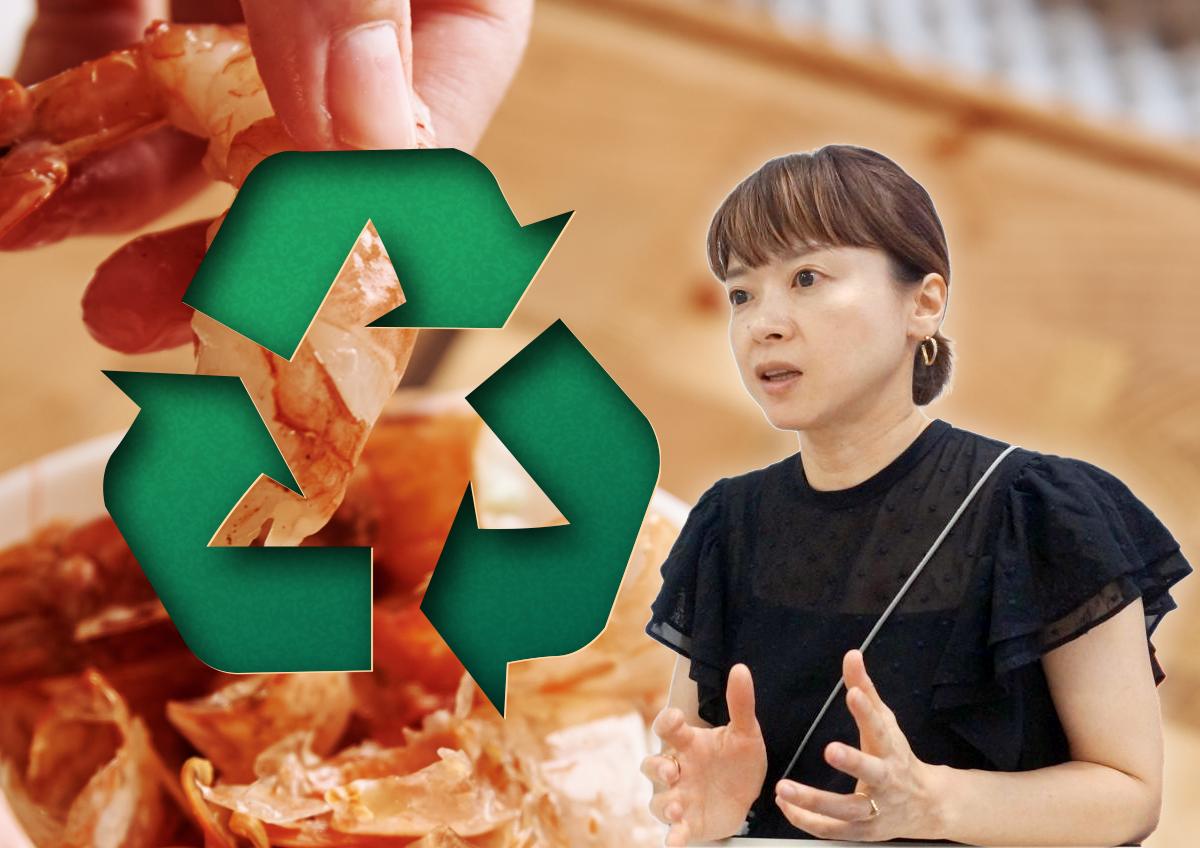
Sonoko Doukairin, Executive Officer (Director) of Japan's fresh food distribution and sales company 'Oisix ra daichi (Oisix)', spoke about the potential of the Japanese food upcycling market in a recent interview with Asia Economy.
She said, "Even in Japan, there are growing concerns about food waste generated in households, restaurants, and businesses," adding, "Interest in food upcycling is gradually increasing because it allows us to create new products from food by-products that have been overlooked, and to contribute to solving environmental issues."
Oisix is a subscription service platform that regularly delivers fresh and organic foods. With the aim of "providing ordinary households with a rich and diverse diet" through food that customers can eat with peace of mind, the company offers a variety of groceries, including home meal replacements (HMR). As of March this year, the number of subscribers stood at approximately 368,000. Oisix entered the food upcycling business in July 2021 through the 'Green Project,' led by Doukairin, an expert in product planning and development.
![Sonoko Doukairin, Executive Officer of Oisix, is introducing the food upcycling initiative that the company is promoting in an interview with Asia Economy. <br>[Photo by Asia Economy]](http://www.asiae.co.kr/news/img_view.htm?img=2024092414532637300_1727157206.png)
![Japan Food Upcycling Status <br> [Image Source=Getty Images Bank, Graphic by Lee Jihyun]](http://www.asiae.co.kr/news/img_view.htm?img=2024092414532237297_1727157202.png)
![Cases of Reprocessing Japanese Food Ingredients [Image Source=Getty Images Bank, Graphic by Lee Jihyun]](http://www.asiae.co.kr/news/img_view.htm?img=2024092414532437299_1727157204.png)
[Photo by Asia Economy]
Doukairin explained, "The project was launched to address social issues related to food through business," adding, "We prioritized 'food loss' (edible food that is discarded) as it is closely linked to environmental issues." Oisix was reportedly the first company in Japan to use the term 'food upcycling' and to develop and sell related products. She continued, "While working as a product developer in the past, I witnessed significant food loss at farms and factories. I was convinced that if we could create new products using these resources, the food upcycling market would expand in Japan as well."
Even in Japan, where thrift is considered a virtue, concerns about discarded food run deep. According to estimates by the Ministry of Agriculture, Forestry and Fisheries and the Ministry of the Environment, food loss in Japan amounted to about 5.22 million tons last year. The economic loss from disposal reaches 6.75 trillion yen (about 62 trillion won) annually, which is about 6.3% of Japan's annual national budget.
Moreover, Japan's food self-sufficiency rate (the proportion of domestically produced food in total national food consumption) was less than 37% as of 2020, which is relatively low. In comparison, Australia was at 200%, the United States at 132%, France at 125%, and the United Kingdom at 65% during the same period. South Korea's rate is around 45%.
For this reason, the Japanese government has set a goal through the Food Recycling Law to reduce food loss generated by food companies by 50% by 2030 compared to 5.47 million tons in 2000, and is encouraging companies to actively participate. Japanese companies are also actively engaging in food sharing and food upcycling.
Oisix has developed 112 food upcycling products over the past three years as of July this year. Notable examples include snack chips made from vegetable by-products previously considered unsellable, such as broccoli stems, eggplant caps, and radish peels. Other popular items include frozen bananas for smoothies made from bananas that couldn't be distributed due to surface blemishes, dried plums left over after making plum wine, and chocolate balls coated with processed chocolate made from coffee grounds.
Oisix sells these products to regular delivery members and supplies some to offline stores such as convenience stores and supermarkets. The packaging for these products is specially marked with an upcycling label. After tasting the actual products, they were found to be just as good as conventional products in terms of taste and texture, and their design and composition were not off-putting.
The total amount of food loss reduced by Oisix through food upcycling, sourced from collaborating producers and food businesses, reached 118 tons cumulatively as of July this year. From the perspective of producers, they can generate additional income from agricultural and marine by-products that would otherwise be discarded, so they sometimes proactively propose ideas for food upcycling product development.
![(FROM left) Dried fruit made from plums used for plum wine, snacks made from white shrimp shells, and choco balls coated with processed chocolate on coffee grounds, all food upcycling products produced by Oisix. A logo indicating food upcycling products is printed at the top of the packaging. <br>[Photo by Asia Economy]](http://www.asiae.co.kr/news/img_view.htm?img=2024091813325831351_1726633978.jpg)
(FROM left) Dried fruit made from plums used for plum wine, snacks made from white shrimp shells, and choco balls coated with processed chocolate on coffee grounds, all food upcycling products produced by Oisix. A logo indicating food upcycling products is printed at the top of the packaging.
[Photo by Asia Economy]
A representative example is the shrimp chips made using white shrimp shells, one of the three major seafood products of Hokuriku, Toyama Prefecture. Previously, the heads and shells, which account for about 60% of the white shrimp's weight, were all incinerated because their salt content made them unsuitable even for compost. A processing company employee, regretting the waste, approached Oisix to explore food upcycling options, which led to product development. The brown rice snack made from seaweed stems with holes, considered unsellable, is another product reflecting producers' input.
Doukairin emphasized, "Food upcycling products are definitely effective in addressing environmental issues," but also noted, "Rather than focusing solely on eco-friendliness, highlighting the value of being delicious and innovative will be much more helpful in expanding the related market." She added, "I hope to see more ideas and product development reflecting this approach in Korea as well."
※ This feature was supported by the Press Promotion Fund, which is financed by government advertising fees.
IndexRediscovery of Eumseo
- Turning Discarded Watermelon Rinds into a 26.5 Billion Won Annual Sales Miracle
- Food Upcycling and Lost Muscle... Slowing Down Climate Change
- "Open Only at Night"... Tokyo Bakery Sells Out Within an Hour
- No Longer Food Waste... Japan Finds a 'Gold Mine' by Changing Perspective
- The Country Once Known for the Most Waste in Europe... Turning Beer Residue into High-Protein Grain Powder
-

Reporter Kim Heungsoon sport@asiae.co.kr
-
Edit Hong Jayeon hongzaa@asiae.co.kr
© The Asia Business Daily(www.asiae.co.kr). All rights reserved.
!["Please Help Us": How Much Do Those Bowing 90 Degrees These Days Actually Earn? [Data Pick]](https://cwcontent.asiae.co.kr/asiaresize/323/2026052010120870131_1779239528.png)