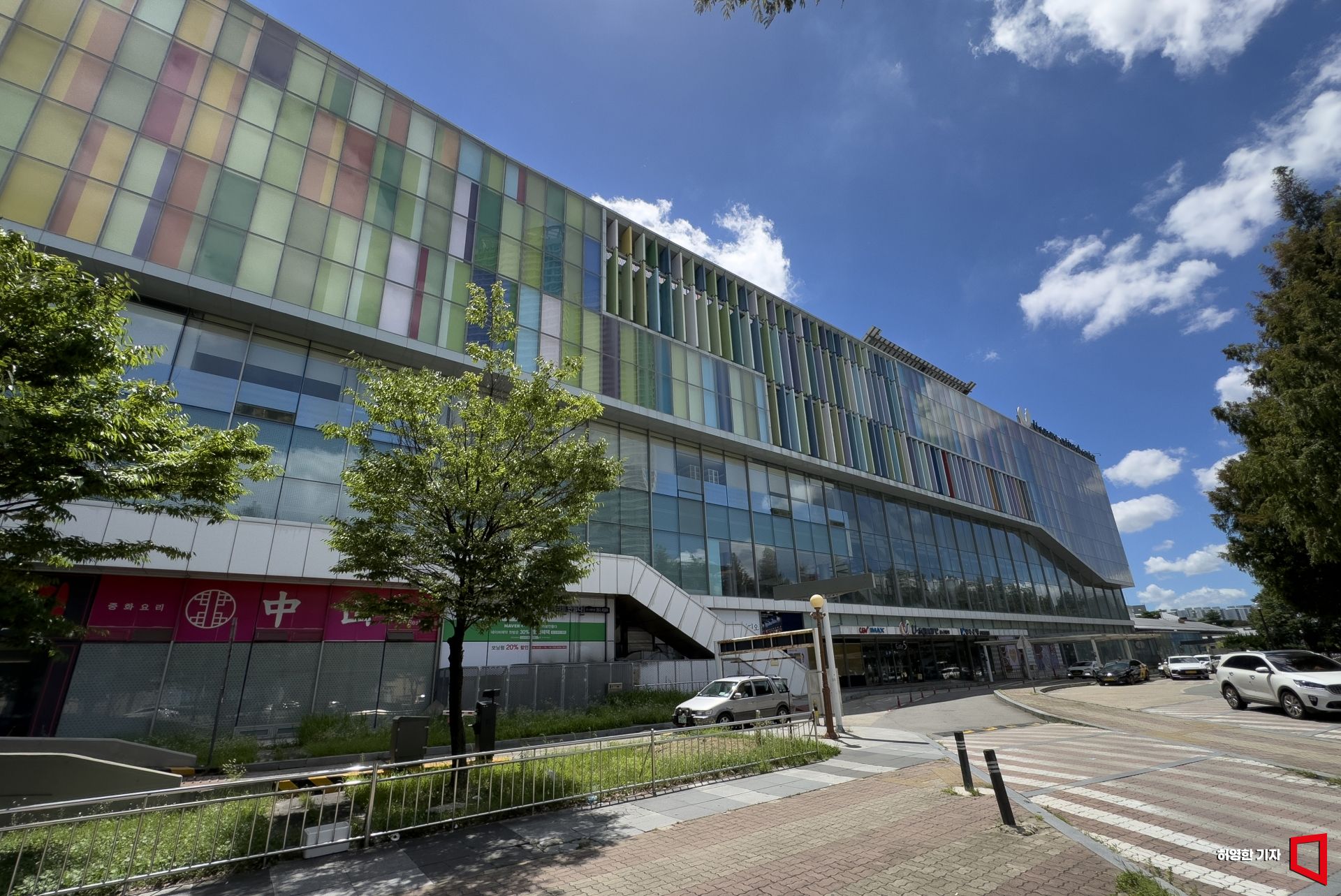


Gwangju City Intercity Bus Terminal and Complex Cultural Space U-Square
Editor's NoteAre you familiar with the term "Nojaem City," meaning a "boring city"? It refers to a city that lacks things to do, see, or enjoy, making it dull for locals and unappealing for visitors. Since 2019, various cities have been labeled as Nojaem City on social networking services (SNS). What started as a meme has led local governments in places like Daejeon, Ulsan, Gwangju, and Cheongju to launch "Fun City Projects." But are cities branded as "nojaem" truly boring and dull? What makes a city fun? We aim to reflect on the places and spaces where we live.
# At noon on the 20th of last month, a line for the pop-up store of the famous Daegu bakery "Mamangkape" wrapped around the escalator area on the basement floor of Hyundai Department Store Ulsan. Kim Minseo (36), who was in line to buy the signature salted Bungeoppang, said she rushed over as soon as she saw the announcement on Instagram. Kim Yooyeon (27), who was waiting behind her, explained, "There are almost no pop-up stores in Ulsan, so we usually go all the way to Busan," highlighting the reason for the long queue.
# A similar scene unfolded at Daejeon Shinsegae Art & Science on the 23rd, where IKEA's pop-up store opened. As it was IKEA's first pop-up in the Chungcheong region, locals flocked to the site. Except for the Dongbusan branch in Busan Gijang-gun, all three IKEA stores are located in the Seoul metropolitan area (Goyang, Gwangmyeong, and Giheung).
Complex shopping malls, which combine shopping centers, cinemas, amusement parks, and other cultural facilities, are considered key elements that make a city fun. This is why shopping malls and department stores consistently appear at the top of local tourist attraction rankings.
We analyzed 3,400 popular tourist destinations across 17 metropolitan cities and provinces over the past year (August 2023 - July 2024) using data from the Korea Tourism Organization Data Lab. Among the most searched destinations by locals on navigation apps, department stores and shopping malls dominated the top spots. Since 2022, in Daejeon, Ulsan, and Gwangju?cities that have launched "Fun City Projects"?department stores and shopping malls rank first, excluding train stations and bus terminals.
Not only locals but also visitors from other regions frequently visit department stores and shopping malls. In Daejeon, Hyundai Premium Outlet Daejeon and Shinsegae Department Store Daejeon Shinsegae Art & Science ranked second and third among the most visited places by outsiders; excluding transportation hubs like Daejeon Station, shopping facilities effectively take the top spot. In Gwangju, both locals and visitors most often go to U Square Gwangju General Bus Terminal, which houses cinemas and large bookstores. In Ulsan, Hyundai Department Store Ulsan ranked third after Ganjeolgot, a famous sunrise spot.
When we asked residents of Daejeon, Ulsan, Gwangju, and Cheongju how they spend their weekends, many said they spend time with family, partners, or friends at local department stores or shopping malls. Yuk Youngchae, a shop owner in Dunsan-dong, Dong-gu, Daejeon, in her twenties, said, "If we had more pop-up stores and exhibitions in complex shopping malls, maybe our city could shed the 'nojaem' label."
Complex shopping malls also serve as gateways that attract people from neighboring cities. Citizens in Cheongju said that when they want to shop offline, they often go on "shopping tours" to Daejeon or Seoul. From Osong Station in Cheongju, it takes just 50 minutes by KTX to reach Yongsan Station in Seoul. Yeom Soyeon (39), who runs a cafe on Seongan-gil in Cheongju, said, "Cheongju has only one shopping mall, one cinema, and just one Hyundai Department Store. It's quiet and nice to live in, but there's really nothing downtown," adding, "If needed, we have to go to Daejeon or Seoul."
Gwangju Eyes Complex Shopping Malls to Become a 'Fun City'
Gwangju is a prime example of a city striving to attract a complex shopping mall. Despite having a population of 1.41 million, Gwangju still lacks a large complex shopping mall. Kang Gijeong, the mayor of Gwangju, has announced plans to build one as part of his vision to make Gwangju a "fun city" and usher in an era of 30 million city users.
Currently, U Square, a complex cultural space, serves as a substitute for a complex shopping mall in Gwangju. U Square connects the general bus terminal, the now-closed U Square Cultural Center, and Shinsegae Department Store, with cafes, bakeries, restaurants, large stationery stores, and bookstores clustered together. When I visited U Square on the 30th of last month, it was bustling with people even on a weekday afternoon.
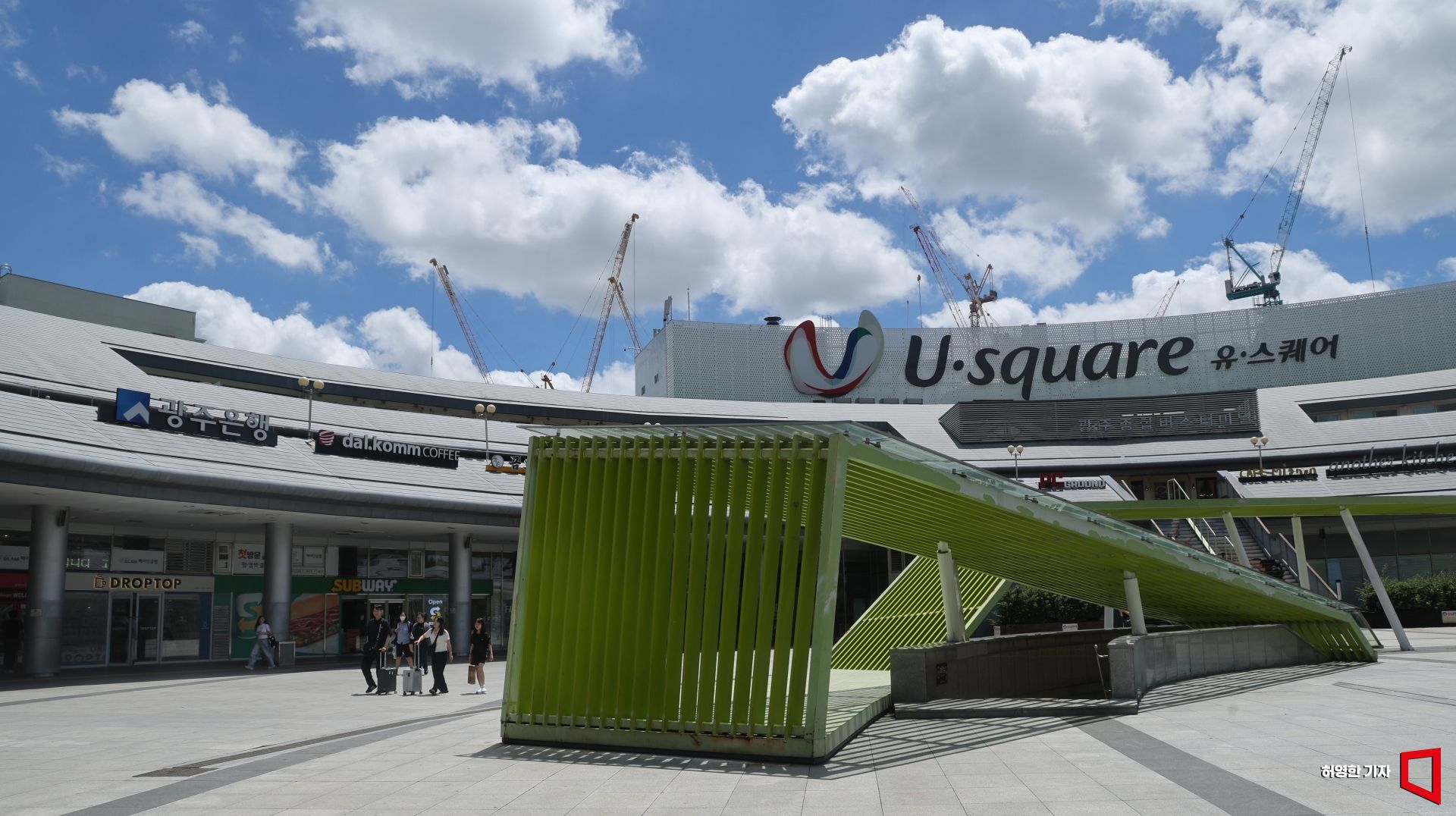
However, Gwangju citizens unanimously say that it's not enough to enjoy leisure in just one place. A taxi driver in his 70s, who described himself as a "Gwangju native," said, "If we build a complex shopping mall, people from Jeju or Jeonbuk might come to Gwangju instead of going all the way to Seoul. That's how Gwangju will develop."
Kim (67), who visited the cinema in U Square with his wife, said, "It's been disappointing not to have a large complex shopping mall, but now that one is coming, citizens are looking forward to it." Jeong (23), a Chosun University student met at Dongmyeong-dong Cafe Street, also expressed hope, saying, "Compared to Seoul, there really hasn't been much to do in Gwangju," and welcomed the city's efforts to attract a complex shopping mall.


Are Shopping Malls a Guaranteed Ticket to a 'Fun City'?
Once just places to buy goods, shopping malls have now become the center of "mall-ing culture," where people enjoy not only shopping but also dining, gaming, movies, and various cultural experiences. As complex shopping malls become spaces for new cultural experiences, they can be core elements in making cities more fun. They are also seen as channels for attracting visitors and creating local consumption and jobs in a short period.
However, experts say that shopping malls and department stores alone are not enough to transform a "nojaem city" into a "fun city." Since the brands in department stores and shopping malls are similar everywhere, it's difficult to highlight a city's unique character. Professor Mo Jongrin of Yonsei University said, "Department stores and shopping malls are predictable, but neighborhood alley shops are ever-changing and unique. Sustainable fun comes from local businesses, but local governments tend to favor large projects like complex shopping malls that show quick results, which is a problem."

Park Songmi (39), whom we met at U Square in Gwangju, said, "If a complex shopping mall opens in Gwangju, there will be more to see, but I'm worried it might kill the surrounding local businesses. In reality, it's just bringing trends from Seoul as they are."
▶Previous article: The Miracle of O-ridangil? Does Benchmarking Seoul Guarantee Success?
▶Next article: Pouring Trillions for 'Fun' Promises... The 'Thing' That Excites Mayors
IndexRousseau City
- A Map of South Korea Drawn by ChatGPT... Daejeon is Sung Sim Dang, Gwangju Only Has the Taegeukgi?
- What Is the 'Nojaem City' Meme That Sparked Both Controversy and Buzz on Social Media?
- When You Think of Ulsan, Only "Industrial City" Comes to Mind... "Is This Just a City People Leave After Earning Money?"
- Asked for Sightseeing Recommendations, Even Locals Hesitate... "Gwangju Has History but No Places to Have Fun"
- Cheongju, Still Stuck in the Neighborhood of 'King of Baking, Kim Takgu' for 14 Years... Why?
- Why Is Lee Chanwon Singing in Ulsan? Over 1,100 Local Festivals, But Still 'No Fun'?
- "If Necessary, Have to Go to Busan or Seoul... Cities Debating Complex Shopping Malls"

![[Report] "A Culinary Destination with a View of Gyeongbokgung"... Kim Dong-sun's High-End Dining Takes Over Gwanghwamun](https://cwcontent.asiae.co.kr/asiaresize/304/2026042114562634571_1776750985.jpg)
![[Gallery Stroll] Red Robe, Black Lines... Danjong Returns with the Face of Wounds](https://cwcontent.asiae.co.kr/asiaresize/304/2026042014183532691_1776662315.jpg)