

The Sea Calls. Ulsan 'Shipbuilding and Marine Festival'
Editor's NoteHave you heard of a "Nojaem City," meaning a "boring city"? This term refers to cities that lack things to do, see, or enjoy, making them dull for locals and unappealing for visitors. Since 2019, the term "Nojaem City" has been used on social media to label various cities, and what began as a kind of meme has even led to "Fun City Projects" by local governments in places like Daejeon, Ulsan, Gwangju, and Cheongju. But are cities labeled as "nojaem" truly boring and dull? What makes a city fun? Let's take a closer look at the places and spaces where we live.
"I'm just here to see Lee Chanwon and will leave right after."
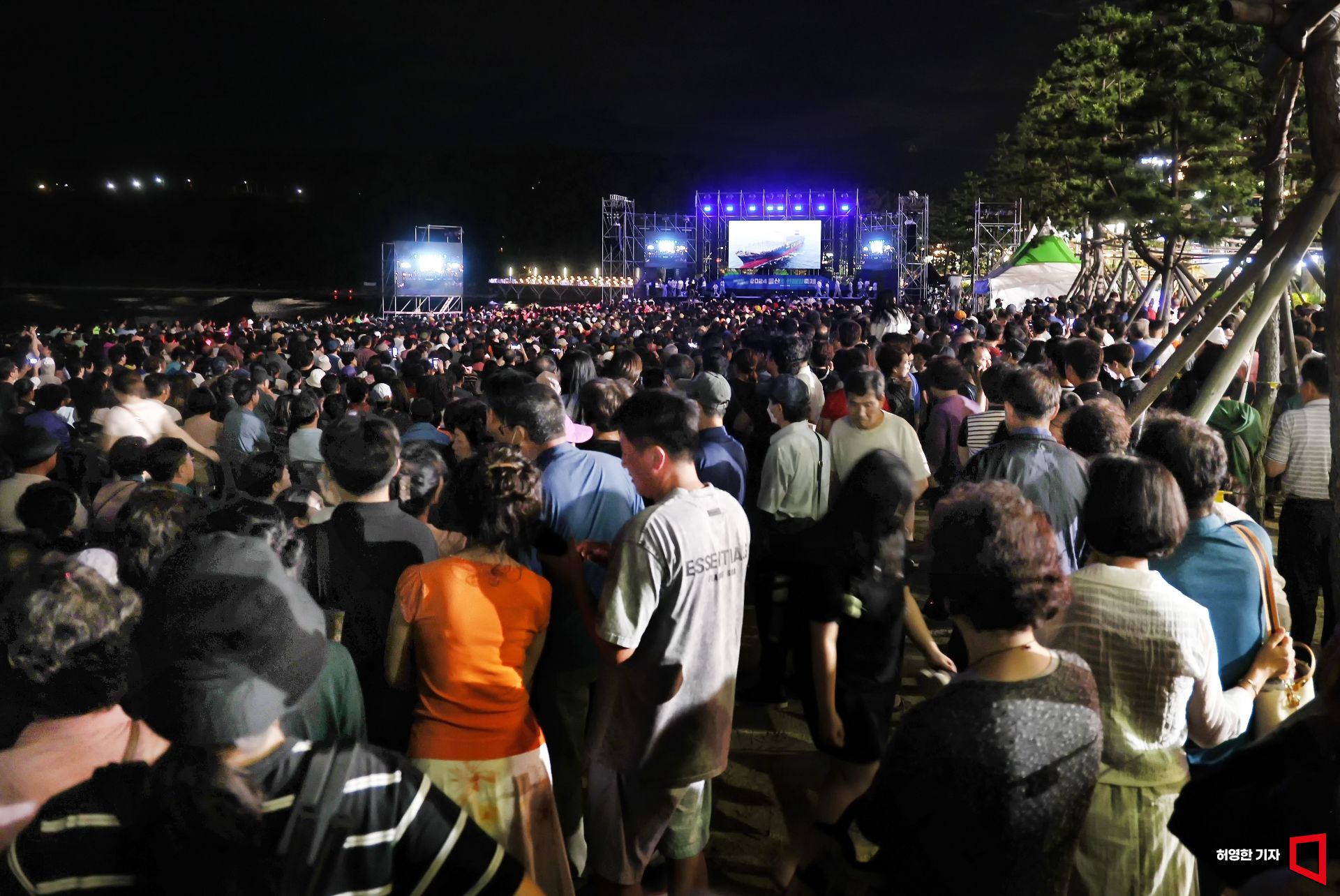
Kim Chunja, a woman in her 50s who visited Ulsan's largest summer festival, the "Ulsan Shipbuilding and Marine Festival" (July 19-21, Ilsan Beach, Dong-gu, Ulsan), which was organized by Ulsan City with a budget of 600 million KRW, told the reporter that she came from Busan starting at 8 a.m. just to see Lee ChanwonA native of Ulsan, Bancheon-ri, Eonyang-eup, Ulju-gun, Ulsan Metropolitan City. Although 185,000 people attended this three-day free festival, most visitors, like Kim, came only briefly to watch the invited singer's performance rather than to enjoy the local festival, making the original purpose of promoting Ulsan's shipbuilding industry through the "Shipbuilding and Marine Festival" seem irrelevant.
On the evening of July 19, the first day of the festival, the venue was bustling with people eager to enjoy the performances. When trot singer Lee Chanwon took the stage, the crowd was so dense it was difficult for even one person to pass through. Waiting 20 minutes to use a public restroom was standard. Nearby convenience stores were so packed with people that it was hard to even open or close the doors.
Number of Festivals Up 32% in 5 Years... 1,170 Held This Year
The number of local festivals supported by the Ministry of Culture, Sports and Tourism has steadily increased, from 884 before the COVID-19 pandemic in 2019, to 944 in 2022, 1,129 in 2023, and 1,170 this year. The estimated budget (including national, local, private, and self-funded sources) for this year's 1,170 local festivals is 4.1334 trillion KRW. New festivals like the Hangang Festival, Byeolbada Busan Night Festa, and Hongcheongang Starlight Music Beer Festival are launched across the country every year.
The increase in festivals in Korea is because local governments see festivals as events that can revitalize their regions by providing things to do, see, and enjoy. While festivals are planned to reflect local characteristics, attracting visitors is the first priority, so inviting popular singers?an easy way to draw crowds?becomes the main focus. This is why so much budget is allocated to local government festivals.
Daejeon, Ulsan, Gwangju, and Cheongju, which have set "Fun City" as a policy goal, are also highlighting festivals as core projects. Daejeon, for example, launched the "Zero Hour Festival" for the first time last year, attracting 1.09 million visitors, and is promoting its "8 Major Festivals" as part of the Fun City project, including the Daedeok Water Light Festival (twice a year), Yuseong Hot Spring Culture Festival (twice a year), Dong-gu Dongrak Festival, Seo-gu Art Festival, and Yuseong Chrysanthemum Exhibition.
Ulsan, which has held festivals such as the Rose Festival, Whale Festival, Shipbuilding and Marine Festival, and Soeburi Festival, revived the long-defunct Industrial Festival last year. The Industrial Festival, held for the first time in 35 years, drew 700,000 visitors. Gwangju is also promoting the "G-Festa Gwangju Project" this year, connecting 18 festivals and exhibitions, including the Gwangju Biennale, Beer Festival, and Chungjang Festival. Since last year, Cheongju has held the Musimcheon Food Truck Festival during cherry blossom season, attracting 800,000 visitors over two years.
Festivals Attract Both Locals and Visitors... If Attracting Crowds Is the Goal, It's a 'Success'
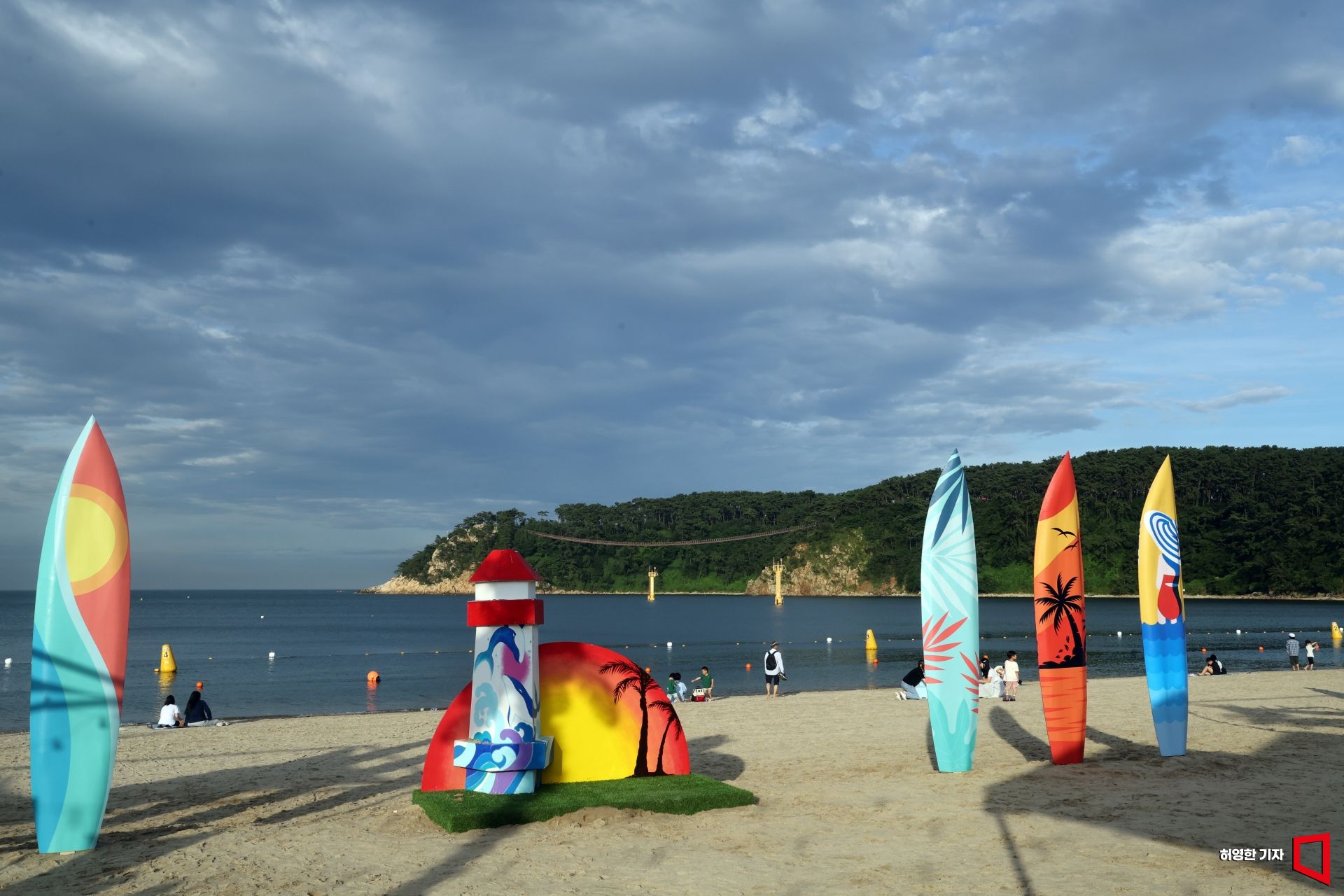
Just as 180,000 people flocked to the usually quiet Ilsan Beach in Ulsan, festivals are considered effective for attracting people.
According to an analysis of 86 festivals that were pilot-evaluated as cultural tourism festivals, visitor numbers increased both inside and outside the festival area during the festival period. When the maximum number of visitors on a single day during the festival period is set at 100, the average number of external visitors during the festival was 59, up by 21 compared to non-festival periods. For locals, the number of visitors during the festival was 84, compared to 66 during non-festival periods, an increase of about 18.
The Jindo Sea-Parting Festival, which promotes the "Korean Moses Miracle" of the mysterious sea road in Jindo, Jeollanam-do, had the highest visitor influx among the 86 festivals analyzed. Although it ranked 84th out of 86 in terms of average daily visitors, when the maximum number of external visitors to Gogun-myeon, Jindo-gun is set at 100, the average during the festival was 90, compared to only 18 during non-festival periods?a fivefold difference. This shows that many visitors come specifically to enjoy the festival.
Among the 86 festivals analyzed, 45% had more than half of their visitors as locals. For example, at the Bucheon International Comics Festival, which had the highest average daily attendance of 120,000, only 32.5% were outsiders or foreigners. This means that over 80,000 locals visited the festival site each day.
Festivals Without Identity Are Rife With Controversy
While festivals seem effective at attracting tourists and boosting the local economy, there are concerns that they often do not lead to substantial revenue generation. Of the 86 festivals analyzed, 20 saw tourism spending in the region actually decrease during the festival period compared to non-festival periods. Another 10 festivals saw little change in tourism spending regardless of the festival. In other words, while attracting visitors was successful, generating local spending was not.
As a result, there is criticism that the flood of identity-less local festivals, funded by massive budgets, not only fails to make cities more fun but also leads to unnecessary waste of local government finances. Experts point out that festivals that rely excessively on famous singers or use large budgets just to create impressive appearances are difficult to sustain regularly.
The desire for quick publicity can also lead to unnecessary controversy. By turning festivals into one-off events and trying to make big profits at once, so-called "rip-off pricing" scandals often occur. For example, at the Hongcheongang Ice Festival in January this year, controversy erupted when a plate of sundae was sold for 20,000 KRW, prompting an official apology from the Hongcheon Cultural Foundation. Similarly, at the Jinhae Gunhangje in March, there was controversy over selling two skewered fish cakes for 10,000 KRW.
Baek Jongwon, CEO of Theborn Korea, who created the Yesan Beer Festival in Chungnam last year, commented at the time, "Festivals are indeed opportunities for local areas. They are a chance to change the way outsiders view us, and an opportunity to make people want to visit our region again." He emphasized that solving the rip-off pricing issue is the key to reviving local festivals and promoting the region.
To Prevent True 'Nojaem', Sustainability Is Key
Ultimately, for festivals to become lasting sources of fun for cities rather than one-off events, careful and detailed planning is essential. Experts stress the importance of organizing festivals that are ▲centered on local residents and encourage voluntary participation ▲offer a variety of fun experiences ▲are created by creative cultural and festival planners rather than just by the government.

For example, rather than investing huge budgets in expos, festivals created with the participation of local residents are seen as more beneficial for both fun and sustainability. Even when inviting famous singers, it is important to balance the program by also featuring local artists or performance groups who have contributed to the region's culture.
Lee Changkil, a local planning expert and head of the Incheon Gaehang-ro Project, said, "A festival for everyone ends up satisfying no one. It turns into a generic, featureless festival," adding, "Planning for everyone is lazy planning. In a situation where festivals are everywhere, each festival needs to find its own competitive edge."
IndexRousseau City
- A Map of South Korea Drawn by ChatGPT... Daejeon is Sung Sim Dang, Gwangju Only Has the Taegeukgi?
- What Is the 'Nojaem City' Meme That Sparked Both Controversy and Buzz on Social Media?
- When You Think of Ulsan, Only "Industrial City" Comes to Mind... "Is This Just a City People Leave After Earning Money?"
- Asked for Sightseeing Recommendations, Even Locals Hesitate... "Gwangju Has History but No Places to Have Fun"
- Cheongju, Still Stuck in the Neighborhood of 'King of Baking, Kim Takgu' for 14 Years... Why?
- Why Is Lee Chanwon Singing in Ulsan? Over 1,100 Local Festivals, But Still 'No Fun'?
- "If Necessary, Have to Go to Busan or Seoul... Cities Debating Complex Shopping Malls"
-
Reporter Jeong Hyunjin jhj48@asiae.co.kr
-

Reporter Yun Seulgi seul97@asiae.co.kr
-
Edit Sung Kiho kihoyeyo@asiae.co.kr
© The Asia Business Daily(www.asiae.co.kr). All rights reserved.

![[Report] "A Culinary Destination with a View of Gyeongbokgung"... Kim Dong-sun's High-End Dining Takes Over Gwanghwamun](https://cwcontent.asiae.co.kr/asiaresize/304/2026042114562634571_1776750985.jpg)
![[Gallery Stroll] Red Robe, Black Lines... Danjong Returns with the Face of Wounds](https://cwcontent.asiae.co.kr/asiaresize/304/2026042014183532691_1776662315.jpg)