[Culture Interview] "Disability Art Should Be Met with Appreciation, Not Just Consideration"
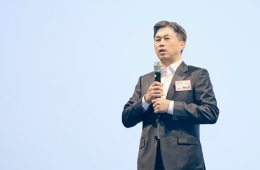
Interview with Bang Guihee, Chairperson of the Korea Disability Arts and Culture Center
"I want to change the order—art that makes you realize only after seeing, 'This was created by an artist with a disability'"
"Disability art is also part of the cultural arts scene... Now it must enter the mainstream"
She presents the challenges of making systems work and expanding the audience
It is not a painting you go to see because it was created by a person with a disability, but a painting after which you realize it was created by a person with a disability.
What Bang Guihee, Chairperson of the Korea Disability Arts and Culture Center, wants to change is not the level of disability art, but the order in which it is viewed. She seeks to break away from the old habit of putting disability first—a step aside from the inertia of labeling the artist by disability before the work itself. The work should come first, and the artist after. Even as Disability Day approaches, her remarks ultimately lead back to this point.
![[Culture Interview] "Disability Art Should Be Met with Appreciation, Not Just Consideration"](http://www.asiae.co.kr/news/img_view.htm?img=2026041614323228941_1776317552.jpg)
That is why, in her words, terms like appreciation and talent appear more frequently than those like consideration or sympathy. Her succinct statement, "We want to show our abilities," clearly reveals where she places her emphasis as head of the institution. It means that simply placing disability art alongside welfare events is not enough. She believes it only becomes true art when there are audiences who see, listen, discuss, and return again. This is also why she has called for leaders of society to seek out disability art—not as sponsors or volunteers, but as audience members.
The format that the Korea Disability Arts and Culture Center has chosen for this year’s Disability Day is an extension of this approach. At the main branch, there is the "People Who Became the Path" exhibition on the history of Korean artists with disabilities; at Modoo Art Space, the "Techniques of Relationship" exhibition; and at Modoo Arts Theater, a performance of traditional Korean music. This is not a matter of simply adding an exhibition here and a performance there. Instead, it is an attempt to bring together history and the present, appreciation and experience, art and stage, all at once—shaping disability art as a living culture of the present, not a subsidiary genre of welfare. Bang’s description of art as "what most gently connects relationships" overlaps with this vision. Just as people who watch the same drama quickly find themselves talking, art narrows the distance between people even before explanations.
The role Bang envisions for the Center is also far broader than that of a simple support institution. It is a hub that sustains creative activity, nurtures talent, and even connects to employment. This is why she summarizes the Center’s past ten years as supporting creative activities, operating an arts creation academy, and creating jobs. The fact that the budget for the Disability Arts Vitalization Grant Program has increased and the number of applications has grown means more than mere numbers. It signals that the base of artists with disabilities has expanded, and that the Center has moved to the core of this ecosystem. Her calling it the "Mecca of disability art" is not an exaggeration, but rather a self-definition.

The play "Jellyfish," which won the 62nd Dong-A Theatre Award for Best Play, is a co-production by Modoo Arts Theater and Creative Table Seokyoung. This work tells the story of a woman with Down syndrome, Kelly, who proactively shapes her life through family and love. Modoo Arts Theater
View original image
However, the next step she envisions does not stop at expanding support. The next goal is entry into the mainstream. This means that disability art should not remain within its own internal community but must circulate and be recognized naturally within the mainstream art world. This is why Bang calls the period after 2026 the "era of entering the mainstream art world," and looks further ahead to a "co-evolutionary period" in which people with and without disabilities grow together. The aim is not for disability art to be separately acknowledged, but for it to move and expand together with all art—placing it as an ordinary part of the cultural and artistic landscape, not as a special exception.
At this point, Bang repeatedly returns to the importance of systems. Although the priority purchase system for creative works and mandatory performance and exhibition systems are already in place, what matters to her is not the systems on paper but the opportunities that actually take shape. "For artists with disabilities to stand naturally on the stage of Open Concerts, for actors with disabilities to be cast in dramas and films not as special appearances but as part of natural casting"—she says just providing a venue once is not enough. It is necessary to break away from the practice of treating disability art as a one-off event or a well-intentioned gesture. Only when disability art enters the everyday flow of the cultural and artistic world can we truly say that the system is working.
Her perspective is also surprisingly flexible when it comes to language. She does not categorically reject the word "overcome." She first points out that some artists wish to express their disability openly in their work, while others prefer not to. Thus, the focus always returns to the work itself. The statement, "It shouldn’t be 'I must go because it was created by a person with a disability,' but 'I went and realized it was created by a person with a disability,'" almost entirely encapsulates how Bang Guihee wishes to reshape the perception surrounding disability art. The work comes first. Only then do disability, narrative, and life follow.

The artwork 'Together Sculpture' (2026, archival pigment print) by Raumcon, currently exhibited at Modoo Art Space,
View original image
Her extended remarks about the explanation robot "Moji" at the Modoo Art Space exhibition are in the same context. A robot that explains artworks to visually impaired visitors, assistive devices that raise and lower canvases, technology that reads sheet music aloud—while such features may seem like mere add-ons to non-disabled people, Bang sees them as hands that enable artists with disabilities to keep working. Technology does not replace art; it sustains it, preventing creative work from being interrupted. The director’s perspective, which views accessibility and the creative environment as a single entity, is particularly clear here.
Beneath her words lies the memory of a long-lived physical experience. Recalling her university days, she was carried up to classrooms on the fifth and seventh floors, endured days of hunger because it was difficult to go down for meals, and clung to writing during those times. Copying sentences from books into her notebook, she dreamed of one day writing like that herself. Her broadcasting appearances led to requests for manuscripts, and she worked as a broadcast writer for 31 years. That career was not just a tale of personal hardship. It became the reason she saw art not as a hobby, but as a language of livelihood. It also led to her conviction that disability art, too, should become a means of building a life. Even after becoming head of the institution, this is why she continues to talk about art in terms of work, structures, and opportunity.
Hot Picks Today
 "With This Certificate, Even Those in Their 60s...
- Popcorn Container Craze at Theaters Sparks Sell-Out Frenzy, Emerges as New Reven...
- When His Father Suddenly Collapsed Before His Eyes... 13-Year-Old Son Preserves ...
- Female Game Caster Makes Bold Move After Criticism Over "Short Skirt" on Broadca...
- "Quit Office Job to Earn Over 200 Million Won a Year"… Chinese Woman in Her 30s...
Bang does not ask people to view disability art as something special. She simply asks that it first be seen as art. Though her words are gentle, their core is resolute. She calls not to let Disability Day pass as mere commemorative language, and not to relegate disability art to a welfare appendage or therapeutic activity. The message that the Korea Disability Arts and Culture Center delivers to the outside world is the same: to accept disability art as "just art." If we simply change the order, perhaps many things will begin to change from there.
© The Asia Business Daily(www.asiae.co.kr). All rights reserved.



!["They Said It Was 'Delicious' Milk... Is the 'List of Fake Milk Products in Korea' for Real? [Matjal X-File]"](https://cwcontent.asiae.co.kr/asiaresize/307/2023072413274517286_1690172865.jpg)