[The View] Where Does the Value of Experts Come From?
The Era of Knowledge Is Over: The Dawn of the 'Era of Judgment'
As AI Provides Answers, Humans Take Responsibility
![[The View] Where Does the Value of Experts Come From?](http://www.asiae.co.kr/news/img_view.htm?img=2025121607550256950_1765839302.jpg)
Generative artificial intelligence (AI) is transforming the way professionals work. In consulting firms, AI is rapidly replacing research and draft preparation tasks that used to be handled by junior analysts. In law firms, a significant portion of contract review and case summary work is now managed by AI-based tools. In medical settings, tasks such as diagnostic assistance, chart summarization, and patient record organization are being swiftly automated. On the surface, AI appears to be a tool that increases the productivity of experts, but underneath, a more fundamental change is underway. The role of experts is shifting from being "the person who provides answers" to "the person who is responsible for those answers."
For a long time, the core of expertise rested on information asymmetry. Doctors possessed medical knowledge that laypeople found difficult to access, and professors were regarded as individuals with the deepest understanding of theories and data in their fields. However, information itself is no longer scarce. In the United States, many people now ask AI about legal issues before consulting a lawyer, or check AI-generated explanations about their symptoms before visiting a hospital. As the cost of accessing information plummets, it is becoming increasingly difficult for experts to derive authority merely from possessing knowledge.
So, where will the value of experts come from in the future? The key lies not in the quantity of information but in the responsibility for judgment and the ability to interpret context. While AI can quickly provide answers, it cannot determine what those answers mean in the real world. For example, even if AI at a U.S. medical institution suggests a high likelihood of a specific disease, it is ultimately the physician who decides the course of treatment and bears the legal and ethical responsibility for the outcome. The same applies to corporate strategy. AI may propose restructuring through market analysis, but it remains up to human managers to judge how such decisions will affect organizational culture and long-term competitiveness.
This shift could have significant implications for Korean society as well. In Korea, reliance on institutionalized expert systems is relatively high in fields where specialized judgment is crucial, such as healthcare, education, law, and finance. People often seek expert advice before making important decisions and use that judgment as a basis for trust. However, as AI rapidly absorbs basic information provision and initial analysis functions, this decision-making structure is also likely to change gradually. The core of the transformation is not that the role of experts will diminish, but rather that the nature of their role will evolve. AI can handle much of the work of delivering information or providing standard answers. On the other hand, understanding the context of individual situations, making balanced judgments amidst conflicting factors, and explaining and taking responsibility for decisions may become even more important.
The issue is not simply that the role of experts is shrinking, but that the gap between experts may widen even further. In the United States, for instance, while average knowledge-based tasks are quickly being replaced by AI, the value of top-tier experts is actually rising. Since anyone can use AI for basic information organization and drafting, the real difference lies in who can read more complex contexts and shoulder greater responsibility. In other words, in the age of AI, professionals who simply relay knowledge may feel pressure, but in areas that require advanced judgment and trust, the value of outstanding experts can become even greater.
What is particularly important is the issue of explainability and trust. People do not just want the correct answer; they want to understand why a particular judgment was made. In high-risk decision-making areas such as healthcare, law, education, and business strategy, the logic and accountability that lead to an outcome are often more important than the result itself. No matter how sophisticated the answer provided by AI may be, the process of explaining why it is valid and ensuring that others can accept it remains the domain of human experts.
Ultimately, in the age of AI, expertise is being redefined not by the amount of knowledge, but by the abilities to judge, explain, take responsibility, and design trust. The core of competition will no longer be about who possesses the most knowledge, but about who can read more complex contexts and make better decisions amid uncertainty. The faster AI delivers near-perfect answers, the heavier the responsibilities demanded of human experts become. Technology can generate answers, but it is still up to humans to transform those answers into social trust. In the AI era, the most valuable professional will not be the one who knows the most, but the one who can take responsibility for the most difficult decisions.
Hot Picks Today
 "With This Certificate, Even Those in Their 60s...
- Popcorn Container Craze at Theaters Sparks Sell-Out Frenzy, Emerges as New Reven...
- When His Father Suddenly Collapsed Before His Eyes... 13-Year-Old Son Preserves ...
- Female Game Caster Makes Bold Move After Criticism Over "Short Skirt" on Broadca...
- "Quit Office Job to Earn Over 200 Million Won a Year"… Chinese Woman in Her 30s...
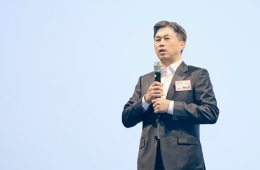
Yoonseok Son, Professor at the University of Notre Dame, USA
© The Asia Business Daily(www.asiae.co.kr). All rights reserved.



!["They Said It Was 'Delicious' Milk... Is the 'List of Fake Milk Products in Korea' for Real? [Matjal X-File]"](https://cwcontent.asiae.co.kr/asiaresize/307/2023072413274517286_1690172865.jpg)