[Reporter’s Notebook] Subtle Investments Within the Trump Administration Amid the Iran War
![[Reporter’s Notebook] Subtle Investments Within the Trump Administration Amid the Iran War](http://www.asiae.co.kr/news/img_view.htm?img=2025111310474716282_1762999975.jpg)
There are observations that the second round of ceasefire negotiations between the United States and Iran may resume as early as this weekend. While there is hope that peace may finally come to the Middle East, there is also a lingering question: "Who will profit this time?"
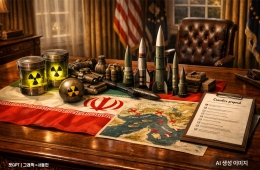
Recent foreign media reports have suggested that someone within the U.S. administration under President Donald Trump appears to have reaped considerable profits by taking advantage of the economic impact of the Iran conflict. This occurred just before President Trump announced a ceasefire on April 7. Evidence shows that over 50 new accounts on the online prediction platform Polymarket placed bets on a ceasefire, resulting in hundreds of thousands of dollars in winnings. A similar situation occurred in the futures market just 15 minutes before President Trump announced a suspension of airstrikes on Iranian power plants last month, with massive short positions in crude oil futures worth about 580 million dollars (approximately 855.1 billion won) being executed. There have also been reports that drone companies invested in by President Trump's sons are selling drones to Middle Eastern countries exposed to threats from Iran, and that Secretary of Defense Pete Hegseth's team attempted to invest in stocks expected to benefit from war ahead of the Iran conflict, all within the same context.
President Trump's family also seems to make little effort to hide their use of national policy for personal financial gain. Since his first term, there have been countless criticisms that the White House was being turned into a family business, but such behavior has become even more blatant in the second term. The eldest son-in-law, who oversaw Middle East policy during the first administration, is now a private citizen attracting enormous investments in the region. The second son, who made a huge profit accompanying President Trump on his Middle East tour last year, will also join the President on his visit to China next month.
It would be unfair to condemn the entire Trump administration based on individual cases alone. This is not simply a matter of wrongdoing by individuals within the administration, but rather a chronic issue in American politics and business circles, where power and the market are deeply intertwined. According to a research report by the National Bureau of Economic Research (NBER) last year, the annual stock investment returns of U.S. congressional leadership were up to 47% higher than those of regular lawmakers. The stock-picking prowess of former Democratic House Speaker Nancy Pelosi is internationally renowned.
However, some of these instances seem too excessive to be dismissed as mere coincidence. Paul Krugman, Nobel laureate in economics and professor at the City University of New York, publicly criticized the Trump administration, stating, "When people with access to national security secrets use that information for profit, that is treason."
Hot Picks Today
 "With This Certificate, Even Those in Their 60s...
- Popcorn Container Craze at Theaters Sparks Sell-Out Frenzy, Emerges as New Reven...
- When His Father Suddenly Collapsed Before His Eyes... 13-Year-Old Son Preserves ...
- Female Game Caster Makes Bold Move After Criticism Over "Short Skirt" on Broadca...
- "Quit Office Job to Earn Over 200 Million Won a Year"… Chinese Woman in Her 30s...
It is inevitable that policy influences the market. However, using that influence to pursue private gain is an entirely different matter. The White House appears to be making some effort to address such concerns, warning staff not to use their positions for betting in prediction markets. Yet if such suspicions persist, trust in democracy and the market will inevitably be undermined. It raises the question of whether President Trump truly started the war with Iran to prevent nuclear proliferation.
© The Asia Business Daily(www.asiae.co.kr). All rights reserved.



!["They Said It Was 'Delicious' Milk... Is the 'List of Fake Milk Products in Korea' for Real? [Matjal X-File]"](https://cwcontent.asiae.co.kr/asiaresize/307/2023072413274517286_1690172865.jpg)