[Inside Chodong] The Meaning of Naphtha and the Existence of the Petrochemical Industry

The shortage of pay-as-you-throw trash bags made the majority of the public aware of the existence of naphtha. A petrochemical industry insider I spoke with recently said, "I can finally explain to my friends exactly what I do for work." Naphtha is the main raw material used to produce ethylene, which is in turn used to make plastic bags and containers. It is extracted during the refining process of crude oil. Until now, naphtha, an intermediate byproduct, was a term mostly used by those in the oil and petrochemical industries.
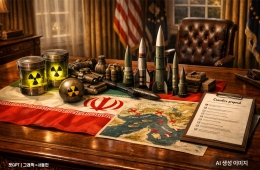
Naphtha became well-known after the Strait of Hormuz was blocked due to the war between the United States and Iran. As of last year, South Korea depended on imports for nearly half (45%) of its naphtha, with 77% of that sourced from the Middle East and 54% brought in through the Strait of Hormuz. In the wake of the war, not only did direct naphtha imports become impossible, but crude oil supply was also cut off, which in turn made it difficult to extract domestic naphtha. Factories producing ethylene using naphtha as a primary raw material began to reduce their operating rates, and Yeochun NCC, the country’s largest ethylene producer, even declared force majeure to its clients.
Contrary to the industry’s recent nickname of "Gold-phtha" over the past month, naphtha has actually suffered from oversupply for several years. Chinese competitors, armed with price competitiveness, have rapidly closed the gap, prompting domestic naphtha cracking companies to begin significant production cuts to avoid mutual destruction. Domestic naphtha cracking facilities have traditionally produced general-purpose products used in large quantities across various industries. As inventories piled up, the government set a target to cut domestic naphtha cracking facility capacity by 18–25%, and scenarios for facility closures and mergers at the three major industrial complexes—Daesan, Yeosu, and Ulsan—began to materialize. On February 25, just before the outbreak of the U.S.-Iran war, the government approved the "Daesan No. 1 Restructuring Plan."
But what if the government had begun to reduce NCCs in a hurry? If production capacity had been lost and the country was forced to import all general-purpose products from abroad, the crisis would not have ended with just a shortage of trash bags. The supply shock could have extended to automotive parts, medical devices, semiconductor materials, and even shipbuilding, all of which rely on naphtha. This incident made it possible to directly and indirectly experience how the petrochemical industry has served as the foundation of the manufacturing sector.
This crisis has brought back to the surface questions the petrochemical industry has long grappled with. Is moving exclusively toward specialty chemicals truly the right direction? Of course, it is essential for the domestic petrochemical industry, which has already lost its market value due to Chinese competition, to shift to high value-added specialty chemical materials as a survival strategy. There seems to be no alternative but to move the portfolio toward product groups with higher technological barriers and thicker margins.
However, after experiencing the recent Middle East crisis, things look a little different. If too much general-purpose production capacity is eliminated too quickly, the buffer against supply chain crises may disappear. General-purpose products may have low margins and be outcompeted by Chinese companies, but that does not mean they are unnecessary.
Hot Picks Today
 "Six Months After 'Mom's Touch Troublesome Woma...
- Popcorn Container Craze at Theaters Sparks Sell-Out Frenzy, Emerges as New Reven...
- "With This Certificate, Even Those in Their 60s Can Get Hired and Earn 3.69 Mill...
- Wild Boar Charges at People After Breaking Into Gapyeong Rest Area... Slams Into...
- Female Game Caster Makes Bold Move After Criticism Over "Short Skirt" on Broadca...
The task for the petrochemical industry is not simply a binary choice between specialty and general-purpose products. The more important questions are what proportion to maintain and at what pace to shift the focus. The government, which is leading production cuts and facility closures, must not lose its sense of balance. It is necessary to develop the insight to distinguish which facilities are an economic issue and which are a matter of national security.
© The Asia Business Daily(www.asiae.co.kr). All rights reserved.


!["They Said It Was 'Delicious' Milk... Is the 'List of Fake Milk Products in Korea' for Real? [Matjal X-File]"](https://cwcontent.asiae.co.kr/asiaresize/307/2023072413274517286_1690172865.jpg)