[Policy Pulse] Let’s Redesign the Path of Lifelong Learning
Learning as Welfare and Growth

On March 24, major organizations related to lifelong education gathered at the National Assembly to hold the launch ceremony for the "Korea Lifelong Education Alliance" and adopted a resolution urging the enactment of the Basic Lifelong Learning Act, once again highlighting the importance of lifelong learning. This event is significant in that it not only serves as a declaration but also calls for the need for institutional transformation.
In today's era of 100-year lifespans, few people believe that a fulfilling life can be achieved through school education alone. Technological change is rapid, and the lifespan of occupations has become shorter. In such times, lifelong learning is not a choice but a necessity. Joseph Stiglitz and Bruce Greenwald, in "Creating a Learning Society," emphasize that the core of economic growth lies not in technology itself but in the ability to learn and disseminate knowledge. They also argue that, since the market cannot provide sufficient learning, active government intervention is necessary. This suggests that lifelong learning is not only a means to improve individuals' quality of life but also the foundation of national competitiveness.
Lifelong Learning: Not a Choice, But a Necessity and the Foundation of National Competitiveness
Lifelong learning also serves a preventive welfare function. In a situation where technological changes are increasing job insecurity, a system that enables proactive learning and transitions—rather than reactive responses to unemployment—reduces social costs and preserves individual dignity. Furthermore, lifelong learning forms the basis of democracy. Learning enhances not only job skills but also citizens' judgment and participatory capabilities, empowering them to mediate conflicts and seek collective solutions.
Korea recognized the importance of lifelong learning relatively early. Starting with the enactment of the Social Education Act in 1983, more than 5,000 lifelong education institutions are now operating nationwide. The participation rate stands at about 40 percent, with an estimated annual participation of around 15 million people. In terms of quantitative growth alone, these results are by no means insignificant.
However, there is much to be improved in terms of substance. First, the financial structure is weak. The Ministry of Education's lifelong education budget amounts to just over 1 trillion won, accounting for only about 1 percent of the total education budget. The school-centered education structure remains firmly in place. Second, there is a high degree of policy fragmentation. Various ministries, including the Ministry of Education, the Ministry of Employment and Labor, and the Ministry of Health and Welfare, each pursue their own projects, leading to a lack of coordination. Third, the effectiveness of education is low. Student satisfaction and social utility fall short of expectations, and cases where it leads to employment or increased income are limited. As a result, while participation is high, the power to transform lives remains weak.
Transforming into a 'Core Welfare Policy': Institutional, Financial, and Societal Consensus Needed
To overcome these limitations, several changes are required. First, lifelong learning must be redefined as a "core welfare policy" rather than "supplementary education." In particular, there is a need to expand support systems that combine learning and income for the middle-aged and vulnerable populations. In addition, links with employment must be strengthened. By expanding industry-demand-based education and corporate participation, a structure must be created in which learning actually leads to jobs. Moreover, policy integration is necessary. A unified platform that transcends ministerial divisions must be established to connect the pathways of learning, employment, and welfare. Furthermore, the quality of learning must be improved. Instead of focusing on short-term or hobby-based programs, a customized learning system linked to individuals' life courses should be developed.
Lifelong learning is no longer a peripheral policy. It is welfare that preserves individual dignity and a core strategy that drives the nation's sustainable growth. Korea must now move beyond "how much we learn" to ask "how much learning transforms our lives." Moreover, this change must be realized not through declarations but through institutional, financial, and social consensus.
Hot Picks Today
 "Six Months After 'Mom's Touch Troublesome Woma...
- Popcorn Container Craze at Theaters Sparks Sell-Out Frenzy, Emerges as New Reven...
- "With This Certificate, Even Those in Their 60s Can Get Hired and Earn 3.69 Mill...
- Jae-yong Lee Snaps a Selfie with President Lee and Prime Minister Modi... Closer...
- Female Game Caster Makes Bold Move After Criticism Over "Short Skirt" on Broadca...
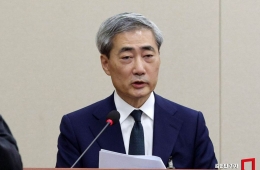
Neunghoo Park, Former Minister of Health and Welfare

At the launch ceremony of the "Korea Lifelong Education Alliance" held on the 24th at the National Assembly Library Auditorium in Yeouido, Seoul, attendees are holding up placards. Korea Lifelong Education Society Internet Homepage
View original image© The Asia Business Daily(www.asiae.co.kr). All rights reserved.


!["They Said It Was 'Delicious' Milk... Is the 'List of Fake Milk Products in Korea' for Real? [Matjal X-File]"](https://cwcontent.asiae.co.kr/asiaresize/307/2023072413274517286_1690172865.jpg)