[K-Women Talk] Misconceptions and Truths About the Fund-Type Retirement Pension System
Maximizing Returns Through "Economies of Scale"
Unlocking Funds Tied to Principal Guarantees
![[K-Women Talk] Misconceptions and Truths About the Fund-Type Retirement Pension System](http://www.asiae.co.kr/news/img_view.htm?img=2024111111143794511_1731291278.jpg)
The stock market is soaring. The KOSPI 5000 era, something we have never experienced before, was achieved at the very beginning of the year, fueling a strong upward trend. Meanwhile, as stock investment returns have risen, the low returns of retirement pensions are once again under scrutiny.
The five-year average annual return of retirement pensions, a key source of retirement income for workers, stands at 2.86%, which is lower than the inflation rate-a point that continues to draw criticism. If we look more closely at the returns, this is only an average; for defined contribution (DC) plans, the top 1% of well-managed accounts have achieved returns as high as 22.7%. Since this is based on 2024 figures, returns would likely be even higher if calculated using the more active stock market of 2025. Returns vary depending on the products selected. Principal-guaranteed products have an average return in the 3% range, while performance-based products average around 9%, showing a significant gap. However, since 75% of Korea's retirement pension reserves are in principal-guaranteed products, overall returns inevitably remain low.
As an alternative to boost retirement pension returns, the introduction of the "fund-type retirement pension system" has recently become a focal point of discussion. However, there appear to be many misunderstandings about this fund-type system. I even heard a well-known economic YouTuber describe the fund-type retirement pension system as if it would create a single, massive retirement pension headquarters, like the National Pension Service, pooling all retirement pensions together for unified management. This is a serious misconception. I believe the legislature, policy authorities, and retirement pension experts all share some responsibility for this misunderstanding.
First, let’s clarify the definition of the fund-type retirement pension system. Currently, the standard is the "contract-type retirement pension system," in which a company entrusts the management of its retirement pension to a financial institution-such as a bank, insurance company, or securities firm-through a one-to-one contract.
The fund-type retirement pension system, on the other hand, involves establishing a separate fund corporation that manages the retirement pensions of employees from multiple companies, not just one. Unlike the contract-type system, where individual employees or companies decide how to manage their own pension assets, the fund-type system entrusts management entirely to a fund corporation composed of retirement pension experts. By pooling the retirement pensions of employees from several companies and leveraging economies of scale, the likelihood of higher returns increases. Whether a company adopts the contract-type or the fund-type system is entirely a matter of choice. The Small and Medium Business Retirement Pension Fund operated by the Korea Workers’ Compensation and Welfare Service, which is currently open only to employees of businesses with 30 or fewer employees, is an example of a fund-type retirement pension. Whether to choose the contract-type or fund-type system is up to the employees and employers of each workplace. However, except for those with 30 or fewer employees, the fund-type system is not legally recognized at present. Therefore, the current discussion on the fund-type system aims to expand the range of choices by introducing legal recognition for this option.
Retirement pensions are, at their core, "mandatory private pensions." Unlike the public National Pension, although the government can design the framework of the system, it cannot arbitrarily use the funds for purposes such as defending the exchange rate or supporting stock prices. The government also cannot guarantee the payments. Furthermore, unlike the National Pension, which is partially funded and partially pay-as-you-go, retirement pensions are paid out solely from the amount an individual has accumulated, plus investment returns. Therefore, I believe it is important to broaden the range of institutional choices so that labor and management, as the main stakeholders of retirement pensions, can secure their retirement income based on their own judgment and responsibility.
Hot Picks Today
 "Six Months After 'Mom's Touch Troublesome Woma...
- Popcorn Container Craze at Theaters Sparks Sell-Out Frenzy, Emerges as New Reven...
- "With This Certificate, Even Those in Their 60s Can Get Hired and Earn 3.69 Mill...
- Wild Boar Charges at People After Breaking Into Gapyeong Rest Area... Slams Into...
- Female Game Caster Makes Bold Move After Criticism Over "Short Skirt" on Broadca...
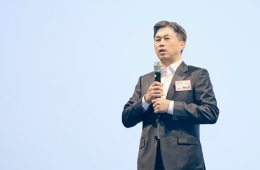
Kim Kyungseon, Chairman of the Korea Retirement Pension Development Institute and former Vice Minister of Gender Equality and Family
© The Asia Business Daily(www.asiae.co.kr). All rights reserved.



!["They Said It Was 'Delicious' Milk... Is the 'List of Fake Milk Products in Korea' for Real? [Matjal X-File]"](https://cwcontent.asiae.co.kr/asiaresize/307/2023072413274517286_1690172865.jpg)