Oh Sehun: "Expanding Urgent Care Centers to Five Locations... Strengthening Essential Medical Services"
Announcement of Three Major Public Healthcare Future Strategies
Introducing AI to Medical Sites to Boost Efficiency
Discounted Cancer Screening Packages for People in Their 20s and 30s
Oh Sehun, the People Power Party candidate for Seoul mayor, announced plans to operate Seoul-style Urgent Care Centers (UCCs) in each region of the city. The idea is to increase the number of Urgent Care Centers dedicated to treating minor emergency patients during nighttime and holidays, thereby reducing the overload in emergency rooms at large hospitals and strengthening Seoul’s public healthcare infrastructure.
On May 15, Oh unveiled his “Three Major Public Healthcare Future Strategies.” The main point is to expand the current two Seoul-style Urgent Care Centers (UCCs) located in Yangcheon and Songpa districts to a total of five, with one center in each of the five regions (Central, Northeast, Northwest, Southwest, Southeast). The centers are planned to operate daily until midnight, focusing on patients with minor acute conditions such as trauma, abdominal pain, and high fever.

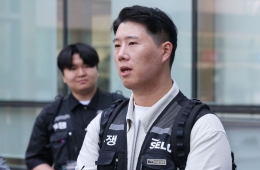
Seoul mayoral candidate from the People Power Party, Oh Sehoon, is speaking at the launch ceremony of the Seoul City Party Election Committee and the joint meeting between the Seoul City Party Election Committee and the mayoral candidate at the People Power Party central office in Yeouido, Seoul on the 12th. Photo by Kim Hyunmin
View original imageThe Seoul-style Urgent Care Centers serve as key public healthcare hubs, handling patients who are not severely ill but require immediate treatment during nighttime or holidays, alleviating the burden on large hospital emergency rooms. Due to prolonged gaps in healthcare and frequent cases of patients being sent from one emergency room to another, these centers were introduced in November 2024.
In the Northeast region, a municipal children's hospital will be built in Gwangjin-gu, and Seoul Medical Center will be specialized as a public cancer treatment hub. In the Northwest region, a Western Disabled Dental Hospital is planned to open. For the Southwest, the emergency medical center at Southwest Hospital will be expanded, and the Boramae Respiratory Care Center will operate continuously to enhance its functions.
On-site, artificial intelligence (AI) technology will be introduced. AI will assess patient symptoms before the consultation and automatically handle foreign language interpretation. Patient conditions will be monitored in real-time with smartwatches, creating an environment where medical staff can focus on areas where they are most needed.
A long-term plan will also be implemented to secure future public healthcare personnel. Seoul will establish a scholarship program within private universities to directly support medical students, and after graduation, a system will be introduced requiring a certain period of mandatory service at municipal hospitals.
Essential medical services will be expanded through public-private cooperation. A support network will be established for patients with severe or rare heart and cerebrovascular diseases, and a standard model for drug response will be created to strengthen the emergency mental health response system. In the field of pregnancy and childbirth, Seoul will be the first in the country to operate a public-private Seoul-style Safe Postnatal Care Center. Medical expense support will be expanded for pregnant women aged 35 and older, and the number of Moonlight Children's Hospitals will also increase.
For younger generations, a new cancer screening package exclusively for people in their 20s and 30s will be introduced with a 10% discount on screening costs. An integrated linkage system will also be established so that patients discharged from municipal hospitals can naturally connect to community care services after returning home.
Hot Picks Today
!["Heading for 2 Million Won": The Company the Securities Industry Says Not to Doubt [Weekend Money]](https://cwcontent.asiae.co.kr/asiaresize/93/2025061015355092669_1749537351.jpg) "Heading for 2 Million Won": The Company the Securities Industry Says Not to Doubt [Weekend Money]
"Heading for 2 Million Won": The Company the Securities Industry Says Not to Doubt [Weekend Money]
- "Anyone Who Visited the Room Salon, Come Forward"… Gangnam Police Station Launches Full Staff Investigation After New Scandal
- "Drink Three Cups of Coffee and Stay Up All Night Before the Test"... Manual of Insurance Planner Who Collected 1 Billion Won in Payouts
- "Persistence Pays Off: Wins $1.4 Billion Lottery After 30 Years Using the Same Numbers"
- Did Samsung and SK hynix Rise Too Much?... Foreign Assets Grow Despite Selling [Weekend Money]
Oh stated, "Robust public healthcare improves the quality of life for Seoul citizens," adding, "We will make sure that Seoul City is there for you when you need it most."
© The Asia Business Daily(www.asiae.co.kr). All rights reserved.