Did Samsung and SK hynix Rise Too Much?... Foreign Assets Grow Despite Selling [Weekend Money]
Foreign Ownership Ratio Evaluated by Market Capitalization, Not Number of Shares
Surge in Samsung Electronics and SK hynix Share Prices Drives Market Cap Higher
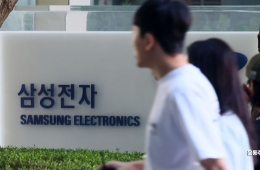
Although foreign investors have continued to sell, the foreign ownership ratio of KOSPI stocks has actually increased. This is because the share prices of stocks such as Samsung Electronics and SK hynix, which were held by foreign investors, have surged significantly.

According to Daishin Securities, since November of last year, foreign investors have posted a cumulative net selloff of 80 trillion won in the Korea Exchange’s main board, but during the same period, the foreign ownership ratio of KOSPI stocks by market capitalization rose from 31% to 38%.
Kwon Soonho, a researcher at Daishin Securities, explained, “It is necessary to separate stock valuation (stock) and new transactions (flow) to understand this gap. Unlike individual stocks, the foreign ownership ratio of KOSPI is assessed by market capitalization rather than the number of shares. The effect of foreign net selling lowered the ownership ratio by only 1.5 percentage points, whereas the contribution from price increases in held stocks amounted to +9 percentage points.”
If we simplify foreign investors as a single entity, the one-year return on their KOSPI portfolio is 273%, which greatly exceeds the KOSPI’s overall gain of 193% during the same period. This is the result of a sharp rise in large semiconductor stocks such as Samsung Electronics and SK hynix, in which foreign investors held significant stakes.
![Did Samsung and SK hynix Rise Too Much?... Foreign Assets Grow Despite Selling [Weekend Money]](http://www.asiae.co.kr/news/img_view.htm?img=2026051416161763554_1778742977.png)
Samsung Electronics and SK hynix together account for 48.4% of the total KOSPI, but based on foreign investor holdings, these two stocks make up as much as 63.8%. Kwon noted, “The focus is heavily weighted toward large-cap semiconductors, and as the share prices of these stocks have soared, even if foreign investors rebalance or realize profits with smaller volumes than two years ago, the absolute net selling amount is bound to be large. Recent large-scale net selling is more likely driven by profit-taking and rebalancing needs rather than aggressive position reduction. In fact, the downward pressure on prices from foreign selling has eased compared to before 2024, while upward pressure from institutional and retail net buying has increased.”
Hot Picks Today
 "Only Two Per Person" Garbage Bag Crisis Was Just Yesterday... Japan Also Faces Shortage Anxiety
- "Samsung Electronics Employee with 100 Million Won Salary Receiving 600 Million Won Bonus... Estimated Tax Revealed"
- Lived as Family for Over 30 Years... Daughter-in-Law Cast Aside After Husband's Death
- 'Will Demand Finally Decline Due to High Prices?'... "I'll Just Enjoy Nearby Trips" as Japan and China See a Surge
- "Wore It Once, Then This? White Spots All Over 4.15 Million Won Prada Jacket... 'Full Refund Ordered'"
Looking ahead, even if there is an unusually large wave of foreign net selling triggered by risk-off sentiment or a shift in market narrative, the resulting price shock is likely to be small relative to the scale of selling. Kwon explained, “According to a regression analysis over the past 36 months, for every 1 percentage point that the KOSPI outperforms global markets over three months, there is about 500 billion won of foreign net selling pressure in the following month. As of May 6, the KOSPI’s three-month return has outperformed the MSCI All Country World Index (MSCI ACWI) by 39 percentage points. Factoring in risk-on sentiment, estimated foreign net selling is 21.5 trillion won, with the upper bound of the 95% confidence interval reaching 35 trillion won. While the absolute size is unprecedented, considering the increase in the value of foreign-held assets due to gains in key stocks, even such amounts may be interpreted as modest rebalancing and profit-taking.”
© The Asia Business Daily(www.asiae.co.kr). All rights reserved.