
Analysis of 112 Elevators in the UK, France, and Germany
Over the Past 20 Years, Body Size Has Increased but Design Standards Remain Unchanged
Stuck at 75kg, Failing to Reflect the Rising Obesity Trend
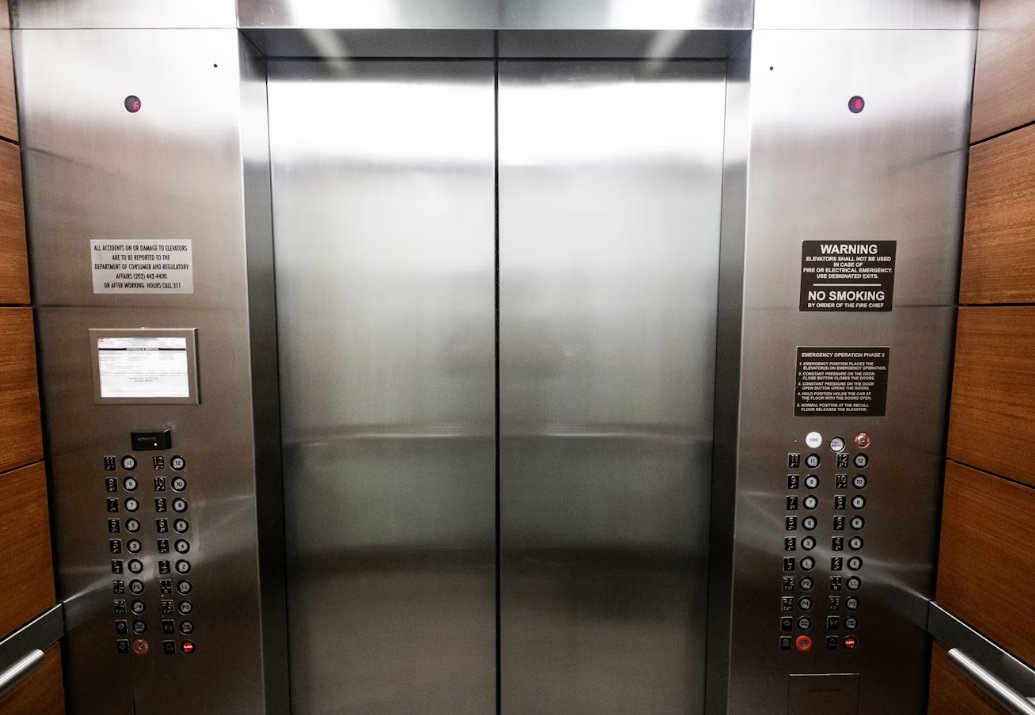
A recent study has found that elevator design standards in the UK and Europe have failed to reflect the recent trend of rising obesity rates. The research team pointed out that, in addition to safety concerns, people with obesity may experience discrimination and inconvenience when using public facilities.
According to a recent report by The Guardian, a research team led by Professor Nick Finer of the International Prader-Willi Syndrome Organization (IPWSO) announced at the European Congress on Obesity, held in Istanbul, Türkiye, that the elevator weight limit standards in the UK and Europe have not kept pace with rising obesity rates.
The research team analyzed data on the maximum passenger load for 112 elevators manufactured between 1972 and 2024 in the UK, France, Germany, Italy, Spain, Austria, and Finland.
Professor Finer divided each elevator’s total allowable weight by its maximum passenger capacity and compared this with the average adult body weight at the time of manufacture.
Researchers: “Average body weight has increased, but elevator load limits remain unchanged”
The study found that average adult body weight has continuously increased, while the total allowable load for elevators has barely changed since 2004. In the mid-1970s, the average weight of a British man was 75kg and a woman was 65kg, but these averages have now risen to 86kg for men and 73kg for women.
The per-person allowable weight in elevators increased from about 62kg in 1972 to 75kg by 2002, roughly tracking the weight gain trend of that period. However, since then, most manufacturers have continued to assume an average adult weight of 75kg, which is about 4kg less than the current adult average.
Professor Finer pointed out that, as manufacturers shifted their design focus from weight to the area of passenger space, they failed to adequately consider changes in body shape due to rising obesity. He stated, “Manufacturers have not properly accounted for the fact that as obesity increases, the space occupied by individuals also increases.”
He also explained that when design standards do not match reality, safety issues can arise. If the actual number of people who can safely board is less than the designed capacity, inter-floor transportation efficiency drops, and if the elevator’s total load is exceeded, there is also a risk that the elevator could stop operating.

“Public facilities must be updated to reflect reality”
In particular, Professor Finer expressed concern about the psychological stigma experienced by people with obesity when using elevators. He said, “This can be a form of everyday weight discrimination,” and stressed the need to update various facilities to reflect reality so that people with obesity are not excluded from society.
He added, “If we do not acknowledge trends in obesity and changes in body shape, it will become even more difficult for these individuals to live in society.”
Commenting on the study, Jane DeVille-Almond, President of the British Obesity Society, said, “We must acknowledge that society will not return to body shapes of 50 years ago and develop facilities that are appropriate for the 21st century.”
Dietitian Louise Payne also remarked, “When it comes to public facilities, the issue is not just about convenience—it’s about dignity, accessibility, and inclusion,” adding, “No one should feel ashamed or excluded when using public transport or everyday services.”
-

Reporter Yun Seulgi seul97@asiae.co.kr
-
Edit Hong Jayeon hongzaa@asiae.co.kr
© The Asia Business Daily(www.asiae.co.kr). All rights reserved.